In periods of global uncertainty, infrastructure stops being a simple pipeline of projects and becomes a capability test. Can a city keep moving while markets fluctuate, supply chains tighten, and priorities shift? The difference between programmes that stall and programmes that progress is rarely intent or funding alone. It is the delivery system around them, how interfaces are managed, how decisions are made, and how information remains trusted as conditions change. The shift toward resilience by design is increasingly visible in the Middle East, where long-term mobility programmes continue to advance despite volatility.
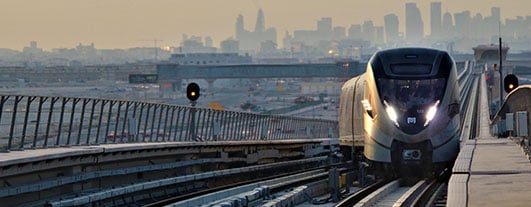
In the UAE, there has been continued investment in long-term mobility infrastructure. In Abu Dhabi, Abu Dhabi Transport Company has announced an expression of interest for the design and build package for Light Rail Transit Line 4, a 19-kilometre line with 23 stations connecting Zayed International Airport, Al Raha Beach, and Yas Island. In Dubai, the Roads and Transport Authority is advancing major metro expansion through the Dubai Metro Blue Line, a 30-kilometre extension with 14 stations, supporting connectivity across key growth areas of the city.
If we look closely at programmes that continue to progress through complexity, we notice these three disciplines keep showing up, regardless of geography or mode:
- planning mobility programmes as an integrated portfolio, not a set of standalone projects.
- putting governance in place that accelerates decisions without compromising assurance.
- building a digital information backbone so decisions and changes stay traceable from planning through delivery and into operations.
Regionally, the signal is clear: investment continues. Clients are asking for programmes that can be phased into benefits, governed with faster decision cycles, and transitioned into operations with fewer surprises.
In transport and logistics, where disruption quickly becomes economic friction, “resilience” is increasingly measured in delivery performance, interface control, readiness, and the ability to adapt without losing momentum.
This is also where an insight-led approach matters most, turning uncertainty into practical design choices, governance choices, and data choices. At WSP, we frame this through our Future Ready® approach, grounded in delivery lessons and focused on what owners can do differently and earlier.
If uncertainty is the operating environment, then the key is engineered certainty. It means designing delivery, so systems do not break down when conditions change. Here is what that looks like in practice.