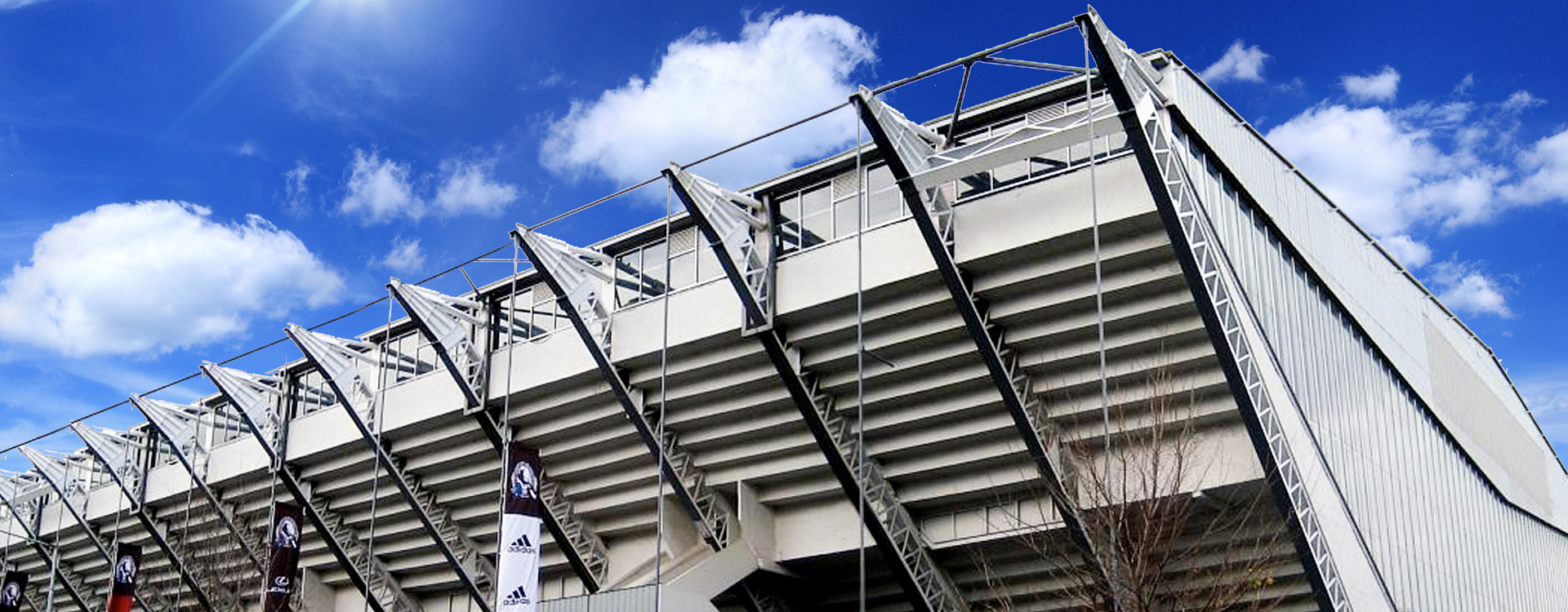
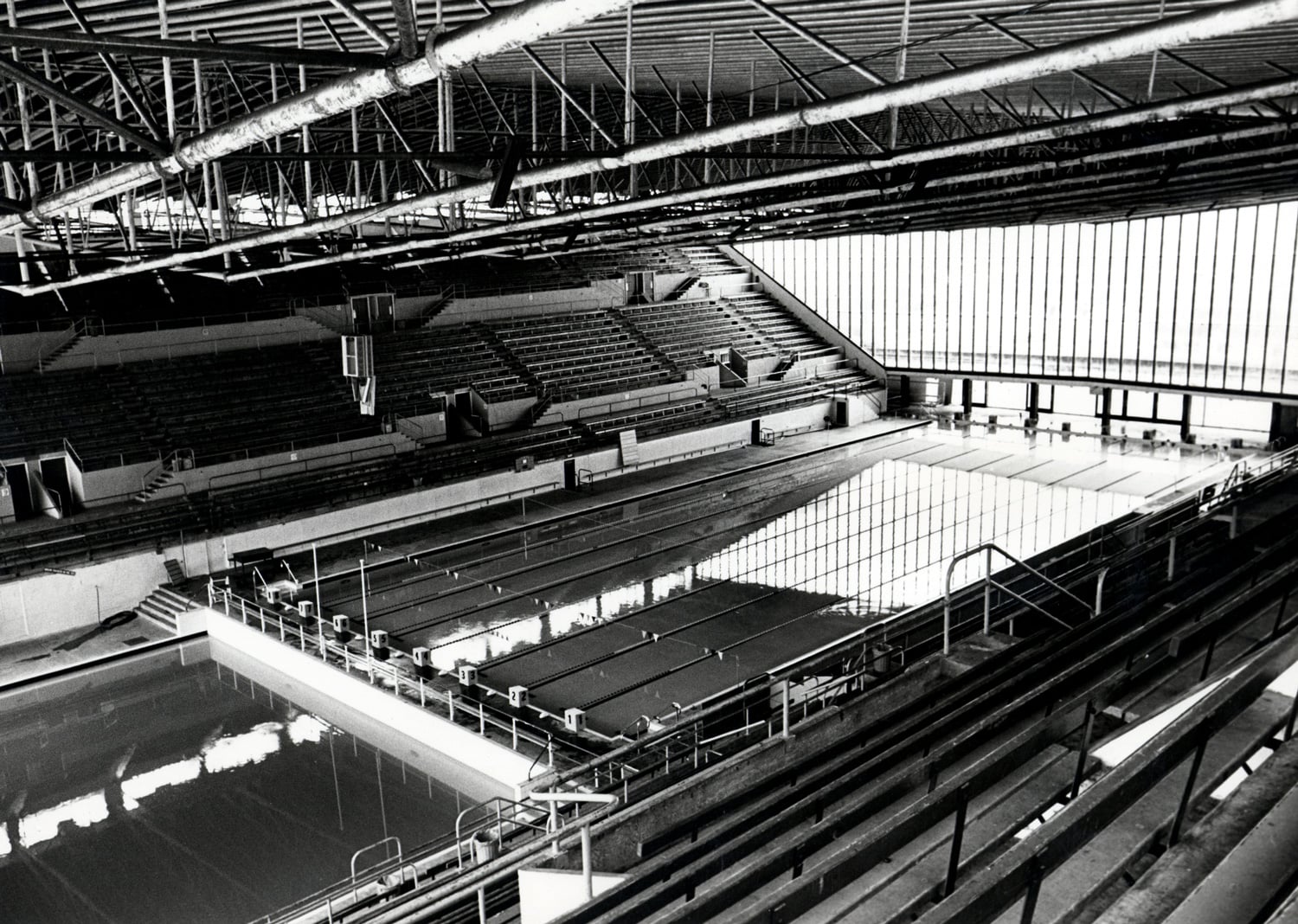
Post-tensioned rods are typically used in pre-hardened concrete structures to relieve tension and stress on the structure. By using steel, not only is it significantly stronger and resilient due to the quality of the material, but it also allows for minimal material use and waste. Spring anchorage systems were also attached to the tie downs to account for unbalanced loads across the stadium in an act of clever pre-planning. Lattice girders also supported the side and the seating of the structure.
Designing a structure that required less materials, was done to reflect the cultural and historical significance of 1956, the post-war period, where there was a material shortage, but labour was abundant.
The specific use of post-tensioning ensures the building’s structural integrity and endurance through periodic adjustments and tightening of the rods. The AIA Centre is still to this day, considered the only post-tensioned steel structure in Victoria.
In order to work towards a circular built environment and transition to a low carbon future, WSP’s technical experts provides insights on the key role of steel for a sustainable future.
The original project was won in competition by a consortium comprising architects Peter Mcintyre, Kevin Borland and John and Phyllis Murphy with engineer Bill Irwin who founded his practice at that time. The practice became a part of WSP in 2019.
Also, in 2021 - it won the 2021 Victorian Architecture Award – in the category of Enduring Architecture.