Engineering Resilience at High Speed
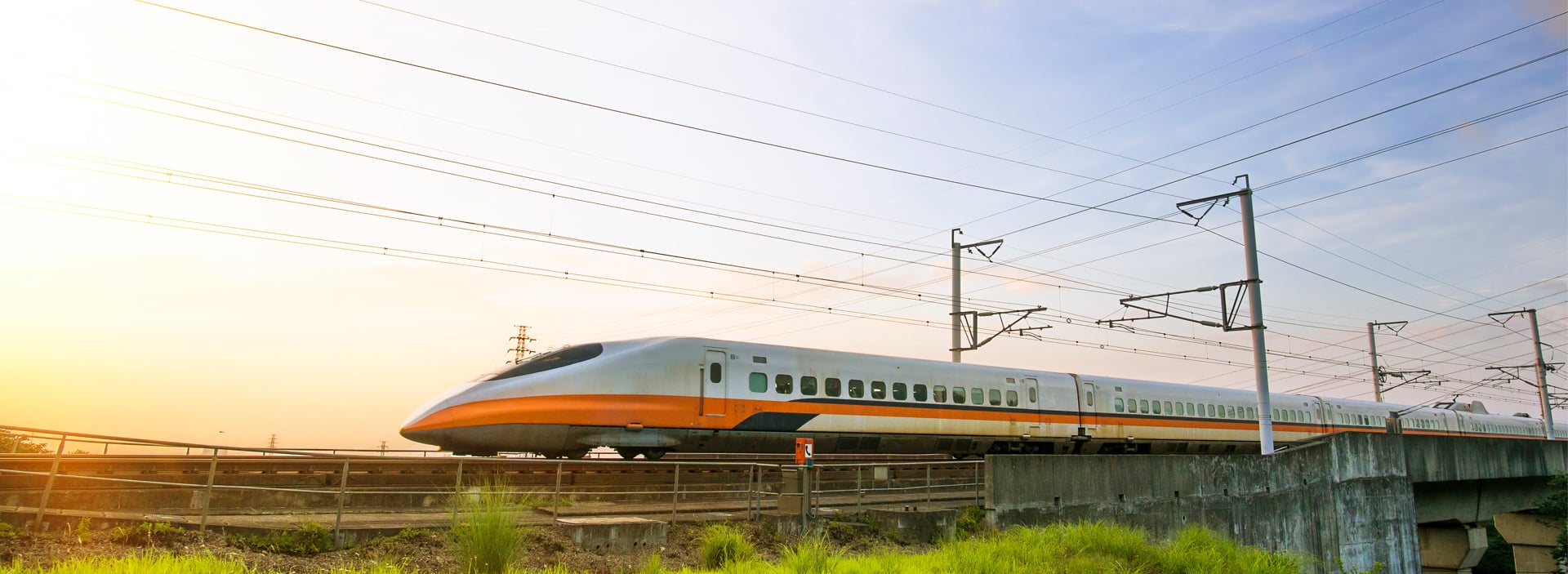
Taiwan’s high-speed railway is a 350km north-south line running along the west coast of the country.
Opened in January 2007, it reduced journey times between the country’s two main economic centres—Taipei and Kaohsiung—from around four hours to just over 100 minutes, with some services also calling at intermediate stations. It was also notable as the first international application of Japanese Shinkansen technology, with trains capable of reaching speeds of 300 km/h (186 mph).
Much of the route is constructed on viaducts or through tunnels, crossing terrain prone to summer typhoons and frequent earthquakes. Despite these challenges, the railway maintains a perfect safety record, supported by a sophisticated safety system that reduces speeds or halts trains during significant seismic events.
The railway was constructed, and is operated, by the Taiwan High Speed Rail Corporation (THSRC), who first appointed our assessors in 2001 to perform independent assessments throughout the system's construction, helping to ensure system functionality, quality, maintainability and safety met requirements.
In 2012, we were chosen to perform similar services for a four-kilometre extension of the route to Taipei City’s Nangang District, plus the construction of three new stations along the original route in the counties of Miaoli, Changhua and Yunlin.