In the race to build the digital backbone of the global economy, data centers have proliferated at an unprecedented pace. Massive campuses are now rising in regions once considered too remote or infrastructure-poor for high-tech development. While much attention has been paid to securing utility power and fiber connectivity, long considered the two cornerstones of site selection, another infrastructure factor has quietly become a critical bottleneck: water.
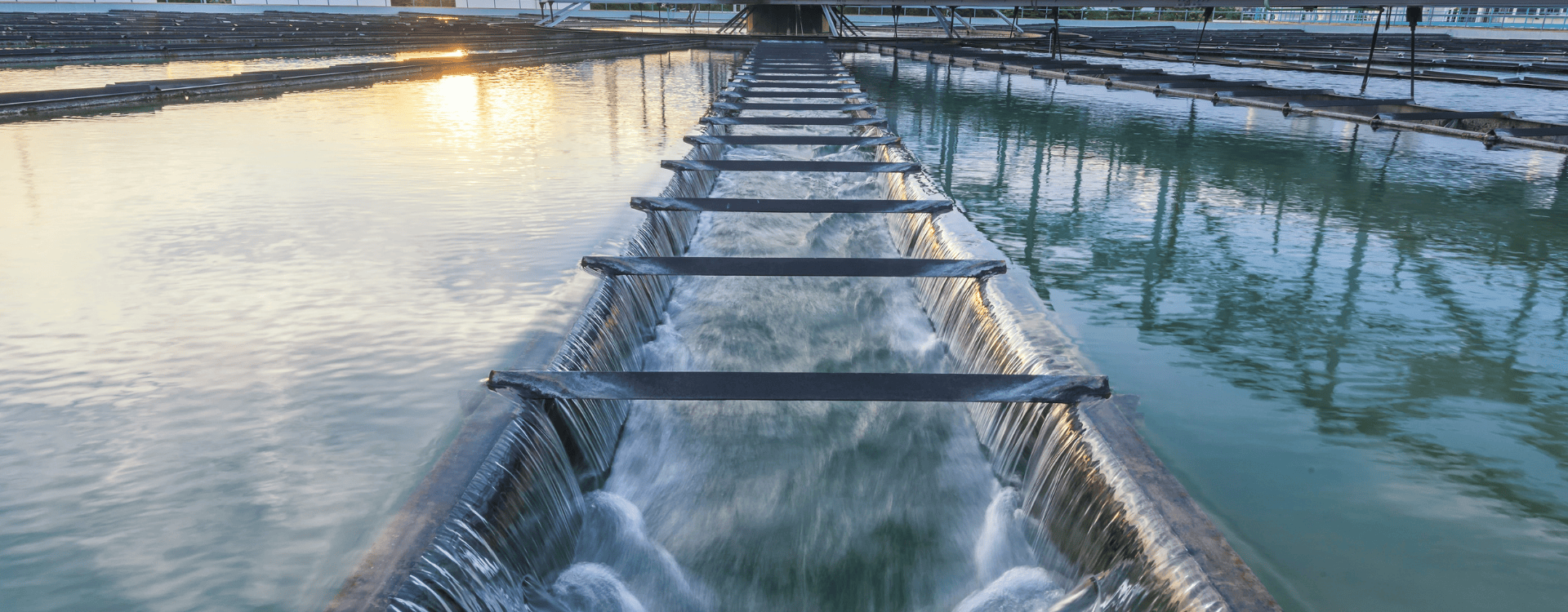
Unlike power and fiber, water usage at a data center isn’t fixed, it depends heavily on the type of cooling system employed. And yet, that very dependency means water availability, treatment, and disposal can quickly become deal-breakers for otherwise promising sites. For developers, planners, and municipalities alike, understanding the full lifecycle of water use, from sourcing to discharge, is now essential for resilient, efficient data center design.
Cooling Strategies and the Role of Water
Cooling is the largest non-IT energy consumer in most data centers, and heat rejection is critical to both uptime and equipment reliability. Operators generally have two main approaches, each defined by a trade-off between water and electricity use.
Air-cooled chillers do not require on-site water but consume significantly more power, sometimes as much as twenty percent more than water-based systems. By contrast, water-cooled chillers and direct evaporative systems use much less electricity but rely heavily on water. Because water is typically an order of magnitude cheaper than electricity, many facilities favor water-based cooling when supply is available, particularly at large campuses with high compute density.
Even when a site chooses air-based systems, water still plays an indirect role. Most electricity generation, especially from fossil fuel and nuclear power plants, depends on water for cooling. Whether used directly at the site or indirectly through the grid, water remains an integral part of every data center’s cooling strategy.
Site Selection and Water Realities
As data centers are increasingly developed outside major urban areas, site selection often runs into infrastructure limitations. Remote locations provide lower land costs and more space for large campuses, but they frequently lack the municipal capacity needed to support such facilities. Water supply is a particularly common challenge.
At some sites, engineers find undersized mains, low pressure, or insufficient flow that limit both operations and fire protection capacity. In many cases, new data centers must install dedicated fire water storage because the local system cannot deliver enough volume during an emergency. When the design also relies on water-intensive cooling, the gap between demand and available infrastructure becomes much greater. In some situations, entire new transmission mains measuring eighteen or even twenty-four inches in diameter must be constructed to meet projected water needs. Projects of this scale bring significant costs, additional permitting requirements, and long-term coordination with municipalities.