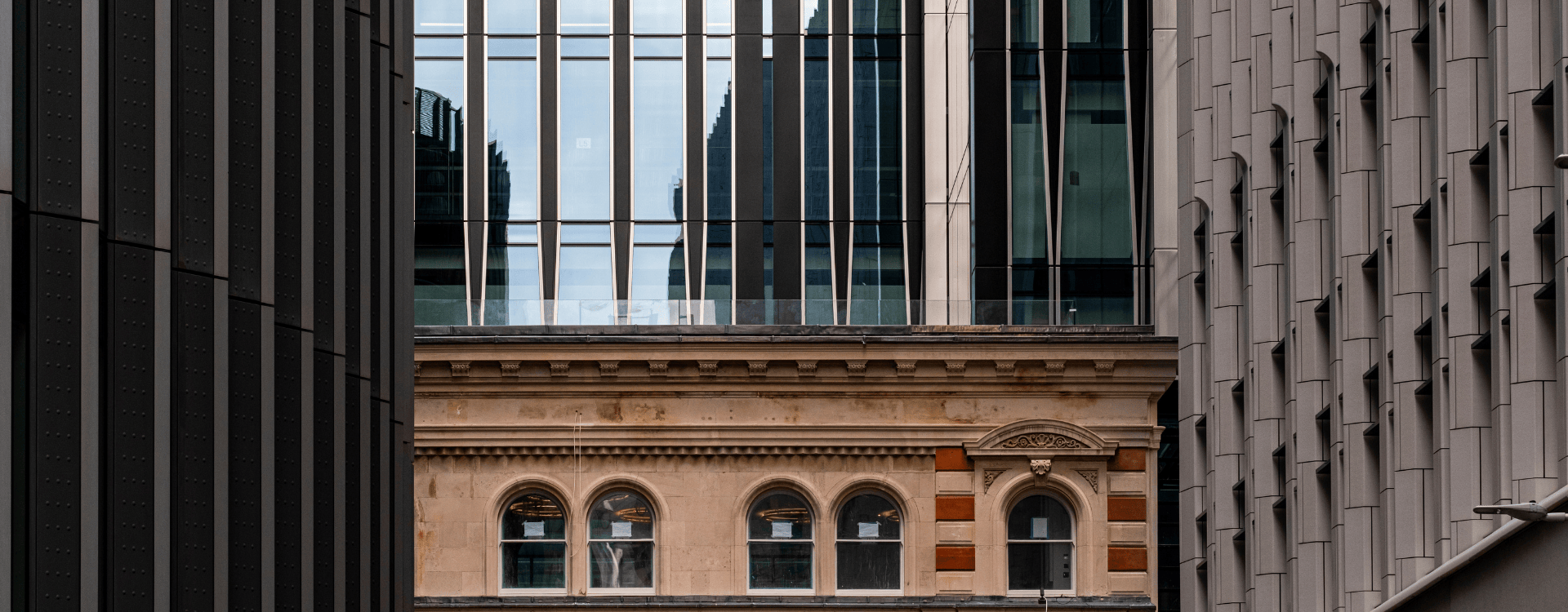
We’re starting to move away from the perception that “new” equals “premium” and see the value in existing buildings and their place in a circular economy. Even an obsolete structure can have useful components – if it’s demolished carefully, the materials from that “donor” building could be reused in a “recipient” somewhere else. If a client has a campus, an estate or a portfolio, that isn’t too difficult to do.
Today’s retrofits can teach us about circular economy design
Right now, we’re in the challenging position of needing to upgrade a massive proportion of our building stock if we’re going to meet net zero. We need to learn from today’s retrofits, designing new net-zero buildings to make it much more straightforward to convert them to other uses in the future – for example, with higher ceilings or spare capacity in the MEP layout.
We also need to design in climate change adaptability, so that our buildings will still be fit for purpose in a warmer world with more extreme weather events. A building might not require mechanical cooling today, but it might do in 20 years to remain comfortable. There’s always a balance, not only between operational and embodied carbon, but between embodied carbon and future flexibility. Some decisions might add upfront carbon today, to achieve the goal of much greater reductions down the line.
Retrofitting is not the end of the story
We need to apply circular economy principles to retrofit projects in exactly the same way. We need to think harder about how they are put together, and use standard sizes for components so that they can be easily dismantled and reused. It might be as simple as fixing mechanical equipment with screws and bolts rather than adhesive, so that it’s not so destructive or wasteful to take it apart. We don’t need simply to retrofit our existing buildings – we need to do so in a way that makes it easy to do the same thing again and again and again.