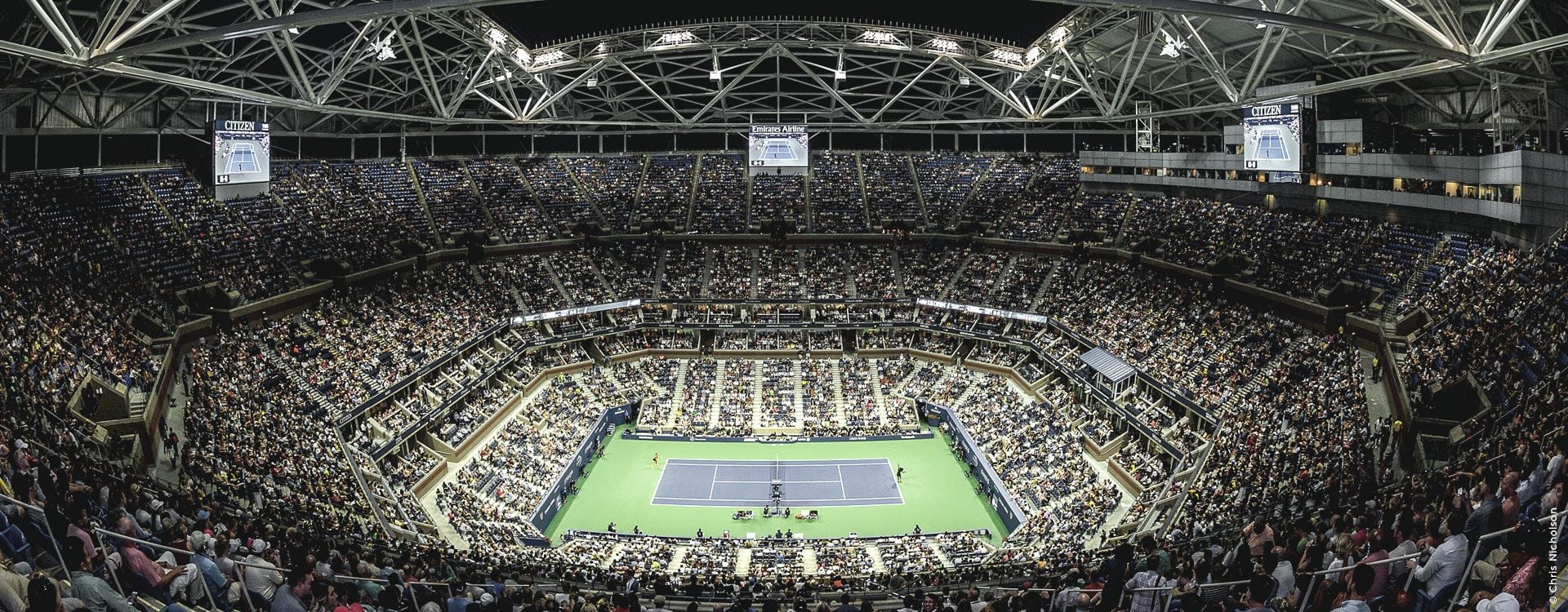
The challenge is to upgrade the experience, without losing what makes them special. That often means broadening the amenities they offer, and adding more seats or premium tiers to recoup the investment. WSP director Nello Petrioli finds clients are often under the impression that stadium reinvention isn’t possible, or that there are constraints in crucial areas.
“There’s a tremendous amount of resilience in structures designed 30 or 40 years ago,” he says. “It’s important to get under the skin of the building, to understand its limitations but also the opportunities. With digital analysis, we can identify opportunities to better use the available space, even if the original brief didn’t allow for expansion.”
Even when there’s no structural capacity to spare, innovative construction methods can come to the rescue. “With a kit-of-parts approach, we can add a lightweight exoskeleton that plugs into the building and feeds in new technology,” says Alastair MacGregor, senior vice president of Property and Buildings at WSP in the US. “If you’re struggling with vertical distribution, you could add an external structural component to expand that capability. That could completely transform how the building functions, while retaining much of its steel and concrete.”