Extreme weather conditions — like hurricanes, tropical storms, flash flooding, damaging winds, tornadoes, ice or snow — are a top concern anywhere — but especially in the southeast, which can face all these hazards in any given year.
So, when harsh weather approaches, it can be reassuring to know that there is someone prepared for the conditions and has plans in place to minimize the impact.
One of those people is Emily Fish, assistant state maintenance engineer – emergency operations for the Georgia Department of Transportation (GDOT). Understanding the potential hazards and preparing for disruptive weather anomalies is a daily part of her professional life.
“Weather is a big year-round concern in Georgia and the threats vary widely,” Fish said. “We have flooding and flash flooding on a regular basis, tornadoes, severe thunderstorms, plus the possibility of tropical storms and hurricanes from the Atlantic Ocean, the Caribbean and the Gulf of Mexico—all of which can leave damage and debris on our roads and highways.”
To accurately monitor and project weather conditions to stay ahead of the threat, GDOT relies upon essential meteorological services from WSP’s weather forecast team, which includes more than 20 meteorologists on-call 24/7, 365 days a year.
“We provide our clients a niche service that is highly customized to each of their individual needs," said Diar Hassan, PhD, senior scientist at WSP. “In the transportation sector, for example, our clients not only need to know atmospheric conditions – such as precipitation types, amounts, or air temperature – they also need to know pavement temperatures and conditions in real-time and forecasted modes.”
He added that WSP’s sophisticated system can provide treatment recommendations for a couple of days ahead.
“The system advises when to plow, salt, what type of chemical to use, how much chemical to use and the recurrence of treatments while fully adhering to the road authority treatment matrix and chemicals,” Hassan said.

WSP’s sophisticated forecasting system can provide actionable treatment recommendations a couple of days ahead of an approaching storm.
At the Heart of Southeast Transportation
Georgia is not only home to Atlanta’s Hartsfield-Jackson International Airport — the world’s busiest airport — but it’s also the junction for seven primary interstate highways and eight auxiliary interstates, totaling about 50,000 miles of public roads, bridges and interchanges managed by GDOT.
While few hurricanes hit Georgia directly, because of its shorter Atlantic coastline, the state ranks seventh in the U.S. for impacts, which includes hurricanes David in 1979, Floyd in 1999 and Katrina in 2005.
This year, Hurricane Idalia entered South Georgia from Florida’s west coast as a Category 3 storm, causing flash flooding, downed trees and power outages that impacted tens of thousands of people. Georgia also played a key role in hurricane evacuations from neighboring states.
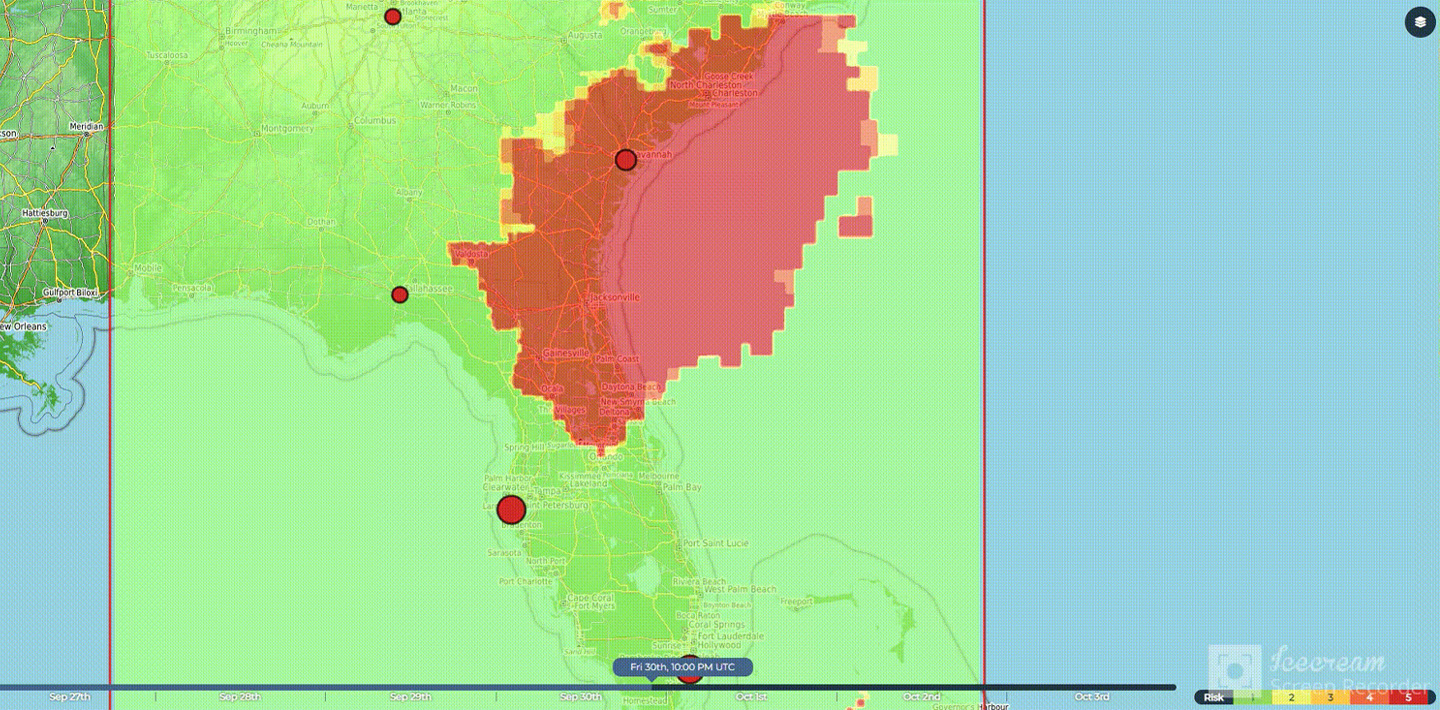
WSP weather model from September 2022 showing the potential flooding impact of Hurricane Ian as it moved up the Atlantic coast from Florida to Georgia and South Carolina.
Lessons of ‘Snowmageddon’
Georgia sits on the cusp of having an actual winter and having no winter at all.
“It’s a huge challenge, especially in the Greater Atlanta Metropolitan Area, which covers nearly 8,400 square miles and is home to most of the state’s 10.7 million residents,” Fish said. Since public transportation is limited, incidents that impact an interstate will negatively impact commuters for hours … or more.
That’s exactly what happened on Jan. 28, 2014 with a storm that became known locally as “Snowmageddon.”
Rapidly deteriorating weather conditions, especially on Atlanta’s downtown connector (I-75/I-85), quickly led to chaos, turning interstates into parking lots and municipal roads into ice rinks. Not only were there hundreds of accidents and abandoned cars and trucks, many people were forced to spend the night in their vehicles.
“I was driving on I-285 early that day and it was lightly snowing and raining,” recalled Dale Brantley, senior transportation manager at WSP. “The temperature was just above 32 degrees. A few hours later, it was in the low 20s and never got any warmer, so we had massive amounts of ice everywhere.”
What happened that day wasn’t an isolated incident.
A similar winter weather event occurred in January 2011, when a snowstorm hit on a Sunday trapping residents at home and tractor-trailers on highways until the ice finally melted a few days later.
“Not only am I the original person who dealt with both storm events in Atlanta when I was working at GDOT, I created the programs the state implemented afterwards to ensure it never happens again,” Brantley added.
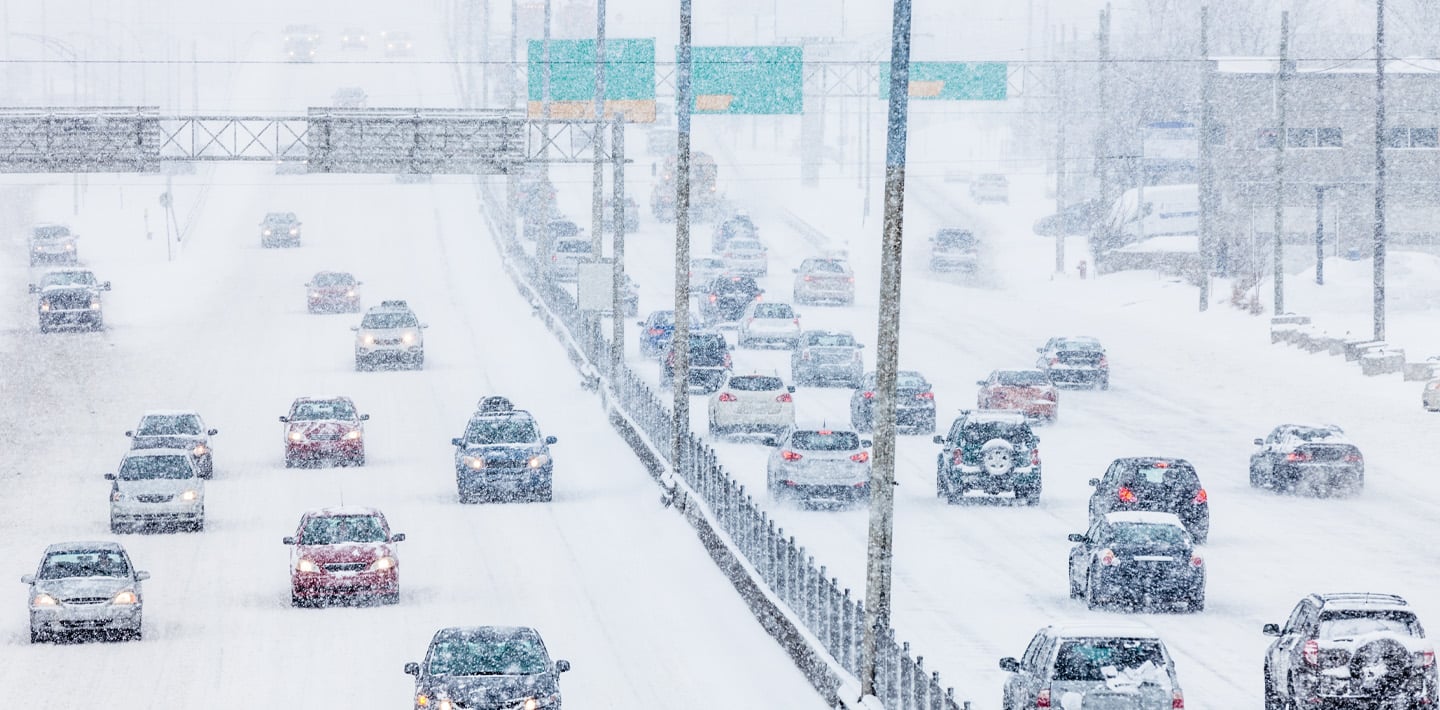
Rapidly deteriorating weather conditions can quickly turn interstates into parking lots and municipal roads into ice rinks.
WSP Meteorologists On-Call
Georgia, today, is proactive rather than reactive, and a model for states across the southeast. Not only does GDOT have the staff and equipment to pretreat thousands of lane miles, but it also doubled its brining and salt storage capacities. Cameras are even being added to salt storge locations to monitor supplies.
“They try to pre-treat everything,” Brantley said, “because once it turns to ice, you can’t do anything with it. States in the south simply don’t have all the winter resources like those up north, so we must prevent it from ever becoming ice.”
Another key change was to make highway weather stations and temperature monitors — like temperature sensors known as “pucks” that are embedded into the pavement — a priority. These devices are now regarded as an essential frontline budgeted necessity in the state, just like traffic lights and overhead message boards for interstate highways.
Currently, at least 59 Road Weather Information Systems (RWIS) are installed in strategic locations across Georgia, with numerous others located throughout Metro Atlanta.
These RWIS sites measure a suite of atmospheric and pavement parameters. WSP communicates with these units, displays real-time data, archives the data and incorporates the data into the models to provide GDOT with the firm’s niche service. WSP also monitors these units daily and reports any malfunctions.
GDOT is one of several WSP clients in critical sectors and industries that the firm’s meteorological experts serve, like DOTs, energy companies, insurance companies and other entities that have zero tolerance for downtime and rely on accurate weather forecasting.
In addition to a customized forecast engine that ingests several terabytes of weather data every day, WSP also has access to clients’ network of sensors and private observations, too.
Clients can access WSP’s digital environment services through a secured web portal or mobile app. Furthermore, the information can be delineated through computer applications, emails and customized text alert messages.
“Our professional meteorologists are a phone call away from our clients and can be reached via a toll-free number or a direct chat application,” Hassan said.
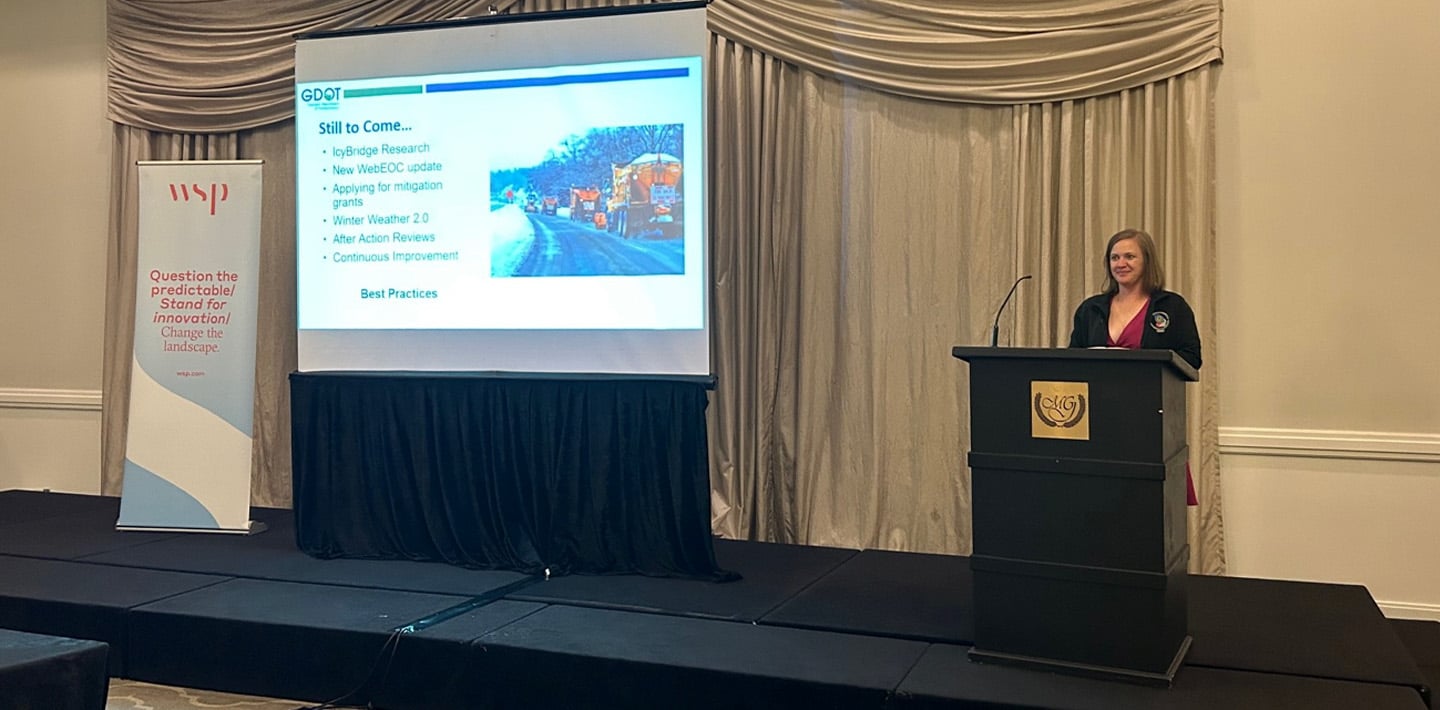
Georgia Department of Transportation’s Emily Fish, speaking at WSP’s Transportation and Weather Conference about her agency’s collaboration with WSP.
Pinpointed Forecasts
WSP’s experience and the ease of the platform is what sold GDOT on contracting the firm’s services.
“Just the knowledge that comes with our ability to access the WSP meteorologists and people like Dale, who has firsthand experience of what we need, has been a real advantage,” Fish said. “They have a hands-on, around-the-clock approach to their clients that is not only responsive but proactive, too. The platform is incredibly user-friendly. We use it all the time.”
GDOT has called a meteorologist for pinpointed forecasts. They can also use this service on a wider agency conference call.
The improvements GDOT and the state have made since 2014 are measurable, but the work is never done.
“It’s a joint effort to keep Georgia safe and informed in all types of weather, and especially in the winter,” Fish said.
For another key client, WSP processed more than 50 million lightning strikes and sent 18,000-plus text message alerts to their field crews, warning of lightning in the area.
“Many of our clients have non-stop operations and we provide the support they need, no matter when they need it,’” Hassan said. “Few companies provide the same level of service and commitment as WSP.”
[To subscribe to Insights, contact the editorial staff at [email protected].]
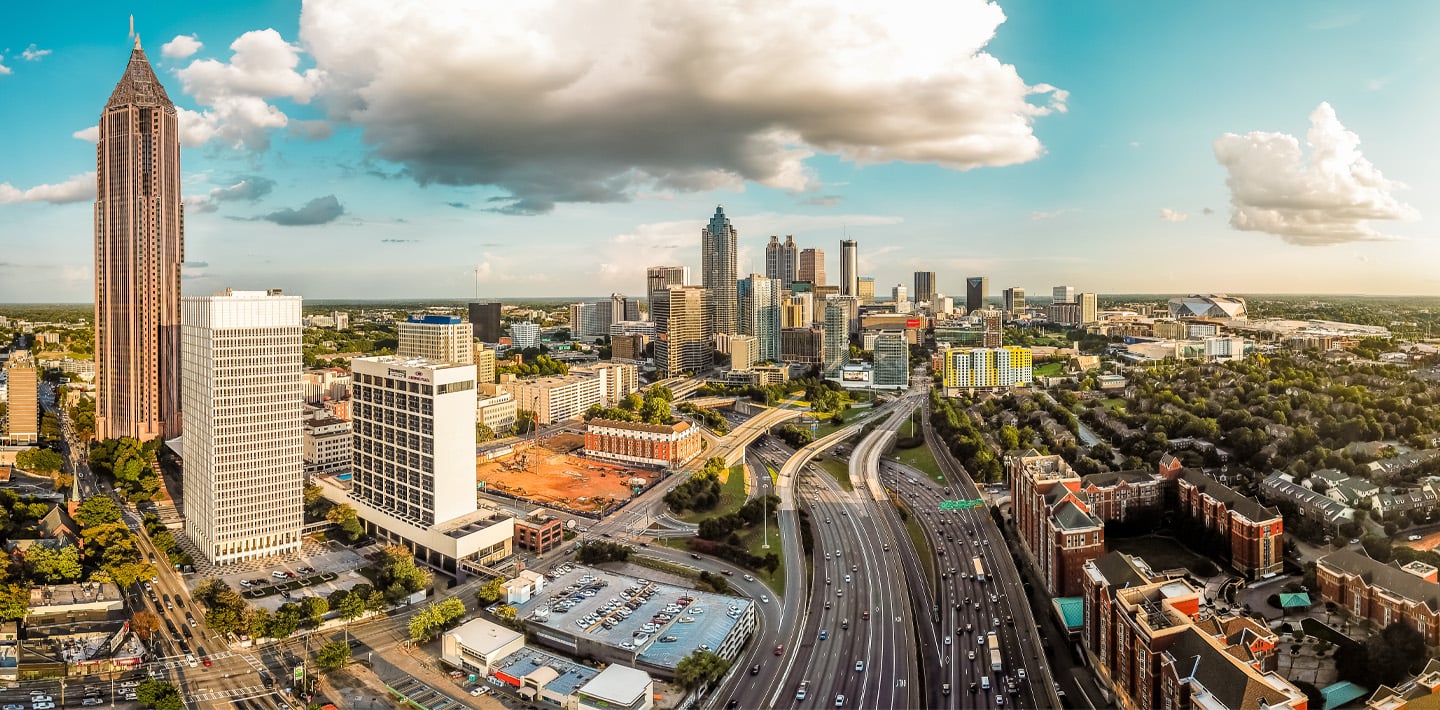
The Georgia Department of Transportation manages about 50,000 miles of roads, bridges and interchanges, working to keep motorists safe in all weather conditions.