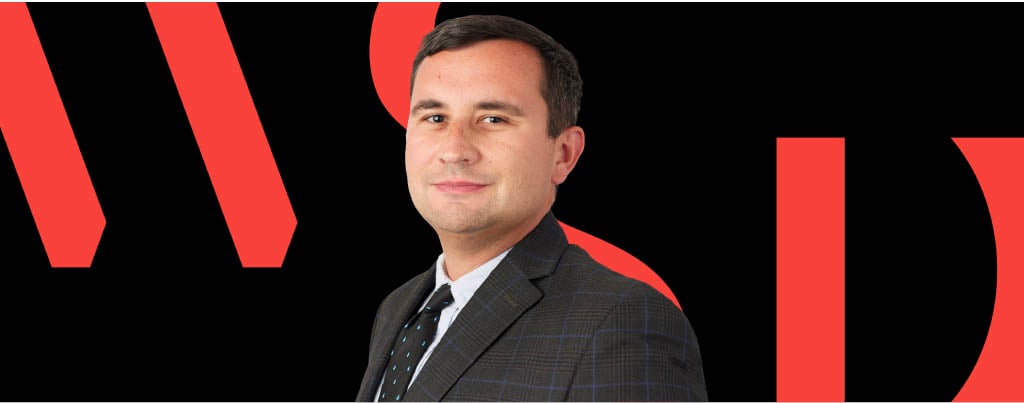
In this interview, Bruno discusses how his teams help develop and implement sustainability strategies, and the challenges they face in the field of climate challenge.
Describe your role with WSP.
As a project director for WSP’s SECC practice, I lead teams that work with corporate clients on a variety of strategic sustainability initiatives, such as emissions management, supply chain sustainability and the evaluation of ecosystem service projects around client operations.
I also support internal initiatives to enhance our professional development opportunities and increase our team’s overall wellness.
What motivates you to succeed in this role?
I first found my passion for environmental studies during a forestry lesson back in middle school, but I never truly acted on that passion until college, where I gained my educational background in environmental management. I have always enjoyed working on science policy and helping decision-makers make their choices based on sound science and data.
But while the subject matter and field of sustainability are both interesting and challenging, what keeps me motivated is the passion, perseverance and comradery that I share with my teammates and clients as we strive to help address – and maybe one day solve – the climate crisis.
Describe your team’s work and any specific projects that your team has been working on.
Most of our work is based around developing and implementing sustainability strategies that support corporate sustainability goals and programs. This gives our clients the foundation to make the business case for sustainability within their organizations and allows both our team and our clients to make greater sustainability impacts.
One of our main goals is to weave sustainability into the everyday fabric of a company’s operation. There’s a swath of trends and practices in the highly interdisciplinary field of sustainability, and while adapting the best practices into a playbook-style format may not seem particularly innovative, it’s still incredibly useful in defining a framework that companies can implement as part of their daily, monthly and annual business operations.
I was recently fortunate to be part of a 15-plus person team that supported a Fortune 50 tech company that is on the leading edge of supply chain sustainability – especially in using supplier data to understand the environmental impact of these suppliers, then educating them on how to reduce their impact.
This work has likely never been done at this level of detail before, and it’s invigorating to support our clients in wrangling and addressing the various sustainability challenges of these supply chains.
What is one the biggest challenges that your team has faced, and how did you overcome this challenge?
One of the biggest challenges in our field and in working with our clients is the uncertainty that comes with addressing issues like climate change, and that’s because of how it spans well into the future. Companies often think one-to-three years ahead, but not 10-to-30 years, so making the business case and implementing behavioral changes to address these long-term climate issues can be complicated.
We help our clients work through these challenges by grounding our solutions in sound science, by tying them to business implications and by educating and engaging internal client stakeholders. This creates a common language for developing and implementing a sustainability strategy.
How does your work benefit your clients and/or their communities?
Environmental and social impacts are often connected, so understanding and addressing community challenges and perspectives is an important aspect to all sustainability work. We have some SECC colleagues who are knee-deep in developing strategies to support equity and environmental justice considerations, particularly in the renewable energy space. We endeavor to take a holistic and equitable perspective in all our projects, particularly those that may impact communities around our client’s operations.
Has your team received any awards or recognition for this work?
I have been a part of teams that have won WSP sustainability innovation or leadership awards, but one award that I’m particularly proud was for the corporate social responsibility work that Katie Eisenbrown, Heather Unger and I conducted for the U.S. Postal Service in 2019/2020. We wrote and designed their 2018 Sustainability Report and it won a well-renowned internal award.
Then there was the icing on the cake: a hand-written thank-you note from our client.
[To subscribe to Insights, contact the editorial staff at [email protected].]