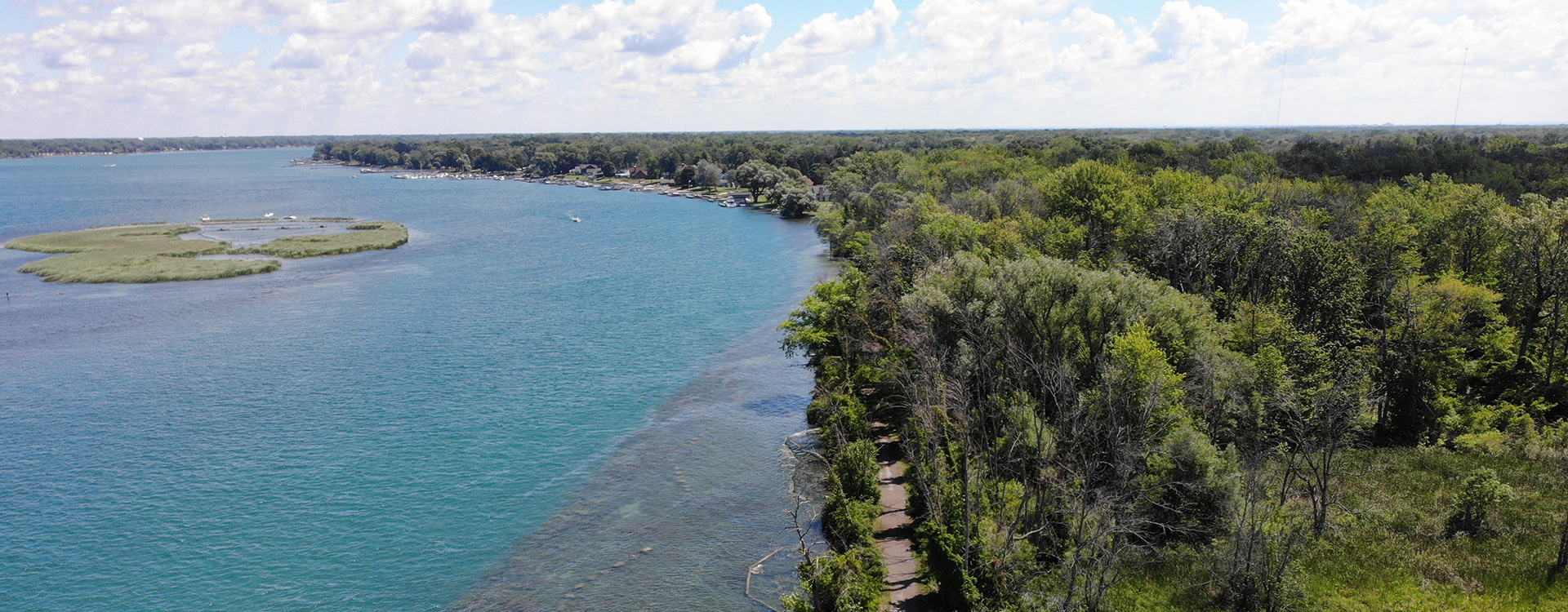
The Buckhorn Island Shoreline (BIS) and Grass Island (GI) are located within Buckhorn Island State Park on the northwestern tip of Grand Island, adjacent to the Niagara River. The Buckhorn Island Shoreline consists of approximately 9,000 feet of shoreline in various stages of degradation along the north edge of the park, while the Grass Island area consisted of a marsh like area offshore from the Park’s land area and within the river itself.
This natural marsh island — a unique ecosystem within the Niagara River that provides an isolated habitat for native birds and fish — had been identified as a priority component of the forthcoming Niagara River AOC Habitat Restoration Plan. The project was designed to contributed progress toward two of the delisting criteria for the Loss of Fish and Wildlife Habitat Beneficial Use Impairment. It addressed these criteria by restoring lost coastal wetland habitat, restoring degraded and severely eroded shorelines, and enhancing aquatic habitat in shoreline and nearshore transition areas.
The preliminary conceptual restoration design — created through the Great Lakes Fisheries & Ecosystem Restoration (GLFER) process — involved concepts to improve the health of the aquatic ecosystem by expanding in-river shallow habitat for fish and other aquatic species. Design modifications requested by the Niagara River Area of Concern (AOC) Remedial Action Committee (RAC) explored additional concepts and features to expand coastal wetland habitat along the shoreline that integrated additional data and engineering analyses to support the final design and siting of habitat restoration features.
 WSP was contracted by the New York State Office of Parks, Recreation and Historic Preservation (NYSOPRHP) to provide 100-percent design, regulatory permitting, and support during the bidding process and through construction of the project.
Design and implementation of the habitat restoration project serves the dual function of shoreline protection from wind and boat generated wave damage and provides suitable habitat structure along the Buckhorn Island shoreline. The project will protect the existing unique and environmentally sensitive in-river Grass Island; expand the existing footprint over time and provide additional suitable habitat structure within the Niagara River ecosystem; and prevent degradation and loss to provide long-term resilience to climate change.
WSP worked collaboratively with NYSOPRHP to provide an innovative design that installs hard features in water to break up wave energy and protect the shoreline from erosional forces, while minimizing the need for large structures in water, as have been used elsewhere within the rivers system.

For the Buckhorn Island Shoreline area portion of the design, these features consisted of the installation of alternating rock sills and cabled logs along the shallow shoreline waters, combined with additional cabled logs along the toe of slope in highly eroded areas. Combined with additional native plantings, these features are meant to both restore and protect the shoreline.
The project achieved its multi-beneficial objectives by successfully restoring and protecting a unique in-river marsh Island and 9,000 feet of river shoreline; enhancing fish and wildlife habitat, while protecting a recreational boating area; reforesting parkland through tree planting to replace ash trees lost to insect infestation, and in turn reusing those dead trees in the design instead of harvesting live trees; and restoring native plantings to the area both on the shoreline and in water.