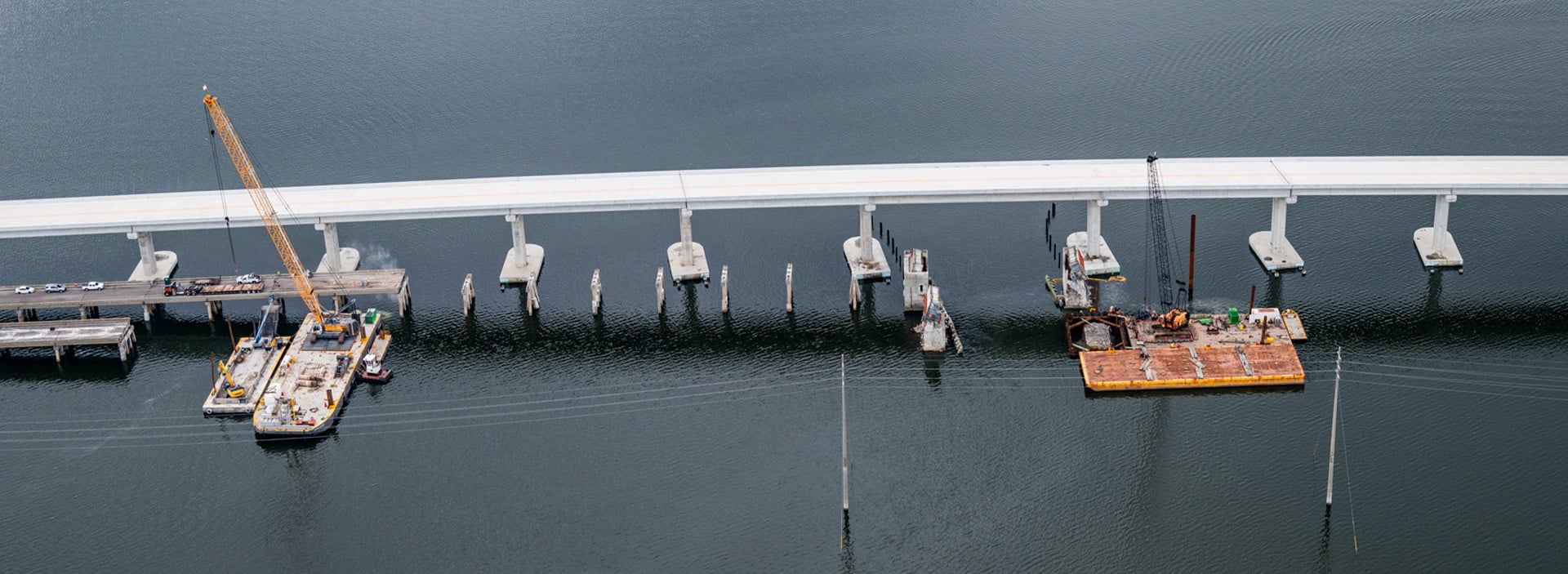
With new and larger equipment needed for space exploration and the many launches each day from the Cape Canaveral Space Force Station, the 1964 twin drawbridges could no longer be relied upon to carry the amount of traffic and oversized loads of materials required for today’s spacecraft.
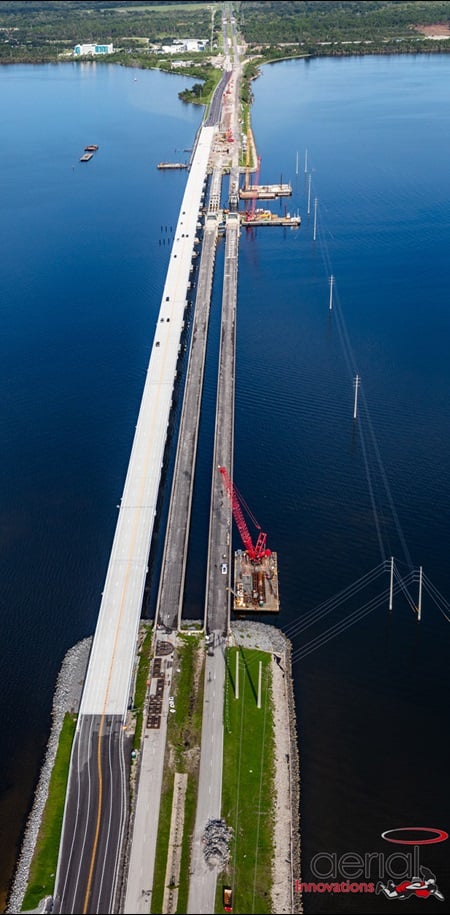
Completed 125 days ahead of schedule the first of the two replacement bridges opened in June 2023. Phase two construction of the second bridge is currently underway. Designed and built to higher standards to enable heavy cargo to be transported across them, the new spans will reach 65-feet above the Indian River Lagoon. The structures are a relatively flat three-degree incline compared to five percent or more for normal bridges. This helps ease the transport of heavy rocket loads.
 Unique Challenges When Reaching for the Stars
Working to be the premier launch site for the globe, the project came with very atypical challenges, including building space launches into the project schedule. The work schedule had to allow for constant interruptions from rocket launches. Work stoppages took place for every launch as a safety measure. No digging was allowed during rocket launches which were frequently delayed and rescheduled, increasing the frequency of work stoppages.
Key to the project schedule was also the use of the existing movable bridges, one for constant traffic and access and the other for construction staging. However, even more detailed coordination we needed as the old bridges were so deficient that only one concrete truck at a time was allowed on them during pours, and those trucks had to travel at walking speed.
Weather or Not
Construction on the Florida coast also presents the unique challenge of putting in place a hurricane plan in addition to regular safety and quality plans. Being prepared was imperative and storm stoppages were also built into the schedule. Two hurricanes impacted the site during construction of the first bridge but with plans in place construction continued on schedule.
Another concern was the installation of a new generator for the existing drawbridges. Also scheduled around the weather, this required three weeks without digging to relocate the generator and electric conduit used as a backup to power the drawbridges during power outages.
In addition to accessibility, the construction of the new bridge supports area growth goals and the state’s aerospace industry. Taller, wider and safer the bridge accommodates heavier spacecraft equipment and payloads and increases connectivity for motorists on top and boating and marine traffic below.
This two-phase bridge replacement project for the NASA Causeway is a partnership of NASA, Florida Department of Transportation and Space Florida.