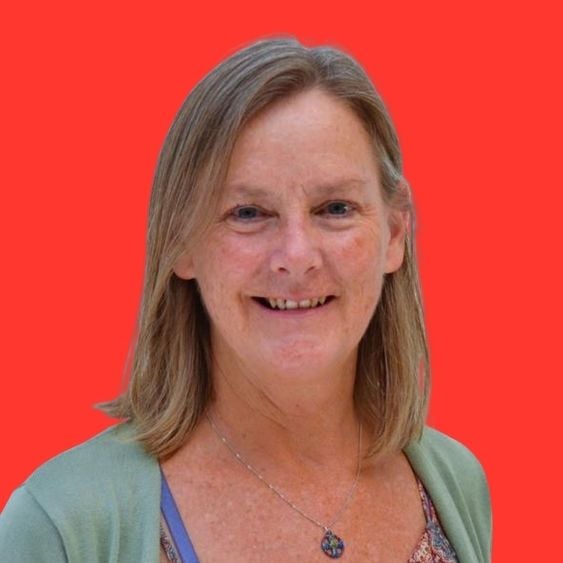
Her current work spans catchment assessments, water quality management plans, surface water impact assessments, and Resource Quality Objectives for major river systems. For Boyd, South Africa’s water challenge is not only scarcity. It is the need to understand how local activities, upstream impacts, monitoring data, and shared catchment responsibilities affect communities, industries, and ecosystems.
What shaped your focus on water resources?
My work has always been linked to water and wastewater. Before moving into consulting, I worked at the Department of Water and Sanitation and, before that, in the environmental section at the City of Johannesburg. That background gives me a practical view of how water is managed from different sides. I have seen the policy, municipal, and consulting environments, and they all show how closely water quality, land use, infrastructure, and governance are connected.
How do catchment assessments, water quality management plans, and surface water impact assessments connect?
They may be prepared for different purposes, but they cannot be treated as separate. A surface water impact assessment for a mine, industrial facility, agricultural operation, or development requires an understanding of the wider catchment. The vision for the catchment should shape the recommendations made at site level. Water management plans also need to respond to what is happening around the site, not only on it. That is how clients support water stewardship beyond their own operations.
What has your recent work in Resource Quality Objectives for a local river system reinforced for you?
It has reinforced the interconnectedness of South Africa’s catchments. Water transfers can link one province to another, and a drought in one area can affect farmers somewhere else. Return flows can change water chemistry before that same water is abstracted again downstream. Shared systems with neighbouring countries add further complexity. We also need to remember that water users are not only people, industry, and agriculture. Fish, macroinvertebrates, habitats, wetlands, and ecosystems are also affected by upstream sources.
What does South Africa’s monitoring data challenge tell us about water governance?
South Africa has a strong history of flow and water quality monitoring, and much of the data is still collected by government, mines, municipalities, agriculture, industry, and other water users. The problem is that too much of it is fragmented, inaccessible, in decline, or not consolidated into a useful form. If we do not monitor, we cannot know. We need verified data to understand trends, plan for droughts and floods, assess water quality risks, and respond more quickly when impacts occur.
What prevents better integration across water systems?
We have strong tools. The National Water Act and the National Water Resource Strategy provide South Africa with a solid foundation. The challenge is implementation, compliance, enforcement, capacity, and collaboration. There are dedicated people in the system, but they are not always supported by the resources or administrative processes needed to do the work effectively. Trust is also a barrier. Different users hold valuable data and experience but sharing that knowledge openly remains difficult in many catchments.
Where do you see opportunities to improve water resilience?
Better collaboration is one of the biggest opportunities. Government, industry, agriculture, communities, and technical specialists all hold part of the picture. We also need better access to catchment data, without treating it only as a commodity. Technology can help through virtual flow gauges, satellite monitoring, drones, sonar, and improved modelling. But the fundamentals are just as important. Better land-use practices, wetland protection, control of alien invasive plants, riverbank rehabilitation, and clearer rehabilitation objectives can all improve water resources. Resilience starts when we manage the whole system, not isolated pieces.