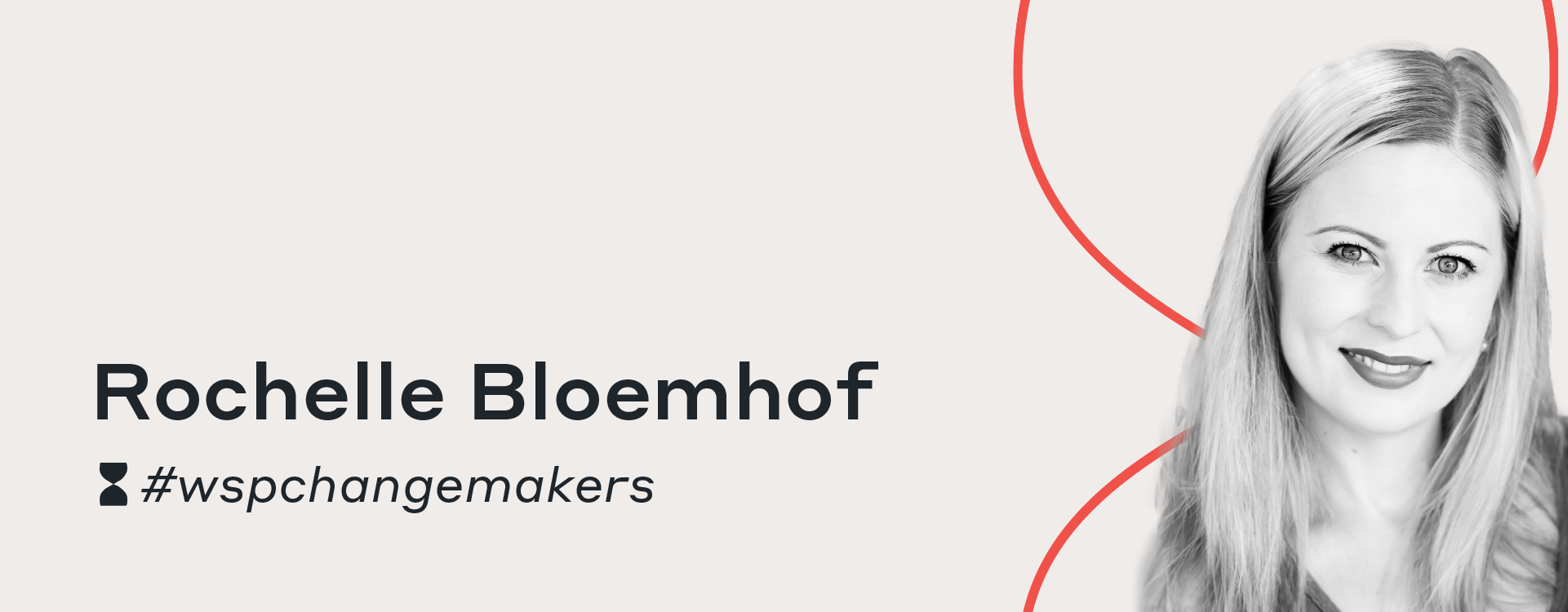
“With parents who both worked for the De Beers Group, I somehow always knew I wanted to wear my green overalls one day. However, I never expected that it would be in the mining industry,” she relates.
Nonetheless, after studying environmental management, a series of unexpected circumstances led Rochelle into the position she enjoys today, as a mine closure and costing consultant for WSP in Africa.
“The first time I heard the phrase mine closure, I was ready to get my green overall and hardhat on and literally go and lock the gates of the mine. I didn’t know at the time what mine closure entailed. There is no degree with a specialisation in mine closure; and it is such a niche milieu that it is either your passion or it isn't,” she continues.
''I was extremely fortunate to have mentors that shared the same passion and who are experts in the field, such as Andrew Brown, Johan Bothma, Dr Mark Aken, Dr Brent Baxter, who helped shaped my career mostly into what it is today,'' she adds.
While mine closure cannot be formally studied at university, it remains one of the most significant challenges facing mining companies, governments, and communities today.
Rochelle stresses that she firmly believes that through an integrated and holistic approach, successful mine closure can be done in a way that promotes social, economic, and environmental benefits post closure.
What makes accomplishing this even more complex is that there are no one-size fits all solution, as each mine is unique and experience its own challenges.
“I therefore thrive on delighting my clients by offering integrated technical, socially, and legally acceptable solutions to effective mine closure. It is rewarding to see that our recommendations are being considered and implemented, resulting in notable cost saving outcomes for our clients,” she continues.
Not only has mine closure become even more of a priority for companies, but the pressures placed upon mines from an environmental and socio-economic point of view due to climate change have increased as well. This has impacted the mine closure segment.
''I am fascinated with how the industry has developed over the past decade, prioritising sustainable mine closure by sharing the same vision and applying innovative and robust solutions to mine regeneration, aiming to leave a positive legacy behind,” she elaborates.
While mine closure is Rochelle's expertise, land regeneration is a subject she is equally passionate about and is what drives her day-to-day activities.
“I don’t like to use the word mine closure as “closure”, as to many stakeholders this can be a very sensitive matter. We need to transition from mine closure to land regeneration by establishing independent and self-sustaining next land use opportunities through regenerative solutions. This is not something that can left to the end. It is a continuous process throughout the operational life of the mine, together with your key stakeholders and affected communities,” she stresses.
Rochelle explains that regeneration can have both opportunities and risks associated with it. “Therefore, in my daily life, I try to drive change in the mine closure industry by promoting these opportunities for both the mines and the communities post closure. Seeing the collaboration, integration, partnerships and regional planning between mining companies, stakeholders and communities happening excites me the most,” she continues.
Rochelle's journey has also led her full circle through her active involvement in the Network of Industrially Contaminated Land in Africa (NICOLA) since 2017. Much of her spare time is spent as the secretary of NICOLA, a forum for contaminated land management in Africa, which aims to establish a solid platform for the development, application and dissemination of sustainable practices, knowledge, and technologies.
NICOLA further promotes cooperation between industry and mining, academia, regulators and service providers while linking closely with the fields of contaminant hydrogeology, geochemistry and waste management. This offers Rochelle yet another way to put her passion for land regeneration into action.
When she is not working, or doing her part to ensure a greener environment, she can be found either camping or at a braai with family and friends and enjoying a glass of good wine.