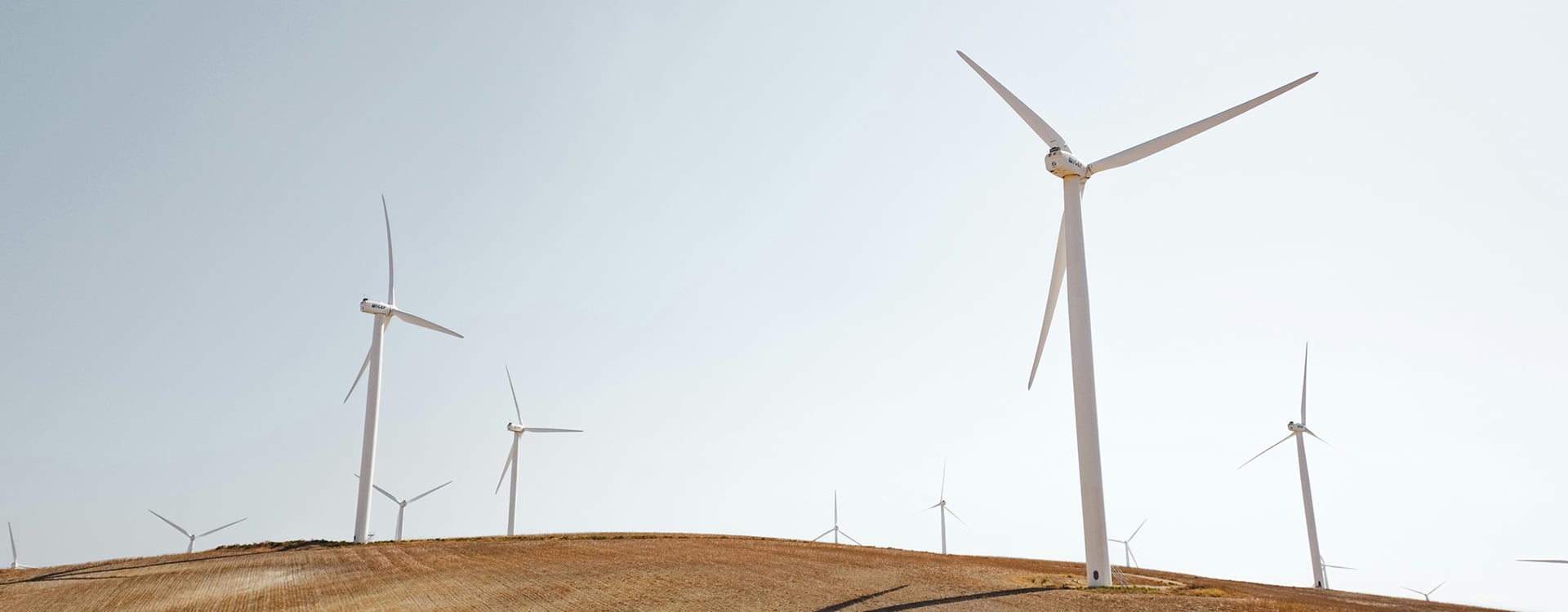
WSP in Africa’s Energy team was appointed by Seriti Green, a subsidiary of the mining giant Seriti, as their Owner’s Engineer to provide expert consulting services for the development of this project. Kelton Govender, Electrical Engineer for Energy at WSP in Africa, highlights the firm's role: “We were initially brought on board to assist with the development specifications for the new main transmission substation. Our involvement quickly expanded to overseeing the design and construction of the wind energy facility, which includes 25 turbines (155MW) in its first phase – sufficient to power about 165 000 households a year - with the potential to scale up to 750MW of wind generation.”
Govender explains, “This is a fast-paced project, driven by the private sector in collaboration with Eskom. We are building the main transmission substation for the complete 900MW, 750MW of wind and 150MW solar generation, aiming to complete the initial 155MW facility by July 2026. The fast-tracked timeline is significantly shorter than typical projects of this scale.”
Community engagement and economic development
A significant aspect of the Ummbila Emoyeni project is its focus on community engagement and economic development. Seriti Green is actively involving local communities, such as Bethal, Morgenzon and Davel, by guiding them on tender applications and collaborations with subcontractors. Seriti has also put in place an economic development team to ensure that local businesses benefit from the project, fostering job creation and skills transfer within the community.
“Seriti is committed to ensuring that this project brings tangible benefits to the local communities,” Govender states. “These efforts include upskilling local residents in maintenance roles, which is crucial for the project's long-term sustainability.”
Overcoming challenges
While the project has faced some challenges associated with large-scale construction, such as tight timelines and initial community resistance, WSP in Africa and Seriti Green have implemented extensive risk management strategies.
“These include extensive community outreach efforts to highlight the fact that the project is not to replace coal but to enable the mine to continue producing coal and supply Eskom with this resource. Of course, we have also had to mitigate risks from potential disruptions, such as those posed by local community unrest,” says Govender.