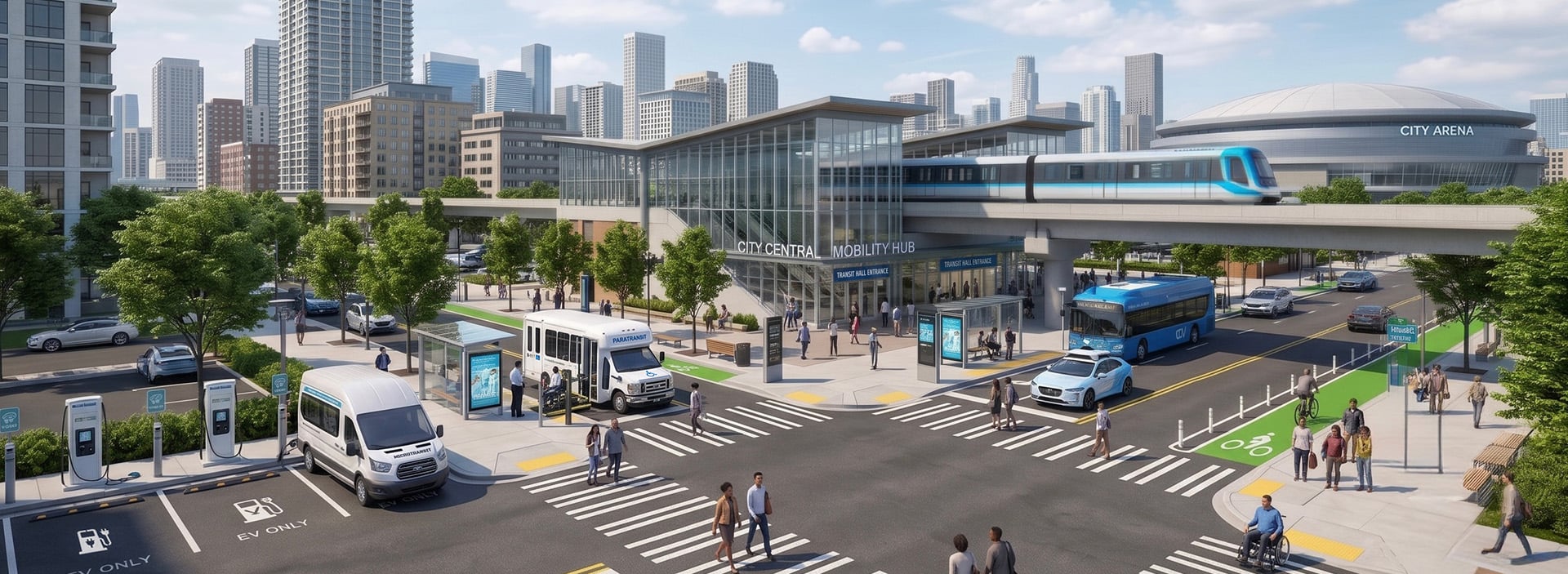
Public transit agencies are under increasing pressure to provide accessible, efficient and responsive transportation services while maximizing existing investments in rail and bus infrastructure. As travel patterns evolve and communities seek greater flexibility, microtransit and paratransit can help address service gaps, connect underserved populations and strengthen multimodal transportation networks.
In a new white paper, Charvi Gupta, new mobility practice lead, WSP in the U.S., examines how demand-responsive transportation services are transforming mobility across the country. The paper traces the evolution of microtransit and paratransit, highlights successful deployments nationwide and outlines practical strategies agencies can use to strengthen first- and last-mile connections, enhance accessibility and respond to changing rider needs.
What you will learn
- How microtransit and paratransit complement fixed-route transit systems rather than compete with them.
- Real-world applications, including feeder service, rural mobility, commuter programs, special events, emergency response and ADA service delivery.
- The role of smart mobility technologies, data analytics, automation and vehicle electrification in shaping the future of demand-responsive transportation.
- Funding, governance and scaling strategies that can help agencies move from pilot programs to long-term operational success.
Emerging opportunities to integrate AI, connected infrastructure, autonomous vehicles and Mobility-as-a-Service platforms into the broader transportation ecosystem.
Download the white paper to learn how transit agencies are using microtransit and paratransit to broaden mobility options, improve operational efficiency and deliver a more connected, equitable and resilient transportation network.