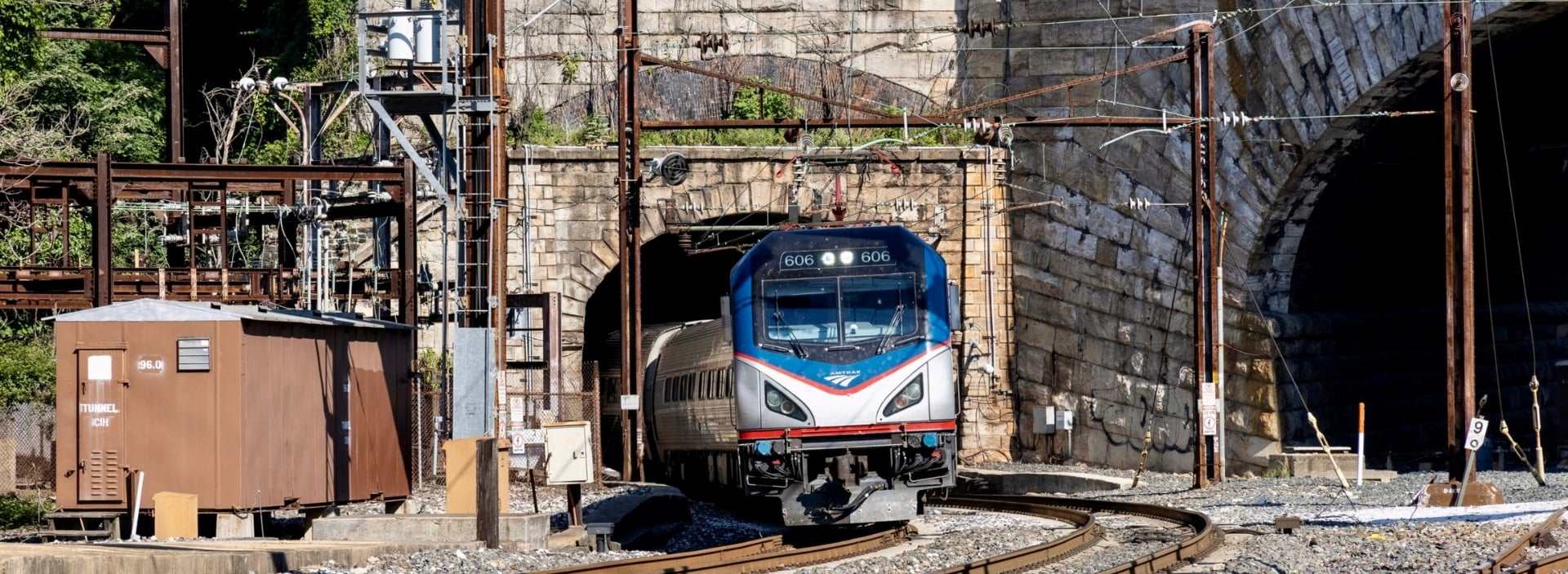
The existing B&P Tunnel was built to accommodate a different era of rail travel. Its tight curvature restricts speeds to approximately 30 miles per hour, while age-related deterioration and water infiltration have increased maintenance needs and the risk of service disruptions.
Because the tunnel carries both intercity and commuter rail traffic, any operational issue can have ripple effects throughout the corridor.
“The tunnel has performed admirably for well over a century,” said Victor Shey, assistant vice president and deputy project manager for the program, WSP in the U.S., for the program, WSP in the U.S. “But it’s increasingly difficult to maintain.”
Timely replacement of the tunnel is essential to improving long-term service reliability and meeting growing passenger rail demand.
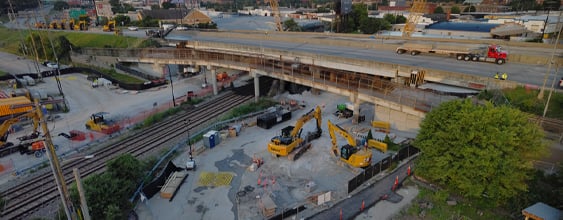
The B&P Tunnel Replacement Program centers on the construction of new, high-capacity tunnels — known as the Frederick Douglass Tunnels — along with associated infrastructure including track alignments, bridges, ventilation facilities and a new West Baltimore MARC station.
In addition to improving reliability and safety, the program will reduce travel times between New York City and Washington, D.C. and eliminate a longstanding bottleneck along the NEC.
Early planning, under the environmental impact studies and preliminary engineering, explored a larger, mixed-use four-tunnel configuration, which was approved by the Federal Rail Administration (FRA). The program ultimately agreed on a two-phased approach, with the first phase prioritizing electric passenger rail for smaller twin tunnel configuration, and the second phase occurring in the future to reflect Amtrak’s evolving ridership priorities and the careful consideration of community and operational factors.
“That process helped right-size the project,” said Cathy Ginter Smith, vice president and deputy project manager, commercial, WSP in the U.S. “The goal was to meet the needs of Amtrak and Maryland’s commuter rail service while also addressing community concerns and managing cost.”