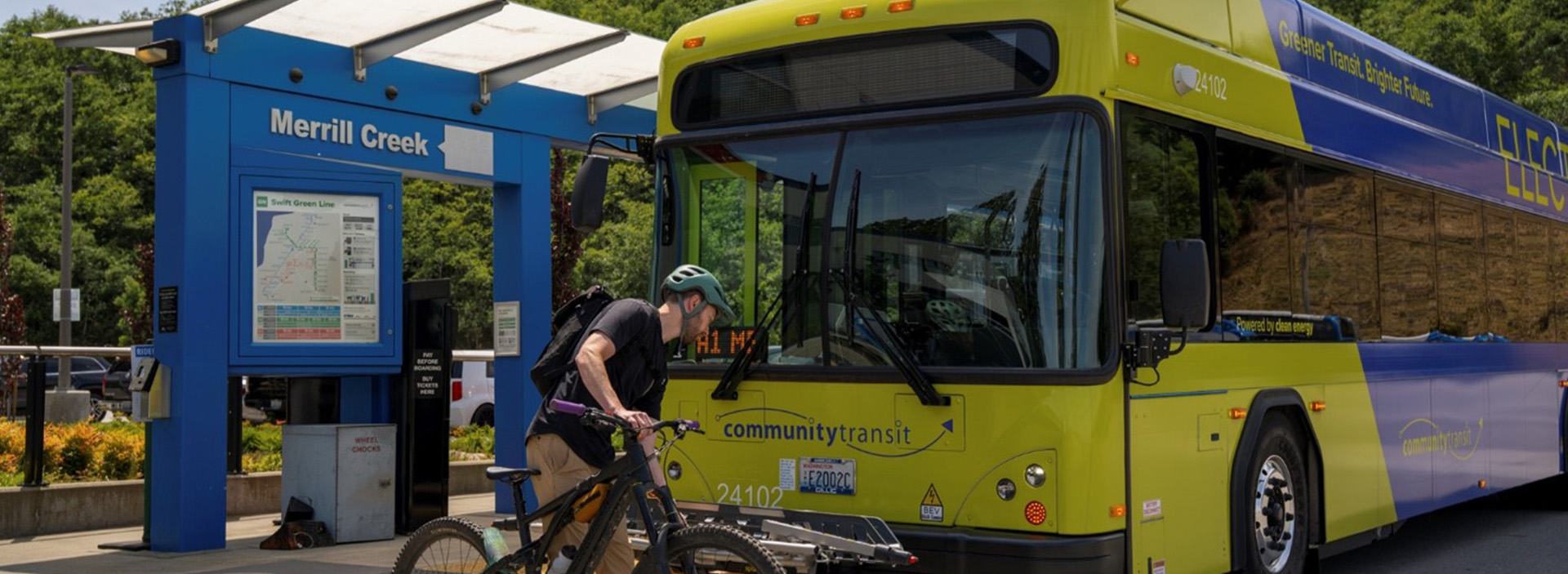
As transit agencies focus on making sustainable, multimodal trips easier for riders, one important part of the journey remains largely invisible to cyclists: whether an arriving bus can accommodate a bicycle.
Without reliable information on bike rack availability, riders face uncertainty, agencies lack consistent usage data and planners have fewer tools to understand where bike-transit connections are succeeding or where additional investment may be needed. As the number of cyclists grows and agencies pursue more integrated mobility networks, this gap becomes more consequential.
Our joint analysis with Sportworks examines the rapidly changing landscape of multimodal mobility and what transit agencies can do to adapt.
Automated bike rack tracking
Automated tracking technologies can help close this information gap with sensors that report when and where bus bike racks are in use and aggregate continuous, vehicle-level data into fleet-wide insights that benefit multi-modal riders and transit planners. When paired with route, stop and time-of-day information, agencies can better understand where multimodal demand is highest, how it changes throughout the day and where riders may benefit from additional bike facilities, service adjustments or clearer real-time information.