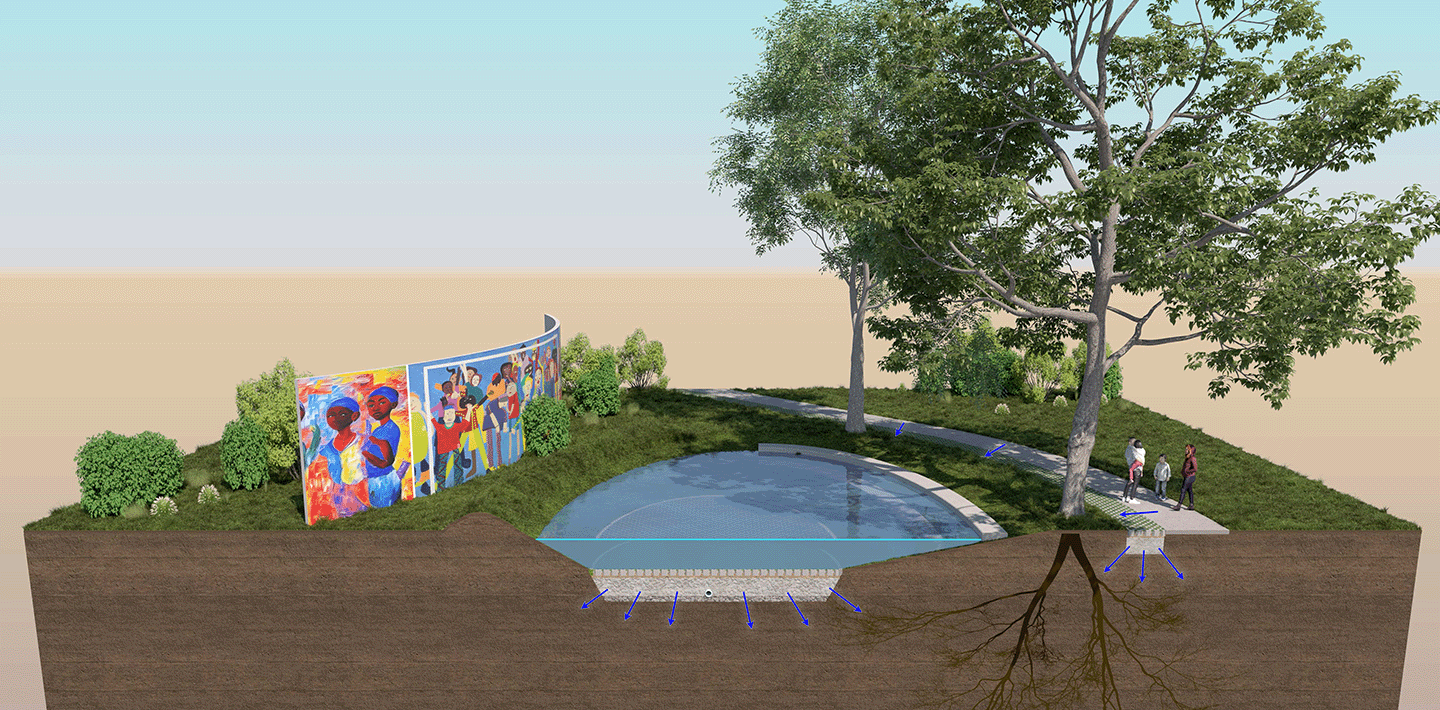
WSP is designing cost-effective blue-green infrastructure, relying on absorb, store, transfer strategies. The affordable housing setting requires keeping multi-purpose use and open space design at the forefront to improve the lives of residents and mitigate flooding while providing overall resilience for the surrounding neighborhood.
WSP is working closely with NYCHA and public housing residents and other stakeholders to make sure the mitigation outcome benefits the community. Furthermore, WSP will help NYCHA ensure that maintenance of the cloudburst interventions is consistent and may contribute to the development of green job pathways. Project elements include project management, project planning, design phase services, hydraulic and hydrologic modeling, resident and interagency engagement, procurement, and design services during construction.
The design typologies that will be considered may include, but are not limited to, sunken recreational areas, rain gardens, subsurface storage areas, vegetated swales, and porous pavement similar to the type developed in other NYCHA campuses; the focus is on open space and multi-purpose use for community. The sunken recreational areas are designed to flood in cloudburst events; they provide tiered seating and a simple stage for community use during non-rain events. Porous materials provide infiltration for water to be stored to reduce stormwater runoff, where feasible. Rain gardens and vegetated swales also provide water infiltration and co-benefits for landscaping and heat island mitigation.
The team is currently in the planning stage and will re-evaluate the feasible options after field visits and community engagement is completed. Design is expected to start in Fall 2024 for a duration of twelve months followed by construction initiation in 2025/2026.
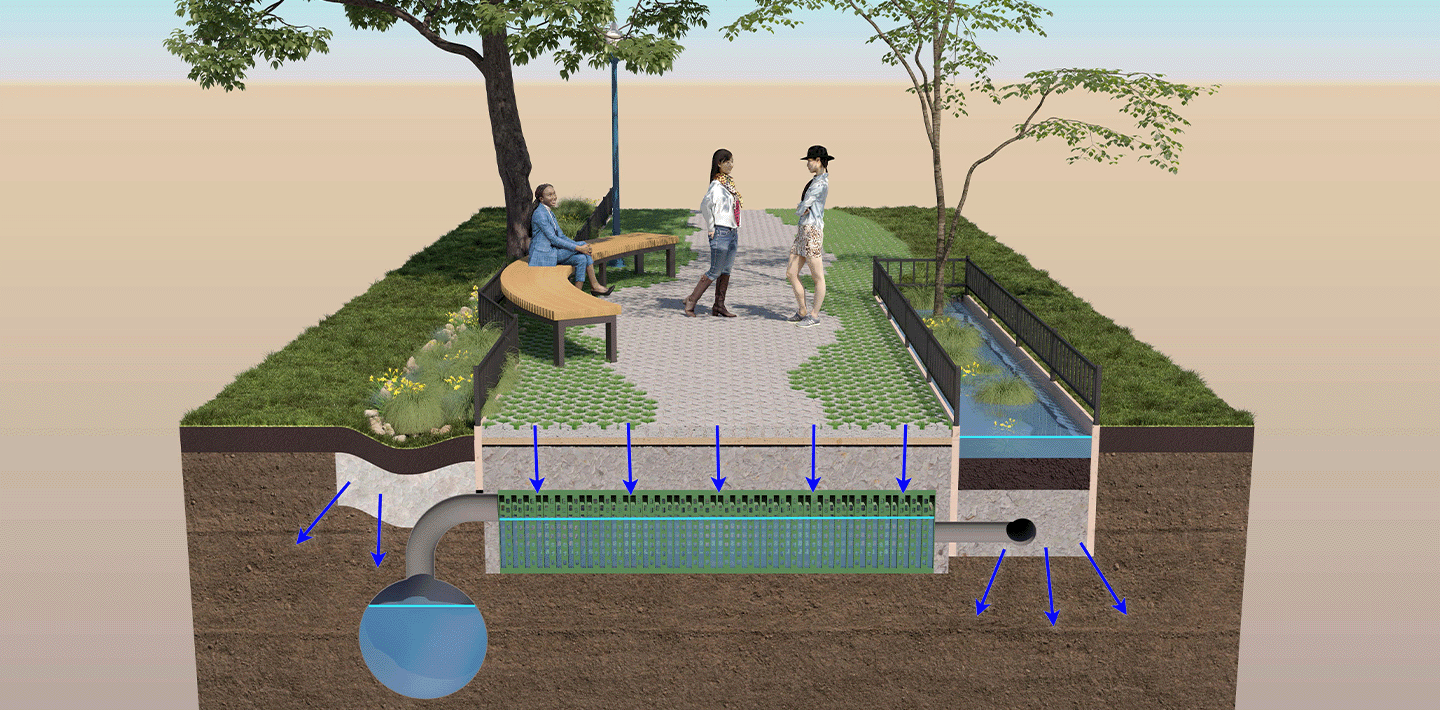
WSP is designing cost-effective blue-green infrastructure, relying on absorb, store, transfer strategies.