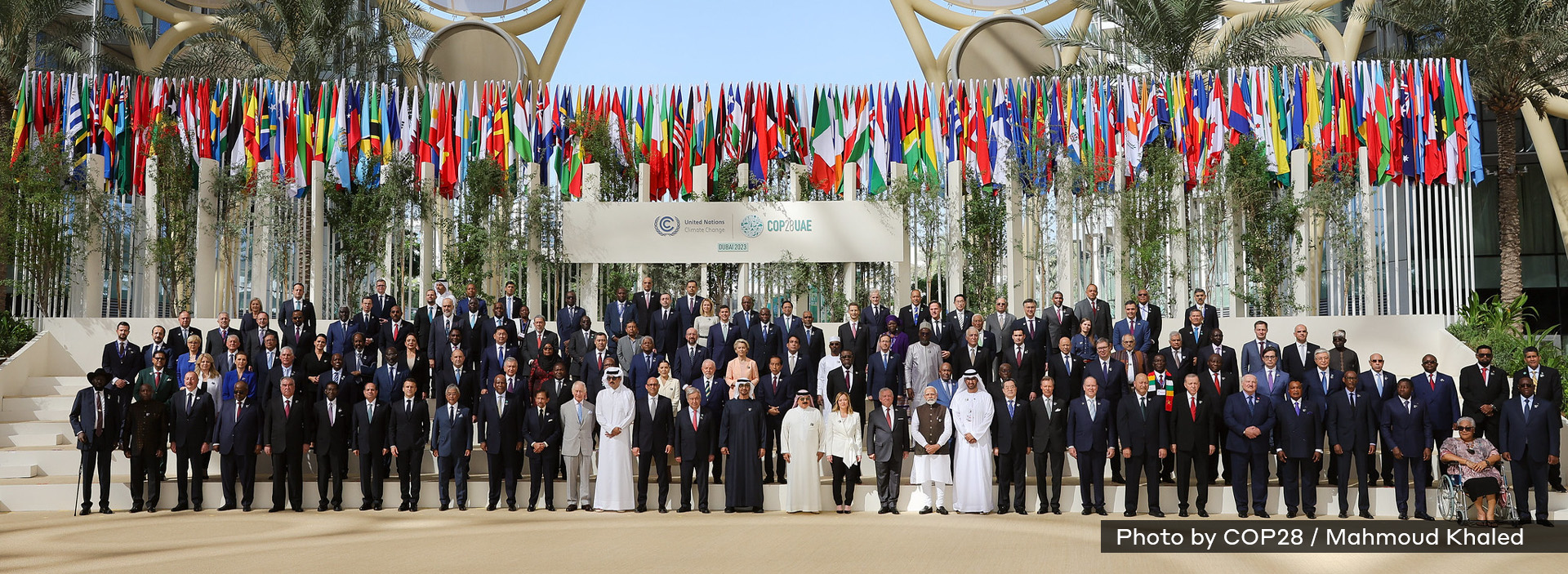
I recently attended the United Nations 28th annual Conference of Parties (COP28), hosted by the United Arab Emirates in Dubai, where more than 70,000 heads of state, world leaders, climate experts and high-level decision-makers took stock of progress to date and discussed climate challenges and solutions.
This year’s event had several major announcements concerning climate finance. Climate finance covers local, national and international financing that enables the large-scale investments needed to significantly reduce greenhouse gas (GHG) emissions, and to adapt to the unavoidable adverse impacts of climate change.
Under the Paris Agreement, the overall goal of climate finance is to align financial flows with a pathway towards low GHG emissions and climate-resilient development. These are some of the major announcements from COP28 that will help guide us toward more climate-resilient future.
1. Renewable Energy and Energy Efficiency
At COP28, 130 countries pledged to triple renewable energy capacity by 2030 to at least 11,000 GW and double annual energy efficiency improvements from 2-to-4 percent every year until 2030. This target is echoed in Global Stocktake, the headline agreement resulting from the conference.
In my view, this commitment—as well as the text in Global Stocktake, “Transitioning away from fossil fuels in energy systems, in a just, orderly and equitable manner”—will be a key reference point for climate investment, particularly in the energy sector, going forward.

©WSP
Kerstin Stendhal, representing Finland’s Climate Change Ministry for Foreign Affairs, discusses accelerating integration of low-carbon waste management to reach climate commitments.
2. New Climate Investment Fund
At COP28, the United Arab Emirates announced the launch of ALTÉRRA, a new $30 billion climate investment fund. This privately managed fund is designed to mobilize up to $250 billion globally by 2030 and is specifically focused on climate investments, with a particular emphasis on transforming emerging markets and developing economies.
I personally see ALTÉRRA as a significant commitment by the UAE to climate change mitigation and adaptation efforts, and the reflection of a broader push by private financial institutions to engage in opportunities created by the transition to a low carbon, climate resilient economy.
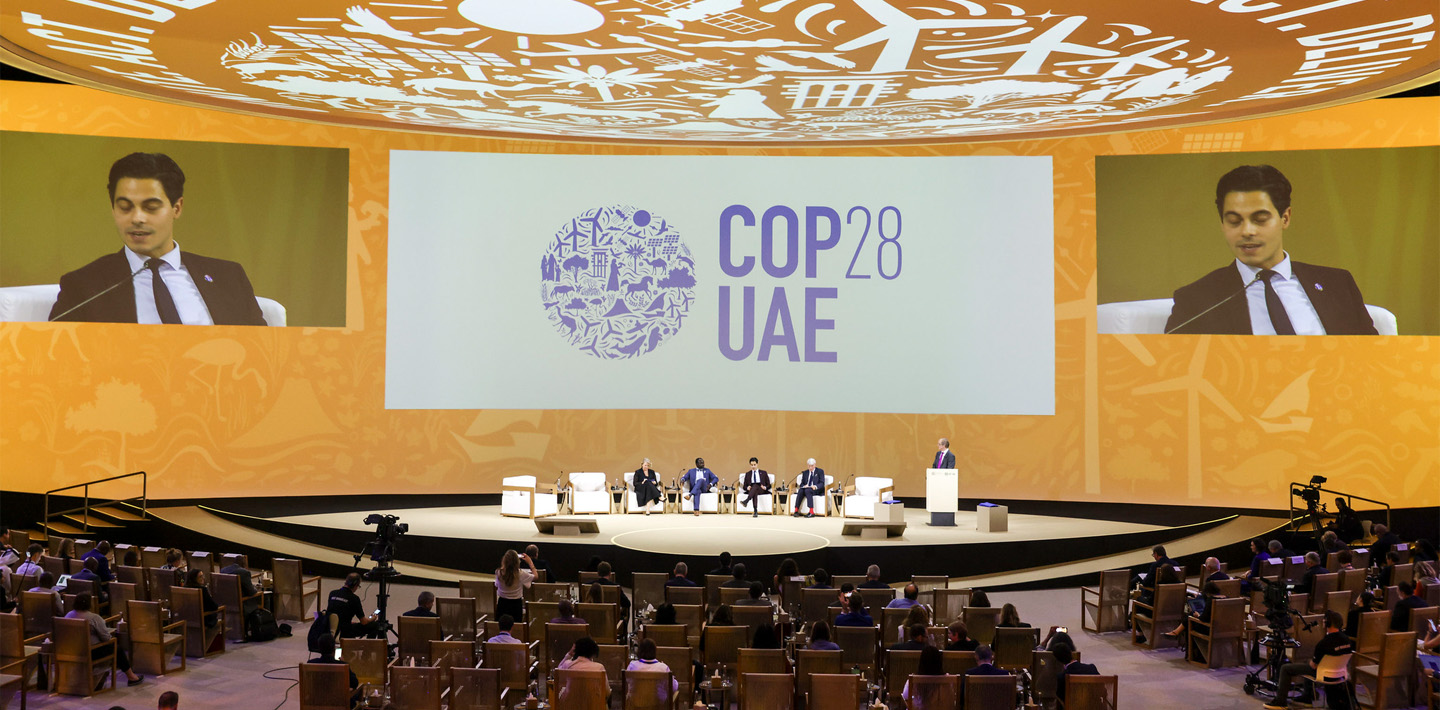
©PHOTO BY COP28/CHRISTOPHE VISEUX
Sessions on climate action were held in the Al Waha Theatre during the UN Climate Change Conference COP28 at Expo City in Dubai.
3. Loss and Damage Fund
The Loss and Damage Fund, which will assist developing countries that are particularly vulnerable to the adverse effects of climate change, officially became operational at COP28. This was announced on the first day of COP28, representing an early sign of momentum.
The Fund was originally agreed upon during COP27 in Sharm El Sheikh, Egypt, and the operationalization of this fund within a year of that historic agreement is unprecedented and represents a major milestone in efforts to address climate-related loss and damage.
The UAE announced a commitment of $100 million to the Fund, in addition to Germany committing $100 million, the UK pledging £40 million for the Fund and £20 million for other arrangements, Japan contributing $10 million and the U.S. committing $17.5 million.
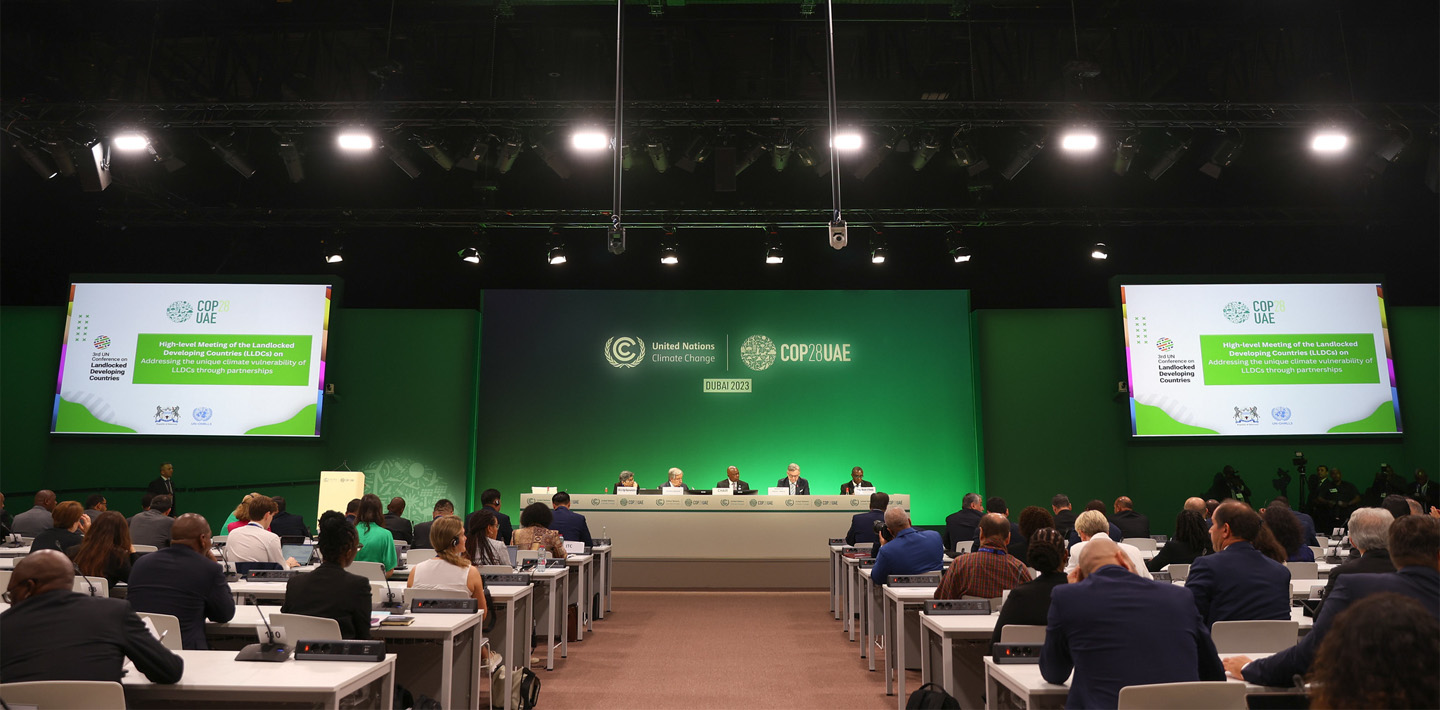
©PHOTO BY COP28/KIARA WORTH
A high-level meeting at COP28 on using partnerships to address the climate change vulnerability of landlocked developing countries.
4. Carbon Standard Coordination
Carbon markets represent an important source of climate finance. Six independent crediting programs—including Gold Standard and Verra’s VCS—reached a cooperation agreement where they will share learnings and best practices, establish common principles and frameworks, and provide greater transparency in the use of their carbon credits.
This agreement is expected to enhance the voluntary carbon market’s effectiveness and credibility, which can help ensure greater confidence among buyers and sellers of carbon credits.

©WSP
The COP28 announcements will better enable alignment of the financial flows for climate-resilient development and achieve the goals of the Paris Agreement.
5. Industrial Transition Accelerator
Backed by Bloomberg Philanthropies and the COP28 presidency, the Industrial Transition Accelerator (ITA) will boost implementation across energy, heavy industry and transport sectors, as well as finance and public policy.
The ITA will focus on decarbonization across industry, transport and energy, while focusing on hard-to-abate sectors that generate a third of global emissions, including steel, aluminum, cement, chemicals, shipping, aviation and parts of the energy supply chain. Heavy-emitting sectors will require a wide range of technologies to be commercialized and deployed to cut emissions at scale, including hydrogen, long-duration energy storage, and carbon capture, utilization and storage.
I’m encouraged by these COP28 announcements, among others that were announced in Dubai, because they will better enable us to align the financial flows for climate-resilient development as we aim to achieve the goals of the Paris Agreement.
For more information, please visit https://www.cop28.com/en/
[To subscribe to Insights, contact the editorial staff at [email protected].]