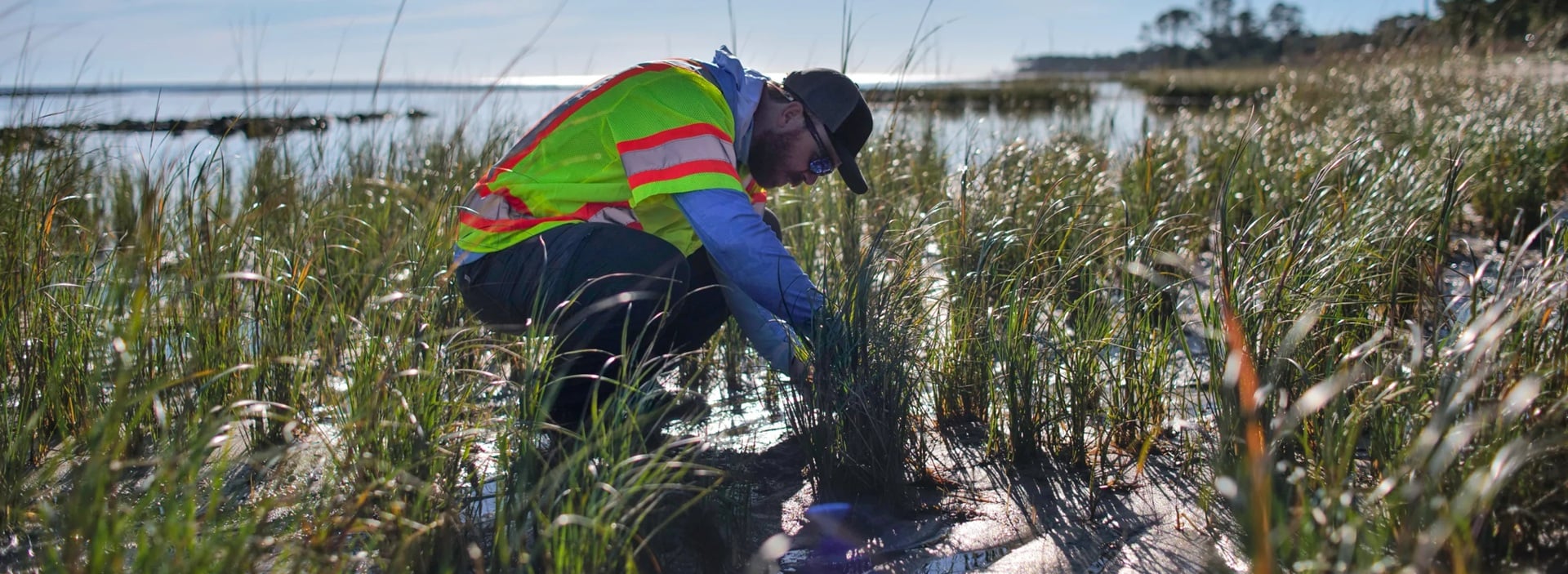
Bawany: I focus on vulnerability assessments, stormwater solutions, environmental restoration and climate adaptation, primarily supporting communities in the Tampa Bay region. I work closely with local governments to address the impacts of sea level rise and climate change, including sunny day flooding, rising groundwater and heavier, more frequent rainfall. A key part of my role is helping clients translate science and data into real-world decisions, from planning studies and capital programs to community-wide resilience strategies. This helps them reduce flood risk today while preparing for future conditions.
Denly: I serve as one of WSP’s PFAS initiative leaders, and a chemistry director, supporting a wide range of PFAS-related programs for industrial and commercial clients. I help organizations understand their potential PFAS risk profiles and develop strategies to manage, reduce, or where possible, eliminate associated liabilities. With PFAS regulations expanding, clients must prepare for evolving requirements related to regulatory compliance reporting, wastewater effluent permitting and state-level reporting, labeling and product restrictions. I helped develop a systematic methodology to assess, prioritize and manage PFAS liabilities through detailed supply chain evaluations to identify potential exposure risks from current operations, historical use or PFAS-containing materials.
McGee: My digital expertise has evolved from Excel VBA to Python-based geoprocessing and now to building solutions with the Microsoft Power Platform. While the tools have changed, my focus remains on working with data, automating repetitive tasks and improving how teams operate. As a water resources engineer, my work centers on surface water challenges such as flood risk analysis, water quality and program delivery. Enabling teams to use data better — from technical analysis through program management and reporting — is central to my role.