After more than a decade of planning and construction, the Los Angeles County Metropolitan Transportation Authority (Metro) opened its $1.8 billion Regional Connector project in the summer of 2023.
The newly constructed 1.9-mile rail link improves connections by bringing together the Metro L (Gold), A (Blue), E (Expo), B (Red) and D (Purple) lines at the 7th Street/Metro Center Station. The new A and E lines will share five downtown Los Angeles stations giving travelers plenty of transfer options along the way.
WSP began working on the Los Angeles Regional Connector project in 2008, providing planning, design and environmental services from conceptual engineering through the bid process. When construction began in 2014, WSP provided on-site design support on behalf of Metro with Regional Connector Constructors, the joint venture of Skanska and Traylor Brothers, Inc., contracted by Metro to design and build the project.
“It is exciting and satisfying on both a personal and professional level to witness this transformational transit project,” said Jason Choi, WSP project manager for the Regional Connector. “The Regional Connector project has been a unique experience and the project of a lifetime for me over the past 12 years, as WSP has provided environmental and engineering services for the owner from the early planning stage through design and construction, to systems integration, testing, through start of revenue service.”
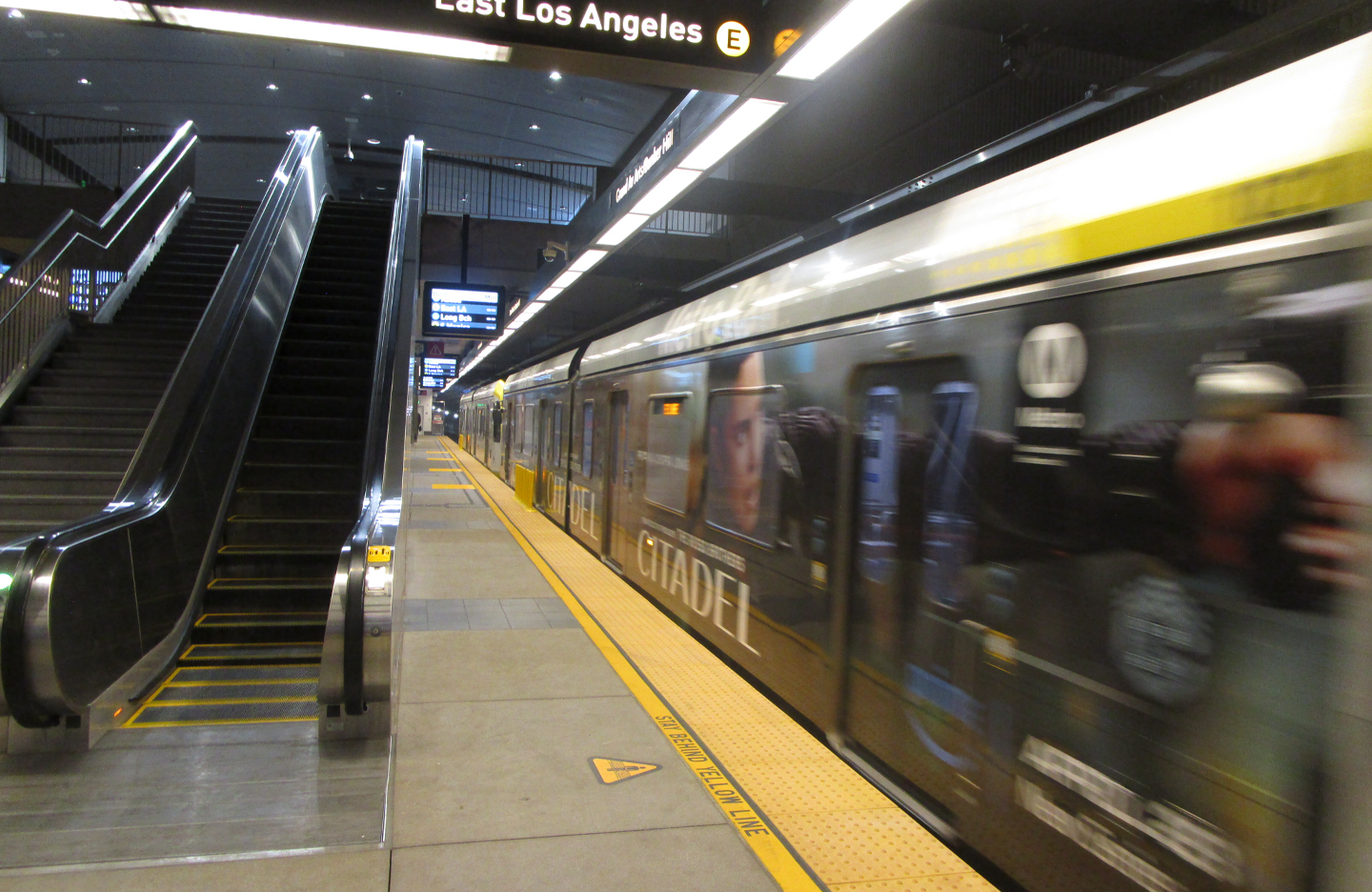
The newly constructed 1.9-mile rail link improves connections by bringing together the Metro L (Gold), A (Blue), E (Expo), B (Red) and D (Purple) lines.
Technical Discipline
The Regional Connector merges the Metro’s hook-shaped Gold line with the Blue and Expo lines, creating two serpent-like A and E lines where there were once a separate three. This merger allows the Metro to bridge for more efficient transit, compared to when this journey was only possible by hopping on and off Metro’s Red/Purple heavy rail line.
The new subway segment and stations will transform the way many riders can experience the Metro system, providing riders with a seamless, one-seat journey from as far as Azusa to Long Beach and from East Los Angeles to Santa Monica with no transfers required.
Digging for the project was accomplished using the tunnel boring machine (TBM) named “Angeli,” which broke into the cut-and-cover tunnel trench at 4th and South Flower streets in the city’s downtown for the first of the 1.1-mile twin bore tunnels. Angeli was brought back to 1st and Alameda streets in Little Tokyo to dig the second parallel tunnel.
“One of many issues that we helped resolve was the tunneling undercrossed the existing B/D Line tunnels, at Hill Street and 2nd Street,” Choi said. “That required significant collaboration between contractor and Metro project and operation teams, and it was a major milestone for this project.”
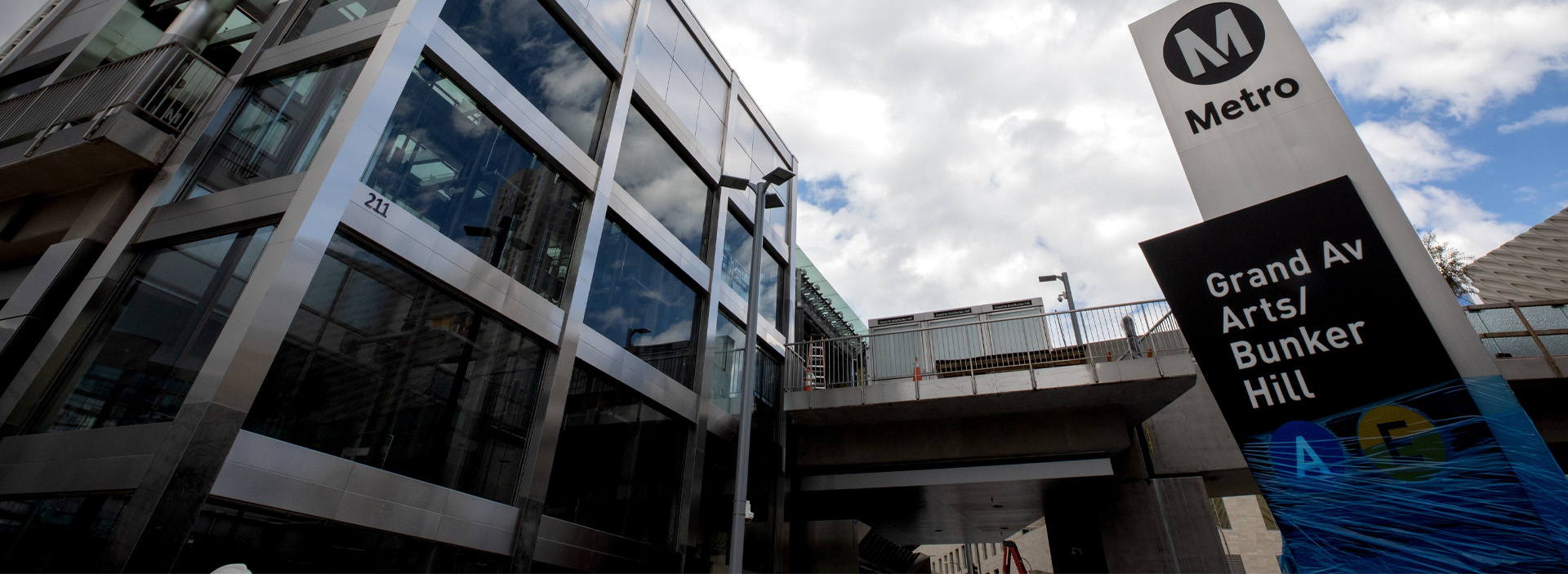
The project included the creation of three new stations: Little Tokyo/Arts District Station at 1st Street and Central Avenue; Historic Broadway Station at 2nd Street and Broadway; and Grand Av Arts/Bunker Hill Station at 2nd and Hope streets.
“The Regional Connector project encompassed all technical disciplines for underground rail transit, beyond geotechnical, structural and tunnel engineering,” said Bill Hansmire, who served as project manager for the project from the start through 2020. “WSP was also involved with architecture, mechanical and electrical engineering, and transit systems, including traction power, communications, and train control. It gave our firm an opportunity to make a significant contribution to a transit project that will make Los Angeles a better place to work and live for coming generations.”
Firsts for L.A. Metro
The Regional Connector features some notable “firsts” for Metro.
It is Metro’s first cavern excavated using the sequential excavation method in soft rock in L.A. for a rail crossover. Metro’s typical cut-and-cover construction for the crossover was difficult to perform due to existing building basements and existing old and fragile storm drains located directly above the new crossover structure.
It’s also the Metro’s first use of high-speed elevators for a station. Due to its depth, the new Grand Av Arts/Bunker Hill Station at Second and Hope streets features six high-speed elevators without escalators.
Another of the project’s innovations involved the location of a fan plant at the junction of the two lines coming into Little Tokyo to provide ventilation for the underground transit lines. WSP’s analysis confirmed that this scheme would work at this location, which compared to other more complex arrangements, resulted in significant cost savings for the client.
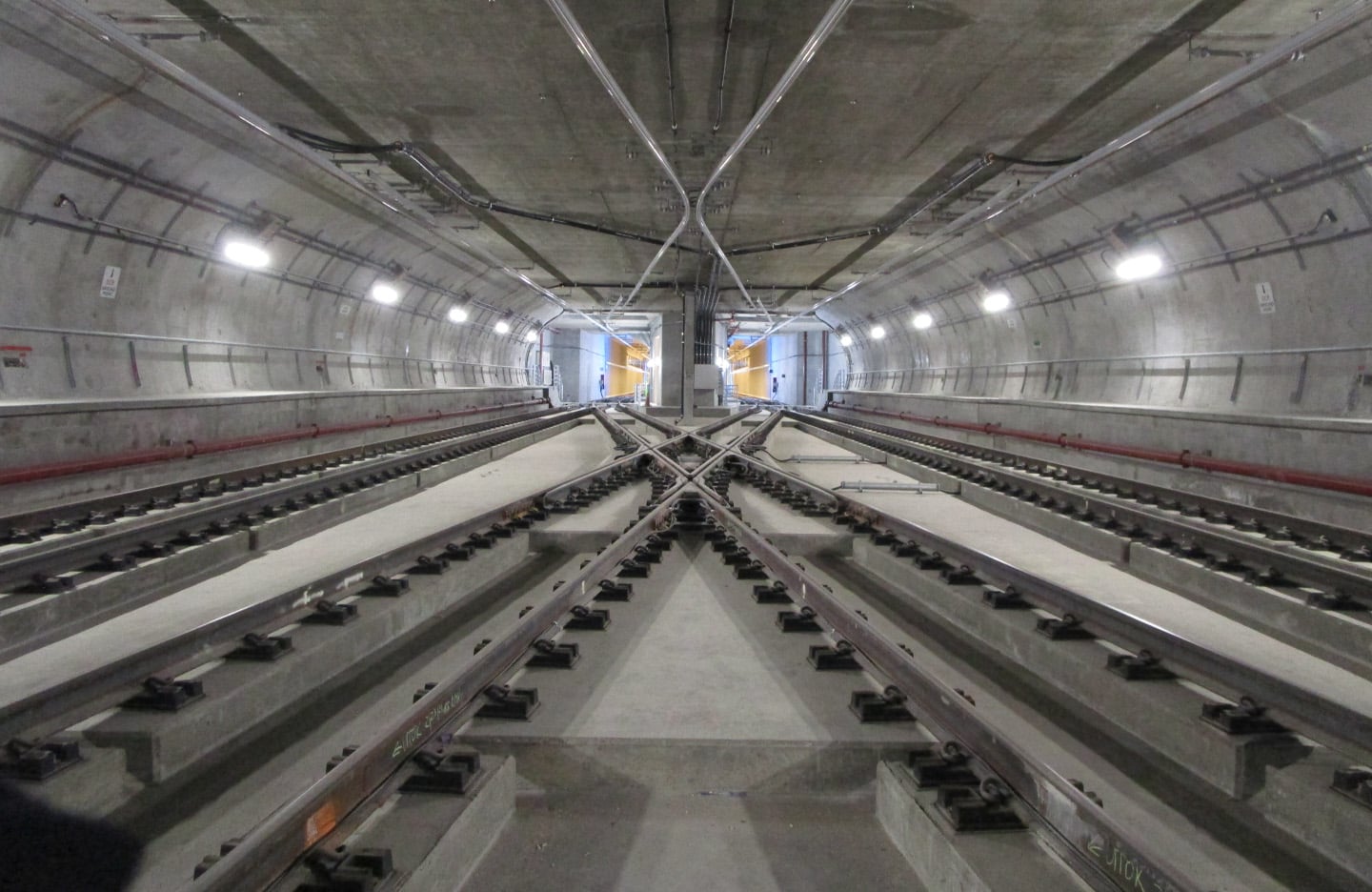
The Regional Connector was LA Metro’s first cavern excavated tunnel using the sequential excavation method in soft rock in L.A. for a rail crossover.
Stakeholder Solutions
The Regional Connector project involved many different teams and Metro departments, as well as utility companies and major community stakeholders. These included the Walt Disney Concert Hall, the Colburn School of Music, The Broad Art Museum, the Japanese American National Museum, the Downtown Los Angeles Financial District, and Little Tokyo and the Arts districts.
“There was an intense comprehensiveness when it came to each of the stakeholders’ technical concerns, each of which required state-of-the-art solutions,” Hansmire said.
Noise and vibration from rail operations, for instance, had to be considered due to the project’s proximity to the Walt Disney Concert Hall and Colbourn School of Music. To address these concerns, the WSP team worked with these stakeholders directly and brought in consultants to find a solution for potential vibrations caused by the Regional Connector.
“We had a very experienced team for this project, which actually made these challenges fun because I felt that there wasn’t a problem that we could not solve, and that turned out to be correct,” Hansmire said.
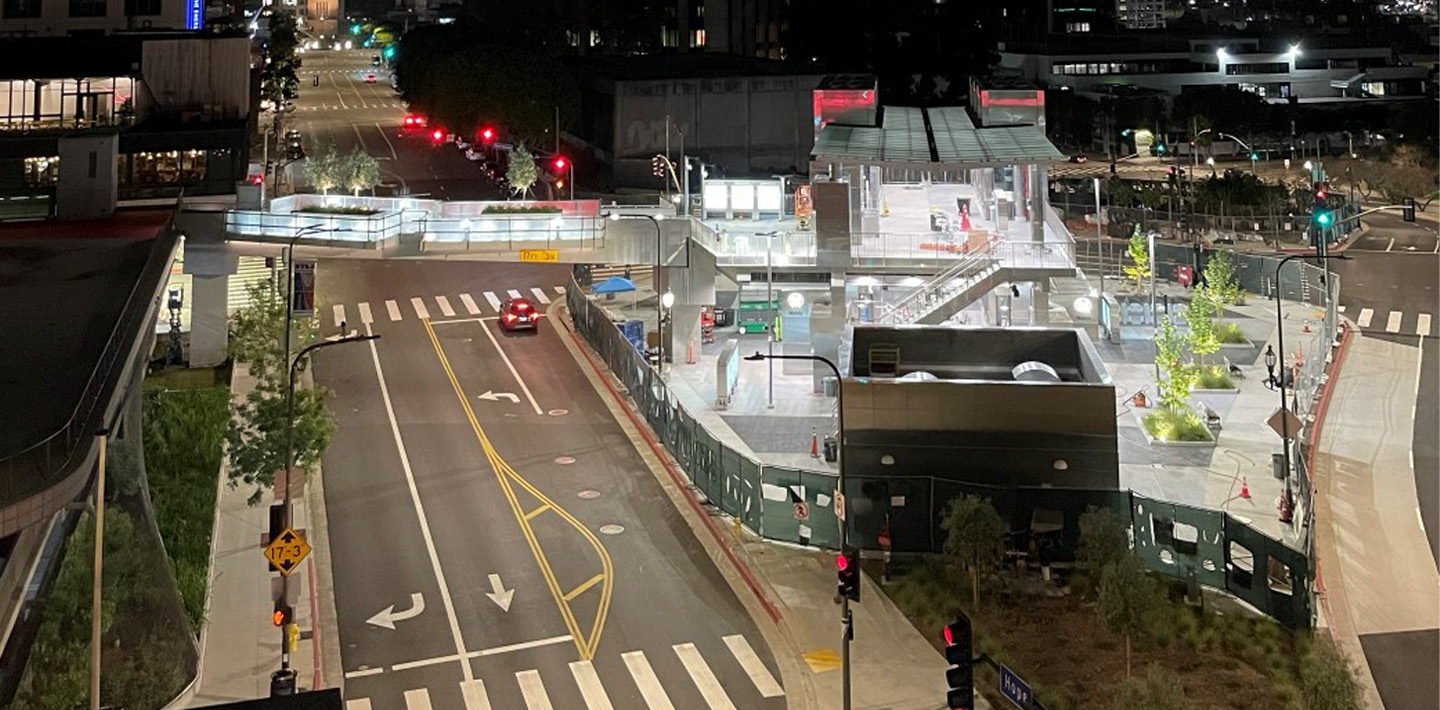
The Grand Av Arts/Bunker Hill Station at night.
Success through Longevity
A key component for this project’s success was Metro’s community engagement, which was achieved through effective communication and listening actively to community concerns throughout the process.
“Metro has done an outstanding job with community outreach for this project, and I think we’ve helped enable that by giving Metro and the public the confidence that this can be done, technically,” Hansmire said.
Hansmire also attributes their success to the experience and continuity the WSP team was able to achieve for more than a decade.
“I think we have provided over time a solid group of people with impressive continuity, from beginning to end,” Hansmire said. “We’ve been there for the whole duration, and that continuity builds strength and credibility. I think that’s what really makes it work.”
[To subscribe to Insights, contact the editorial staff at [email protected].]

Teamwork was a key to the project’s success. Pictured (from left to right) are Jason Choi, WSP project manager; Michael Harrington, LA Metro executive officer and director of project engineering; and Bill Hansmire, WSP project manager through 2020.