Before improvements to life-protecting barriers along the Mississippi River basin could commence, there were several logistical barriers to overcome.
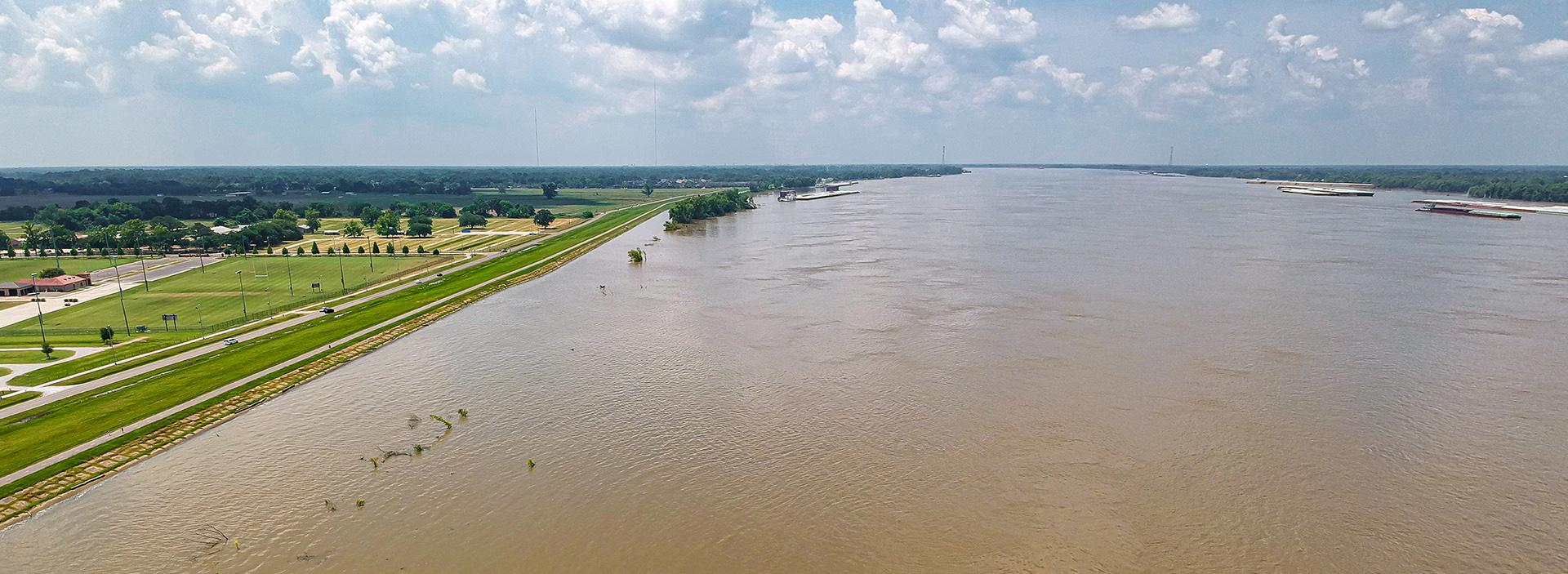
Recent upgrades to the 65-mile levee system that protects Southwestern Illinois from devastating floodwaters have demonstrated remarkable resilience to protect lives and property and boosted confidence in their once eroding capabilities.
| |
|
| |
 |
| |
Levee improvements were designed to meet FEMA’s standards and protect the region from severe flooding. (©WSP) |
| |
|
The engineered embankments along the Mississippi River basin have preserved the Southwestern Illinois region known as The American Bottoms for more than a century, proving their value time and time again.
But in 2007, changing regulations and aging infrastructure led to the Federal Emergency Management Agency (FEMA) announcing its intent to “deaccredit” the levee systems, raising concerns that necessary improvements would be prohibitively expensive and take decades to implement.
Left unchanged, the risk of catastrophic flooding loomed large. Potential damage estimates ranged in the tens of billions, threatening the 174-square-mile region’s stability and prosperity.
Fortunately, innovative approaches were approved that permitted swift action. This decision ultimately led to actions that addressed safety concerns and resulted in improvements that were completed in a fraction of the time initially anticipated.
A feature article published in the November 2025 edition of The Water Report highlights the impact of technical excellence and innovative solutions that were critical to its ultimate success. Click here and select “Illinois Levee Project.”