For Carol Wynperle, a veteran program manager in New York City, there’s no secret to delivering mega infrastructure projects, such as Yankee Stadium and the Kosciuszko Bridge, just a clear-eyed approach to getting things done, shaping a trusted team and delivering for the greater good beyond the jobsite. In this Q&A, Carol discusses what makes her so effective at managing the complexities, uncertainties and sky-high expectations of high-profile infrastructure.
How do you ensure cost-efficiency and hit accelerated timelines on mega projects without compromising safety?
 It starts with strategic contract packaging so that work can start with available funds and granted approvals while allowing overlap of contracts so that work continues seamlessly while mitigating risks. To meet accelerated schedules, the team needs to push on all fronts and continually look for work that can be brought forward. I stress the importance of looking past just the critical path – as the critical path can and will change when the unexpected happens.
How do you go beyond basic project delivery to create something truly special for the community?
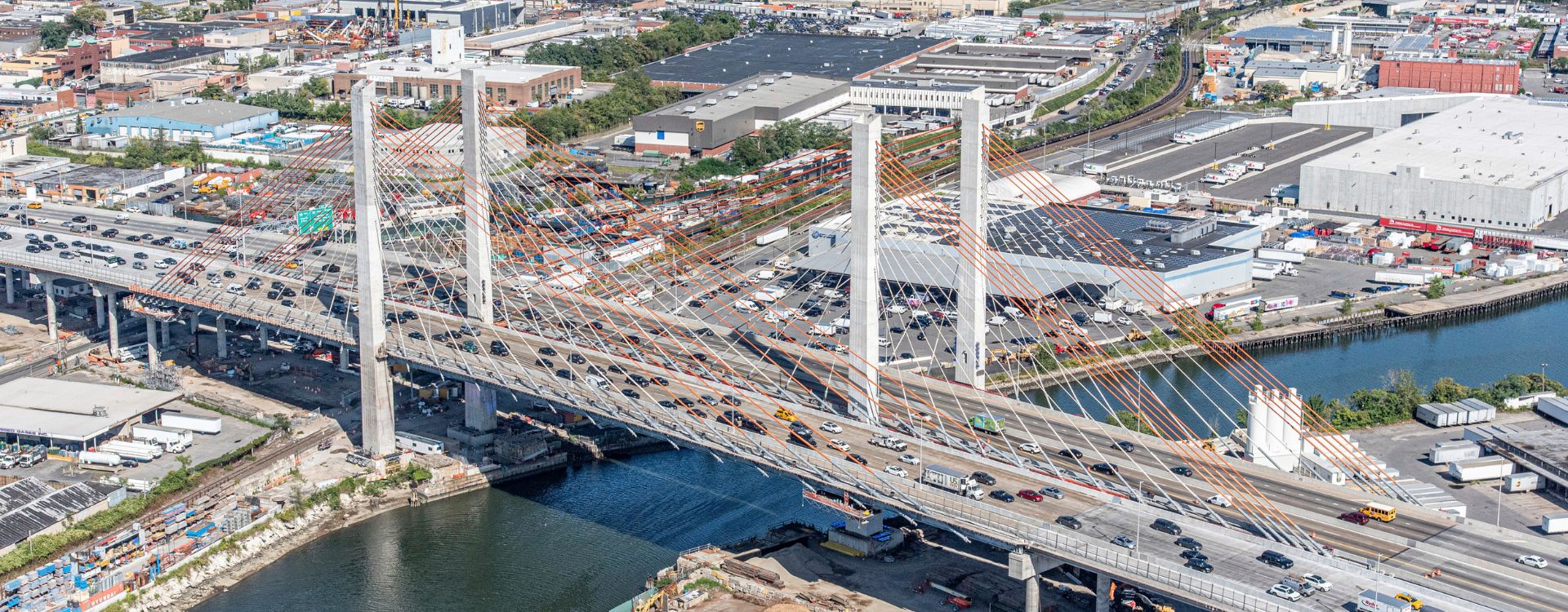
It’s important to think about the end users throughout the life of the project and maintain a focus on long-term legacy and social impact. I invite and encourage my team to share ideas that add meaning to the work. On the Kosciuszko Bridge project, for example, this shaped the basic scope of the project – which included the innovative layout of two parallel cable stayed bridges each with opposing pylons to create two symbolic gateways for entrance into each of the two adjacent communities – Brooklyn and Queens. The addition of an innovative aesthetic lighting system also brought celebratory light shows to the bridge and the surrounding communities.
Can you describe your approach to risk management and what role it plays in successful project delivery?
Risk management is not an aside but the most critical element of successful project delivery. As program manager, everything we do should minimize risk. It’s essential to continually evaluate risks, define ownership and take aggressive mitigation steps. Collaboration with all project stakeholders to identify risks early and tackle them head on is key.
As program manager, how do you cultivate a collaborative and positive working relationship with the Design-Build team?
The role of program manager is facilitation, not obstruction. The focus should be to offer meaningful, constructive comments that improve the project and build trust by offering solutions, not just pointing out issues. This sets a positive tone, demonstrates commitment to the project and energizes the team to deliver it successfully.
 Do you have a favorite project or one that you felt particularly invested in?
As a lifelong Long Islander, I have commuted through Penn Station for decades. My personal connection to the station runs deep, shaped by my parents' stories of its original grandeur. For this reason, my involvement in the preliminary design of its reconstruction was a particularly meaningful role to me. While such a complex undertaking, with its many stakeholders, has faced challenges, there’s no doubt that this essential transit hub will achieve the transformation its users deserve.
What activities do you enjoy in your downtime?
Anything that gets me out on the water. I’m an avid sailor and rower. For me, being on the water is restorative and invigorating. I’m also a big New York Yankees fan. My role as a project manager for the design and construction of the structural trades of the new Yankee Stadium was particularly significant for me!