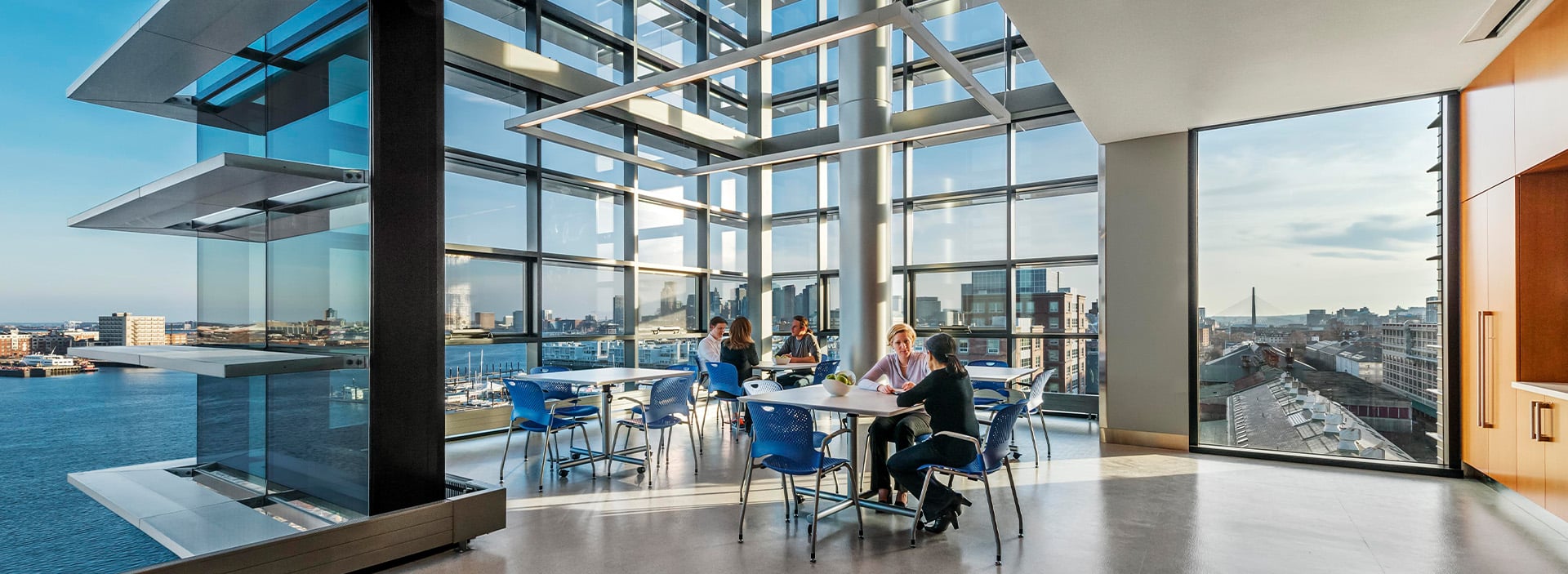
Lighting in hospital settings has experienced an incredible evolution from the early days of oil lamps and candles to the smart, sophisticated LED lighting systems of today.
Even decades ago, hospitals used immense amounts of power within the light fixtures, creating bright environments more focused on tasks than comfort. Now, lighting designers add purposeful illumination only where needed, allowing greater flexibility in patient spaces while improving wellness. Like many other aspects of modern healthcare design, lighting has become more about patient and staff experience.
Human-centered lighting
The biological processes acknowledged within circadian lighting techniques are one example of this change. In hospitals, where disruptions to natural rhythms are common, it’s important to consider the impact of artificial light on the body and mind. For the nursing stations at the new University of California Irvine Medical Center, our designers explored blue light, best for alertness, and controllable warm lighting for a more natural transition at the end of shifts. Frequently, our WSP team programs light level changes into the lighting control system to help ease patients between awake and resting hours.
At the Hoag Maternity Care and Birthing Center in California, we balanced soft overhead and bedside lighting with strategic task lighting at the foot of the bed, ensuring that the care team was able to maintain visibility without compromising a more soothing patient experience. A focus on visual comfort in healthcare spaces has been shown to lower stress and anxiety, and lead to quicker recovery and wellness.