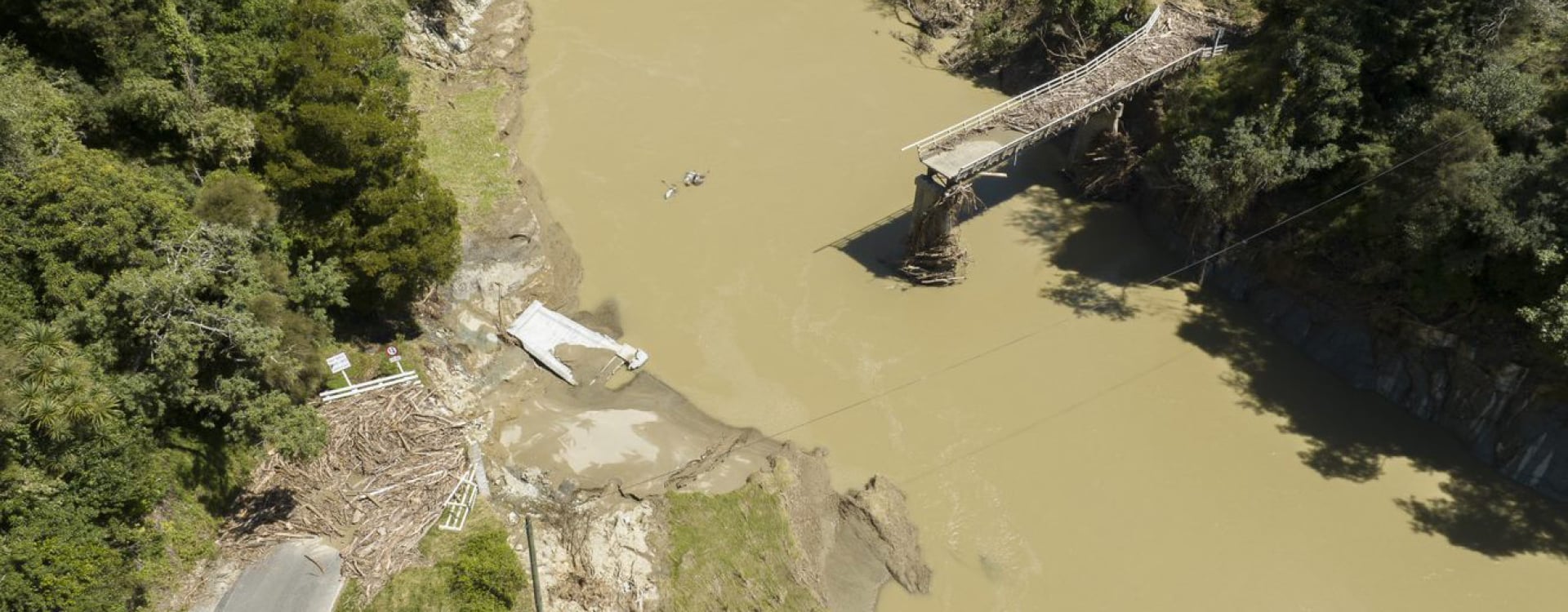
One year on from the cyclone, asset owners are facing up to an important question - how resilient are their networks? With the likelihood of major disruptive weather events increasing with climate change, how best can they proactively manage risk to their structures – especially bridges, culverts, and ‘lifeline’ roads?
A good starting point for asset owners in managing infrastructure risks, notes Natalia and Ben's paper, is having a thorough understanding of their assets. For structures, structural drawings, dimensions, loading capacities, maintenance history, and service attachments are a vital knowledge base.
‘Risk screening’ is one cost-effective method that can be used to quickly assess potential risks, they say. Various methodologies have been developed both nationally and internationally to screen for different risks such as scour, seismic events, vehicle overloading, and crash risks – helping guide asset owners know where to focus detailed risk analysis efforts and potential remediation actions.
Efforts are now underway to analyse patterns of failures and damage in infrastructure, focusing especially on factors like bridge span length. The aim is to improve future flood protection measures and better understand the resilience of existing structures.
In the face of the dynamic and changing nature of Aotearoa's weather-related natural hazards and fragilities inherent in some of the nation’s key infrastructure systems, it's never been more important for asset owners to prioritise efficient risk assessment and management strategies to ensure network resilience and community well-being.
Find out more in Natalia and Ben’s paper below.