What makes the modernization of ESAP so challenging? What were some of the key hurdles to overcome?
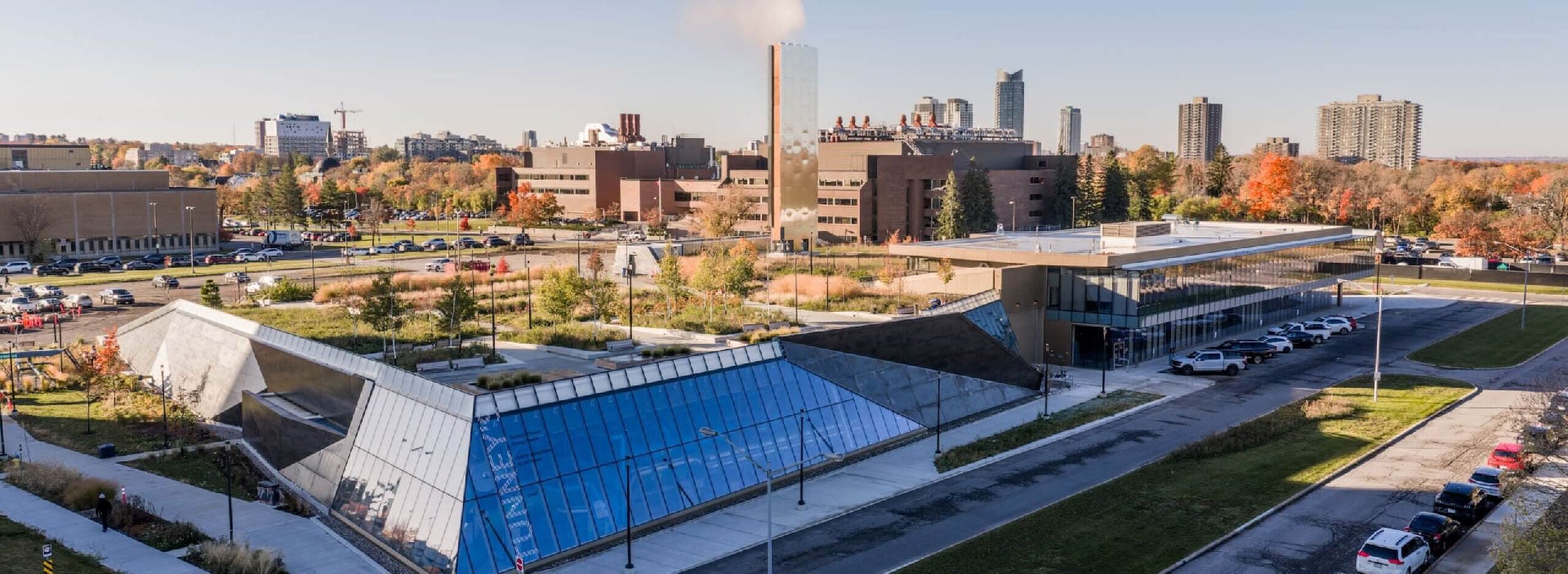
The main challenge would certainly be maintaining the operation of the existing systems while the new systems were built. The engineers, designers, and architects had to consider the uninterrupted supply of heating and cooling to the existing connected buildings in the design of the energy centres, distribution systems, and interconnections to the buildings. This took extensive planning with our construction and operation and maintenance partners in the consortium.
The planning started before we won the project during the bid stage, where we developed phasing plans and detailed design and construction schedules for all the sites, and distribution systems, working around seasonal conditions, energy demands, power upgrades, and, of course, Ottawa’s extensive Festival schedule.
How was WSP able to use its multidisciplinary team, and its global network, to support its role on the project?
The Canadian team was extensive, with staff from Victoria to Halifax contributing to the development of the multidisciplinary packages. As prime consultant on the P3 consortium, we were responsible for all aspects of the ESAP mandate providing mechanical, electrical, process, structural, civil, environmental, landscape architecture (with partners), transportation, commissioning, and overall project management for the design and construction of the energy centres, distribution, and building connections.
Several hundred staff touched the project over the course of the project with well over a hundred FTEs at the peak of the design. It was truly a full Canadian team effort. And, of course, we could not have completed this project without our Global network. This was truly a global collaboration with support from the UK district energy group providing expertise with European piping technologies and Low Temperature Hot Water network design and the team from Sweden assisting with buried piping expertise. The team from the U.S. provided much needed third-party peer review and support, and our bridges team in New Zealand provided their specific expertise with bridge analysis.
The relationships developed during the project continue today with ongoing collaborations on other mandates in Canada and collaborations on mandates in the U.S. and across the Atlantic.
How were modern digital solutions and sustainable materials integrated into the project and why were they used?
Simply stated, the design couldn’t have been completed without modern digital tools.
The design period started in June 2019 with the bulk of the design reaching completion in early 2021 and some packages extending through to 2023 to accommodate program shifts. The Covid pandemic forced all members of the team into home offices, shifting all meetings to virtual, and all coordination through the digital tools. Amazingly, the design team maintained the overall design schedule through this major event.
Building Information Modelling (BIM) was at the forefront. Models of the existing facilities were created from scratch based on high resolution scanning. Information was painstakingly assembled, and converted to Revit models using software and as-built information. The 3D information allowed the team to design with confidence, and allowed coordination between disciplines, regions, and countries, across all project team members (construction, O&M, client, etc).
Every energy centre and every segment of distribution piping was modeled and eventually updated to reflect as-built conditions. These as-built models are now a powerful digital tool for the operations and maintenance team as the as-built design models are the foundation of a digit twin that is now used to monitor, track, and respond to the energy delivery on the entire system of networks.
What lessons were learned from ESAP that can help develop more efficient district energy systems in other parts of the country?
Conversion from high pressure steam to low temperature hot water and the use of electrification as part of an efficiency and decarbonization strategy.
This seems to be the challenge at most campuses today.
Transitioning from steam to low temperature hot water for heating opens opportunity for further energy efficiency through heat recovery technology. There are elements of the ESAP project that relate to many of the campuses across the country, whether it be electrification, the use of thermal energy storage, the use of energy recovery from boilers, or the use of a river water process for cooling.
ESAP utilized the natural elements of the region and the demands of the network to its full benefit. Other campuses across the country can do the same with their own unique elements and network requirements.