Skip to content
WSP
WSP
  • Who We Are
    We are the home of ambitious, passionate, and innovative engineering experts, scientists and advisors.

    See more
    Who We Are
    • Overview
    • Our history
    • Future Ready
    • Corporate responsibility
    • Our offices
    • Canadian leadership
    • Our impact
    Corporate responsibility
    • Overview
    • Communities
    • Ethics and integrity
    • Health and safety
    • Inclusion and belonging
    • Indigenous relations
    • Sustainability
    Featured content
    Thn-Web-Our-Impact
    Unlocking potential everywhere

    As Visioneers we see the potential everywhere, harnessing it to embrace the complex challenges of today’s world. Blazing the trails of purposeful innovation across new frontiers and designing a world where communities can thrive.

    Discover our latest projects highlighting our commitment to innovation, sustainability and engineering excellence. See how we’re shaping the future of communities around the globe.

  • What We Do
    We work together with clients to plan, design, create and deliver innovative projects that shape the world.


    View All

    • Sectors
    • Services
    • Projects
    What We Do
    • Overview
    • Property and Buildings
    • Transportation and Infrastructure
    • Earth and Environment
    • Energy, Resources, Industry
    • Water
    • Services
    Property and Buildings
    • Overview
    • Sports and Events
    • Commercial and Mixed Use
    • Cultural
    • Data Centers
    • Education
    • Existing Buildings
    • Government
    • Healthcare
    • Heritage
    • High-Rise
    • Hospitality
    • Residential
    • Retail
    • Science
    • Telecommunication
    • Timber
    Transportation and Infrastructure
    • Overview
    • Aviation
    • Bridges and Civil Structures
    • Cities and Communities
    • Land Development
    • Municipal
    • Planning, Landscape Architecture, and Urban Design
    • Ports, Marine and Coastal
    • PPP
    • Rail and Transit
    • Roads and Highways
    • Transportation Planning
    • Tunnels
    Earth and Environment
    • Overview
    • Air Quality
    • Biodiversity
    • Climate Change, Resilience and Sustainability
    • Contaminated Land and Soil Remediation
    • Ecology and Environmental Impact
    • Environment, Health and Safety
    • Environmental and Social Impact
    • Environmental Compliance
    • Environmental Due Diligence
    • Geotechnical and Ground Engineering
    • GIS, Mapping and Surveying
    • Indigenous Community Services
    • Materials Engineering and QM
    • Mining
    • Nuclear Energy
    • PFAS Management, Investigation and Treatment
    • Sustainability and ESG Solutions
    • Tunnels
    • Waste Management
    Energy, Resources, Industry
    • Overview
    • Energy
    • Hydrogen
    • Industry
    • Mining
    • Nuclear Energy
    • Oil and Gas
    Water
    • Overview
    • Drinking Water Supply
    • Industrial Water and Wastewater Management
    • Water and Wastewater Treatment
    • Water Resources
    • Water Transmission and Wastewater Conveyance
    Services
    • Overview
    • Advisory Services
    • Design Services
    • Digital Solutions
    • Net Zero
    • Planning Services
    • Project Delivery
    Featured content
    thn-net-zero
    How to Net Zero

    How WSP can help you decarbonize with confidence

  • Insights
    Our global experts offer compelling insights that provide new perspectives.

    Read inspiring articles that challenge the status quo by reframing current issues, sparking fresh conversations and finding new solutions.

    View all
    Insights
    • Overview
    • Climate
    • Mobility
    • Places
    • Resources
    • Society
    • Technology
    Featured content
    thn-Carbon Dioxyde Removal in Mining
    Turn mine materials into credible, durable carbon removal

    A mining-focused white paper on geochemical carbon dioxide removal (CDR) pathways, real-world deployment, Monitoring Reporting and Verification (MRV), and feasibility considerations for operators.

  • Careers
    What if you could do the kind of work the world needs?

    With us, you can. Make your best impact with WSP, where the culture and people also make it the best work of your life.

    Find out more
    Careers
    • Overview
    • Job opportunities
    • Early career
    • Experienced professionals
    • Why join us?
    Featured content
    Thn-Web-Careers-Early-Career
    Jobs for early careers

    Looking for a job or internship? Whether you are a student or graduate, there are opportunities for you at WSP in Canada.

  • Who We Are
    • Overview
    • Our history
    • Future Ready
    • Corporate responsibility
      • Who We Are
      • Accountable for Tomorrow
        • Overview
        • Communities
        • Ethics and integrity
        • Health and safety
        • Inclusion and belonging
        • Indigenous relations
        • Sustainability
    • Our offices
    • Canadian leadership
    • Our impact
  • What We Do
    • Overview
    • Property and Buildings
      • What We Do
      • Expertise at your service
        • Overview
        • Sports and Events
        • Commercial and Mixed Use
        • Cultural
        • Data Centers
        • Education
        • Existing Buildings
        • Government
        • Healthcare
        • Heritage
        • High-Rise
        • Hospitality
        • Residential
        • Retail
        • Science
        • Telecommunication
        • Timber
    • Transportation and Infrastructure
      • What We Do
      • Expertise at your service
        • Overview
        • Aviation
        • Bridges and Civil Structures
        • Cities and Communities
        • Land Development
        • Municipal
        • Planning, Landscape Architecture, and Urban Design
        • Ports, Marine and Coastal
        • PPP
        • Rail and Transit
        • Roads and Highways
        • Transportation Planning
        • Tunnels
    • Earth and Environment
      • What We Do
      • Expertise at your service
        • Overview
        • Air Quality
        • Biodiversity
        • Climate Change, Resilience and Sustainability
        • Contaminated Land and Soil Remediation
        • Ecology and Environmental Impact
        • Environment, Health and Safety
        • Environmental and Social Impact
        • Environmental Compliance
        • Environmental Due Diligence
        • Geotechnical and Ground Engineering
        • GIS, Mapping and Surveying
        • Indigenous Community Services
        • Materials Engineering and QM
        • Mining
        • Nuclear Energy
        • PFAS Management, Investigation and Treatment
        • Sustainability and ESG Solutions
        • Tunnels
        • Waste Management
    • Energy, Resources, Industry
      • What We Do
      • Expertise at your service
        • Overview
        • Energy
        • Hydrogen
        • Industry
        • Mining
        • Nuclear Energy
        • Oil and Gas
    • Water
      • What We Do
      • Expertise at your service
        • Overview
        • Drinking Water Supply
        • Industrial Water and Wastewater Management
        • Water and Wastewater Treatment
        • Water Resources
        • Water Transmission and Wastewater Conveyance
    • Services
      • What We Do
      • Expertise at your service
        • Overview
        • Advisory Services
        • Design Services
        • Digital Solutions
        • Net Zero
        • Planning Services
        • Project Delivery
  • Insights
    • Overview
    • Climate
    • Mobility
    • Places
    • Resources
    • Society
    • Technology
  • Careers
    • Overview
    • Job opportunities
    • Early career
    • Experienced professionals
    • Why join us?
Select your language and location

We are locally dedicated with international scale.

International
  • Global
    English — Français
Americas
  • Canada
    English — Français
  • Latin America
    Español — Português
  • United States
    English
Africa
  • South Africa
    English
Asia
  • China
    中文(简体) — English
  • Hong Kong
    English
  • India
    English
  • Indonesia
    English
  • Malaysia
    English
  • Philippines
    English
  • Singapore
    English
  • South Korea
    한국어(대한민국) — English
  • Thailand
    English
Europe
  • Denmark
    Dansk
  • Finland
    Suomi
  • France
    Français
  • Germany
    Deutsch
  • Hungary
    English
  • Italy
    Italiano
  • Netherlands
    Nederlands
  • Norway
    Norsk
  • Poland
    Polski
  • Romania
    English
  • Spain
    Español
  • Sweden
    Svenska
  • Switzerland
    Deutsch — Français
  • Turkey
    Turkish
  • United Kingdom
    English
Middle East
  • Middle East
    English
Oceania
  • Australia
    English
  • New Zealand
    English
Worldwide offices
    • Investors
    • Investors
    • News
    • Contact us
    • Investors
    • Investors
    • News
    • Contact us
  1. We are WSP
  2. Insights
  3. What if we can make cities car-free?

What if we can... make cities car-free?

If we’re going to make cities carbon-neutral, or even carbon-positive, we will have to switch the majority of travel to walking, cycling and public transport. 

map marker Australia | January 31, 2023
Reading time : 5 minutes

This video is blocked due to your cookie settings.

To watch it, please ensure that all cookies are enabled.

Learn more Agree to all

In many global cities a lot of people don’t drive often or don’t even own a car. Young people are waiting longer to get their driver’s licences, and some never intend to. And a larger proportion of the population are elderly and having to give up their licences. So we need to create neighbourhoods that are easy to get around without relying on cars.

But we can’t expect everyone to change their behaviour overnight – we’ve built our cities and our lives around cars, and it’s going to take a lot of effort to shift that paradigm. As urbanists, there are several key things that we can do to help them make the transition.

First, we need to remove the biggest barriers to active travel: safety and access. Right now, our streetscapes are heavily dominated by motor vehicles. We’ve come to expect noise and air pollution in our streets, and we accept road fatalities and injuries as normal. We know that daily exercise is core to public health and yet we’ve built hostile environments where people feel uncomfortable or that it’s not safe to walk or ride. We need to rethink streetscapes to make them welcoming and accessible for the whole community, from very young children through to the elderly or people living with disability, whether they’re walking, using an e-bike, cargo bike, scooter or personal mobility device.

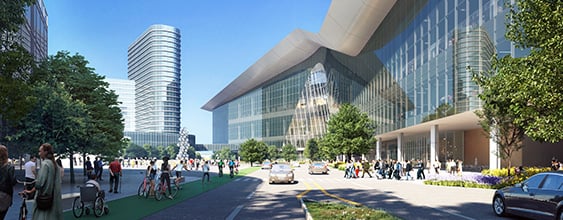
Creating low-traffic and low-speed neighbourhoods – or even removing cars altogether – reduces the danger, the noise and the pollution associated with them. Once you reduce the traffic flow or slow it right down, it opens up a whole host of opportunities. Footpaths can be wider so that family groups and friends can walk together side-by-side. We can add cycling infrastructure, space for outdoor dining, and trees and vegetation that provide shade and reduce the urban heat island effect.

On the flipside, we have to give people a good reason to get out of their cars, by designing neighbourhoods where they can meet their daily needs within a 15-minute walk or cycle. It's not about leaving them stranded in suburban environments without any other support, because that’s unrealistic. Studies have shown that walkable places have some essential ingredients. The most important is medium to high-density living rather than single dwellings on their own plots. This might be semi-detached or terrace housing, or three to six storey apartment buildings. There needs to be a mix of places that provide for your daily needs such as shops, cafes and parks, and regular intersections so people don’t have to walk long distances to cross the street or get from A to B. And, of course, there has to be regular and reliable public transport for those longer-distance trips.

Then there has to be a mix of jobs sprinkled into that, so we need to include commercial and retail space, schools, gyms and all of the other things that people use on a daily basis. Making schools accessible is one of the best ways of bringing about a cultural shift. I’ve never met anyone who disagrees that it’s a good idea for kids to be able to walk or scoot to their local school. That’s part of incorporating activity into our everyday lives. Kids and parents see their friends on the way and children gradually gain independence but, most importantly, they’re getting used to doing local trips on foot.

We also need to think much more about micro-freight – there’s a belief that you can only deliver things with trucks, but most of the deliveries people get to their homes are quite small items that could be transported on cargo bikes. Even the tradies don’t always need a large van for every journey – they might only be picking up a plumbing part from the hardware store. In congested urban environments, bike deliveries are often significantly faster, especially if there are multiple stops. A van gets stuck in traffic and it takes time to park and unload.

We’ve already had a taste of what car-free streets could be like. During the COVID-19 lockdowns a global phenomenon took place. The volume of vehicle traffic dropped, the air was cleaner and people noticed that the birds were singing. People got out and started walking or cycling or jogging in their local neighbourhoods. More than 600 cities around the world, from Vancouver to New York to Melbourne responded by creating more space for people on streets: through outdoor street dining, pop-up cycleways, closing streets to motor traffic, and changing traffic signals. There are many cities that are on a long-term trajectory towards car-free centres or precincts including Barcelona, Paris, Oslo, Milan, Madrid, London, Mexico City, Bogota and Amsterdam.

Going car-free isn’t going to happen everywhere at once, but if we concentrate on areas that have the right ingredients and take an approach of testing things out, people can try it and think “yeah, that’s what I want in my life”. We need to offer a long-term vision and take our communities on a journey to get there.

Perhaps most of all, we need to change the conversation. A lot of discussion about removing cars from cities focuses on what we could lose. We need to encourage people to think about all the things we stand to gain: healthy, active lifestyles, clean air, quiet streets, more social engagement and improved mental health.

Discover more insights, part of WSP's Great Places, For Life.


More on this subject

thn-green-buildings

July 2026 | 5 minutes

Bringing central business districts back to life

svg-icon Feature
Decarbonization , Places , Resilience
thn-fifa-world-cup

June 2026 | 4:55 minutes

Before the Opening Match: The Decisions that Shape Major Event Success

United States
svg-icon Feature
Mobility , Places , Society
thn-leed-v5

March 2026 | 2:08 minutes

LEED v5 Explained: Three Changes Building Owners Should Understand

United States
svg-icon Feature
Decarbonization , Resilience , Places
thn-beauty-buildings

February 2026 | 4 minutes

Finding the beauty in ugly buildings

svg-icon Feature
Places , Decarbonization , Climate , Society
thn-light-at-night

January 2026 | 5 minutes

Light at night

svg-icon Feature
Biodiversity , Society , Places
Thn-Website-Trackless-Tram-WP

January 2026

Examining the Emerging Potential of Trackless Rapid Transit

svg-icon Feature
Mobility , Places , Technology
thumb-DC-Article-Water-563x220

December 2025 | 5 minutes

Data Center Water Stewardship is the Path to Positive Growth

svg-icon Feature
Data Centres , Places , Resources , Resilience
thn-retrofitting-once

November 2025 | 4 minutes

Retrofitting once is not enough

United Kingdom
svg-icon Feature
Places
thn-delivering-urban-transformation

September 2025 | 2:52 minutes

Delivering Urban Transformation

United States
svg-icon Feature
Places , Society , Mobility
thn-urban-centers

September 2025 | 5:15 minutes

Reimagining Urban Centers

United States
svg-icon Feature
Places
img-safer-mobility-thumb

August 2025

Safer Mobility

svg-icon White Paper
Biodiversity , Climate , Decarbonization , Energy Transition , Mobility , Places , Resilience , Resources , Society , Technology , Working at WSP
Royal Academy roof view

July 2025 | 5 minutes

Acoustic engineering: the quiet hero of adaptive reuse

svg-icon Feature
Technology , Places , Resources , Resilience
Sara Stace
Australia

Share this page

  • Share on Facebook - Warning, this link will open a new tab.
  • Share on Linkedin - Warning, this link will open a new tab.
  • Share on Twitter - Warning, this link will open a new tab.
  • Share on Skype - Warning, this link will open your Skype application.

Related themes and tags

  • Places (186)


  • Net Zero (78)
  •  
  •  
  •  
  •  
  •  
  • Who We Are
  • Our history
  • Future Ready
  • Canadian leadership
  • Our offices
  • What We Do
  • Sectors
  • Services
  • Projects
  • Insights
  • Climate
  • Mobility
  • Places
  • Society
  • Resources
  • Technology
  • Careers
  • Join our team
  • Early career
  • Experienced professionals
  • Why join us?
  • Corporate
  • Sustainability
  • Health and safety
  • Investors
  • Business conduct hotline
  • News
  • Ethics and integrity
  • Indigenous relations
    ©2026 WSP
    • The WSP logo
    • Privacy notice
    • Anti-spam commitment
    • Cookie notice
    • Terms of use
    • AI statement
    ©2026 WSP
    Exiting our Website

    You are about to leave WSP.com and are being redirected to a job opportunity at Louis Berger, which has been recently acquired by WSP in the US.