Traffic Management Solutions
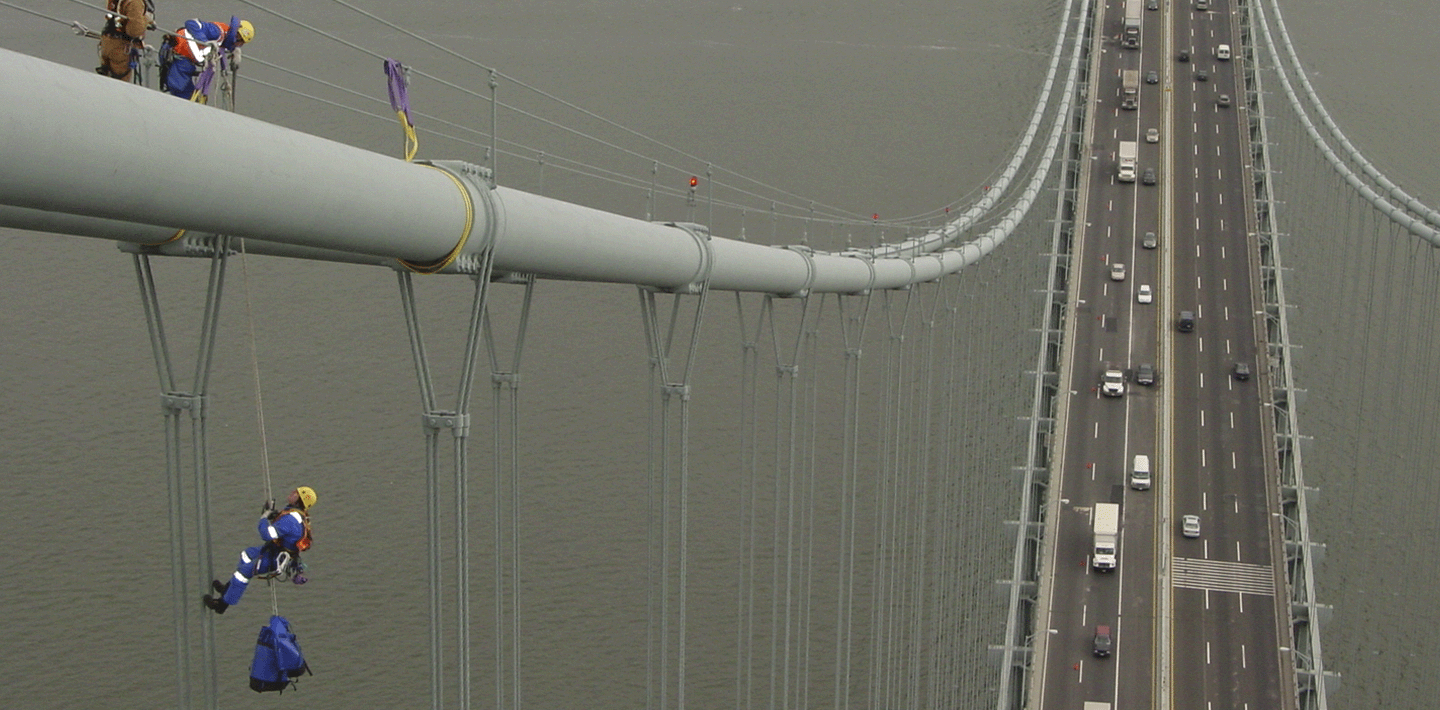
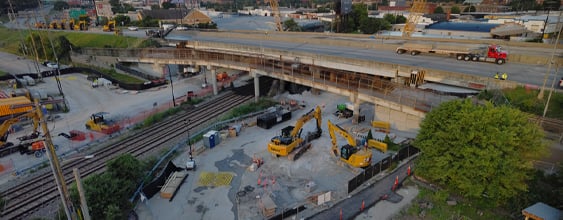
The project replaced 225,000 square feet of bridge deck, in addition to superstructure replacement in the anchorage spans, seismic upgrades, two-way cashless tolling implementation, and improvements to lighting, drainage and standpipes.
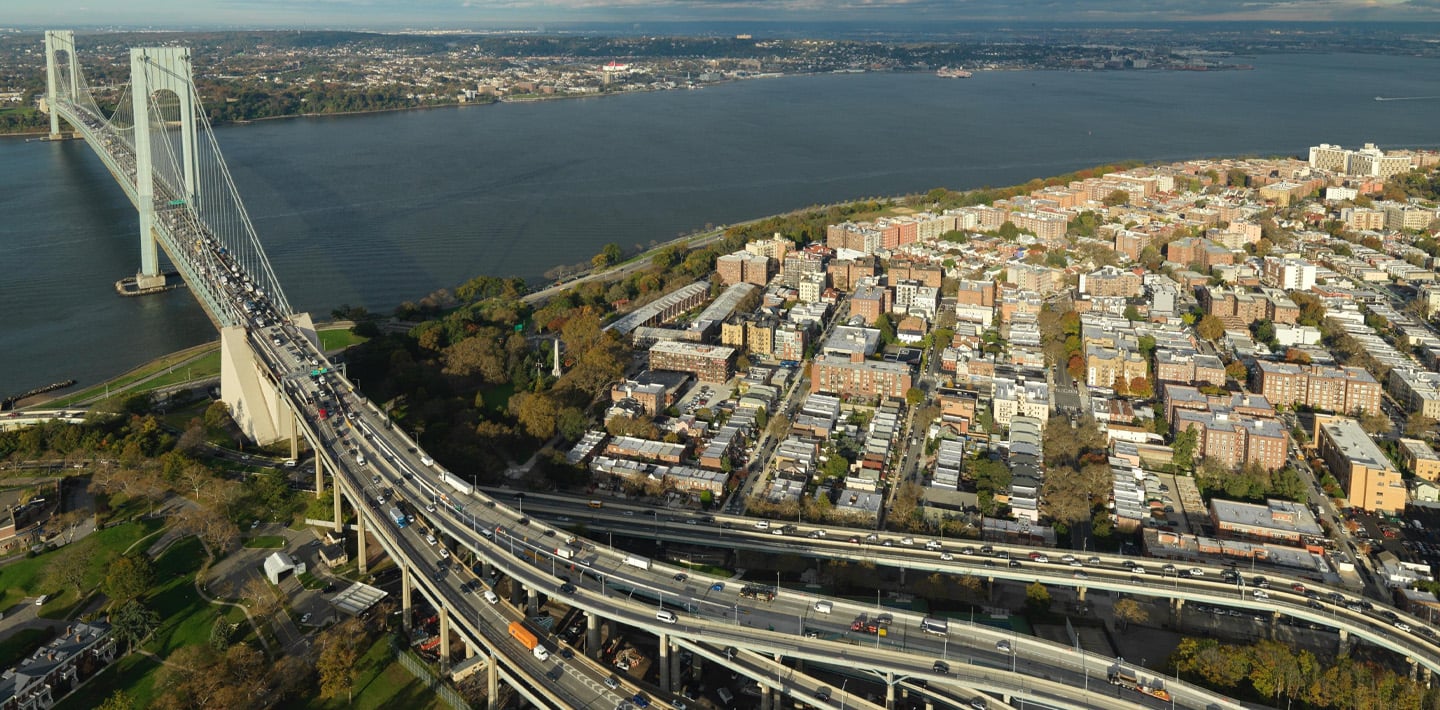
Starting in 2019, the project’s work areas included the westbound and eastbound Staten Island Approach, Staten Island Anchorage, Brooklyn Anchorage and westbound Brooklyn Approach. Work was performed while simultaneously maintaining the existing peak hour lane configuration, all through a complex traffic management scheme and lane-by-lane reconstruction. This scheme was facilitated by the earlier reconfiguration of the upper level, when a high-occupancy vehicle (HOV) lane was added to the original six lanes carried. This HOV lane provided an important connection from Staten Island all the way to the Hugh L. Carey Tunnel to Manhattan.
The anchorage spans were reconstructed with an innovative structural solution developed by the team, using a moveable barrier system to place six available travel lanes in either a 4/2 or 2/4 flexible configuration, depending on traffic needs throughout the day. This required a two-lane shift of the moveable barrier across the span using two barrier transfer machines.
“We were able to take a peak hour lane away from the non-peak period, and instead of moving the barrier one lane each day, we moved it two lanes across a bridge,” Gorton said. “During construction, we went from a 4/3 configuration to a 4/2 configuration between the morning and the afternoon, and that opened up the one lane width of traffic for our team to do the deck replacement and steel repairs with minimal impact on traffic.”
Lanes were closed as work progressed accordingly, and each stage required unique traffic patterns and striping. These traffic control measures, which included lane designation signing and two sets of lane control signs, were successfully implemented and eliminated delays otherwise caused by a more traditional work zone traffic control (WZTC) approach of reducing peak hour capacity.
“A significant traffic management approach was required just to move the barrier and traffic lanes during construction,” Gorton said.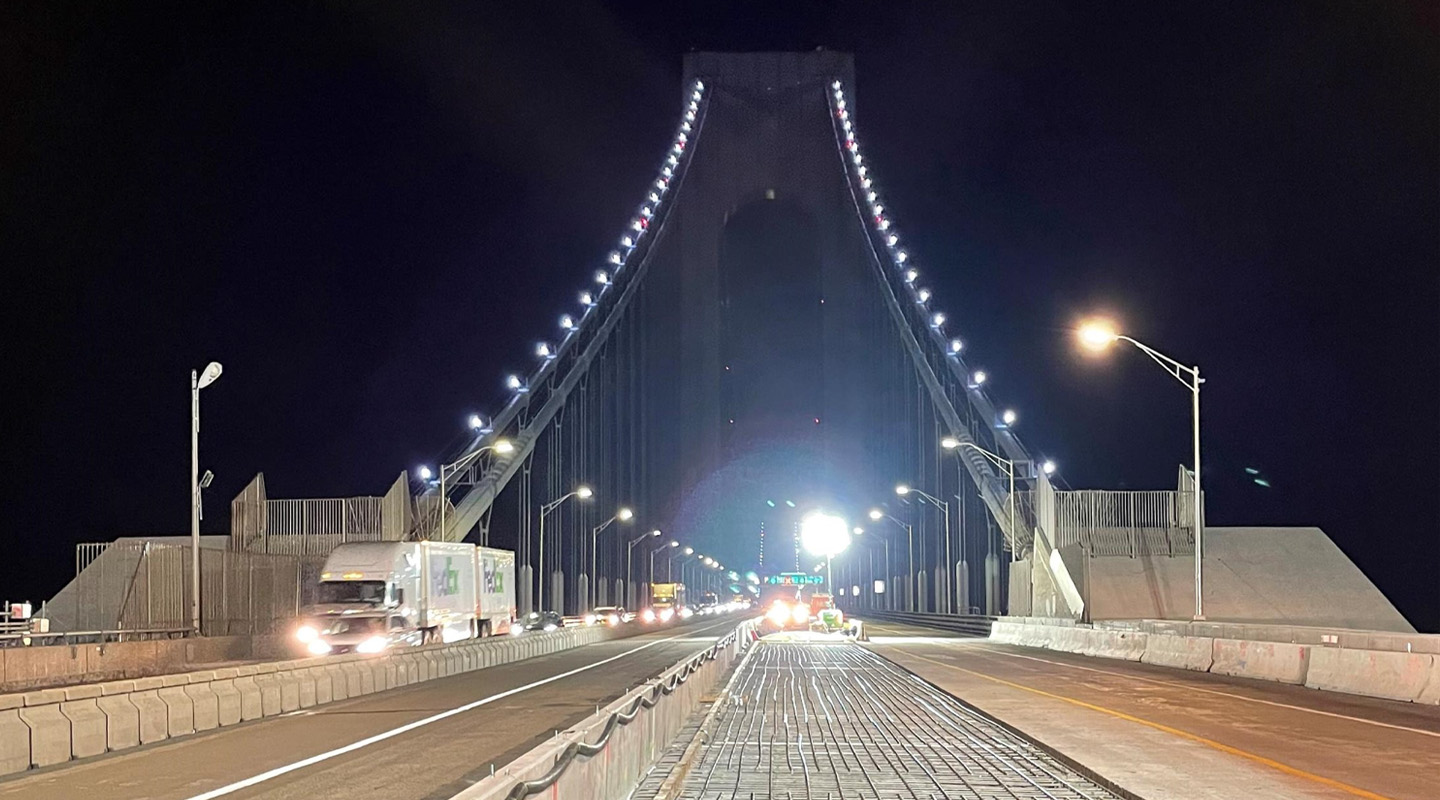
The project replaced 225,000 square feet of bridge deck, in addition to superstructure replacement in the anchorage spans and seismic upgrades.
Success During COVID
Another major challenge for the project was adapting to the COVID-19 pandemic in 2020. This project was considered essential work during the pandemic, and so the team carefully adhered to rapid changes in health guidance and ensured that all necessary project staff continued to be on-site and prioritized the safety of each team member.
Through this careful coordination, work on the bridge continued, with project plans modified to capitalize on the significant reduction in traffic, a little bit of a silver lining.
“We realized that the traffic volumes were so significantly dropped in that period of time that we were able to – in cooperation with the contractor – combine two construction phases to save four or five months on the project’s schedule, deliver a better work quality product and keep moving on an aggressive schedule,” Gorton said.