Waterfront Seattle and a Legacy of Transformative Infrastructure
WSP experts discuss the ongoing program to create an iconic waterfront, as well as how this revitalization was paved by the landmark Alaskan Way Tunnel.
map marker
United States
|
Wednesday, February 14, 2024
Reading Time :
5:00 minutes
Seattle residents are seeing their city’s downtown space being transformed and invigorated in real time, thanks to the ongoing works of the Waterfront Seattle Program.
Waterfront Seattle is reinvigorating the waterfront as an inviting, lively and family-friendly public space, connecting residents and visitors with cultural, commercial and civic destinations, and fostering growth and development opportunities for area businesses and nearby neighborhoods.
WSP partnered with the City of Seattle on such a transformational project for the past decade through the planning, design and construction phases. WSP is the engineer of record on many of the civil, electrical, structural and traffic improvements, and provides programmatic support for budget and partnership management.
“The project is rebuilding 20 acres of Seattle’s central waterfront area, which will help reconnect downtown Seattle to its historic waterfront while also providing an iconic connection between Pioneer Square, the Seattle Aquarium and the Pike Place Market,” said Cale McPherson, WSP vice president of project management.
Opening the Way for Waterfront Seattle
Planning efforts for the Waterfront Seattle Program began in 2003, after which then-mayor Paul Schell and Seattle City Council established the program’s guiding principles in Resolution 31264 in 2011, followed with their endorsement of the Waterfront Concept Design, Framework Plan and Strategic Plan in 2012.
“Waterfront Seattle was imagined by civic leaders as a way to capitalize on the incredible opportunity created by the Alaskan Way Viaduct and the Seawall Replacement programs, which opened up Seattle's central waterfront for development as a premier public space,” McPherson said. “The City of Seattle has been steadily progressing and delivering a series of projects since 2010 and is approaching the end of this exceptional program.”
MarketFront, the first piece of the new pedestrian connection between downtown and the waterfront, opened in 2017.
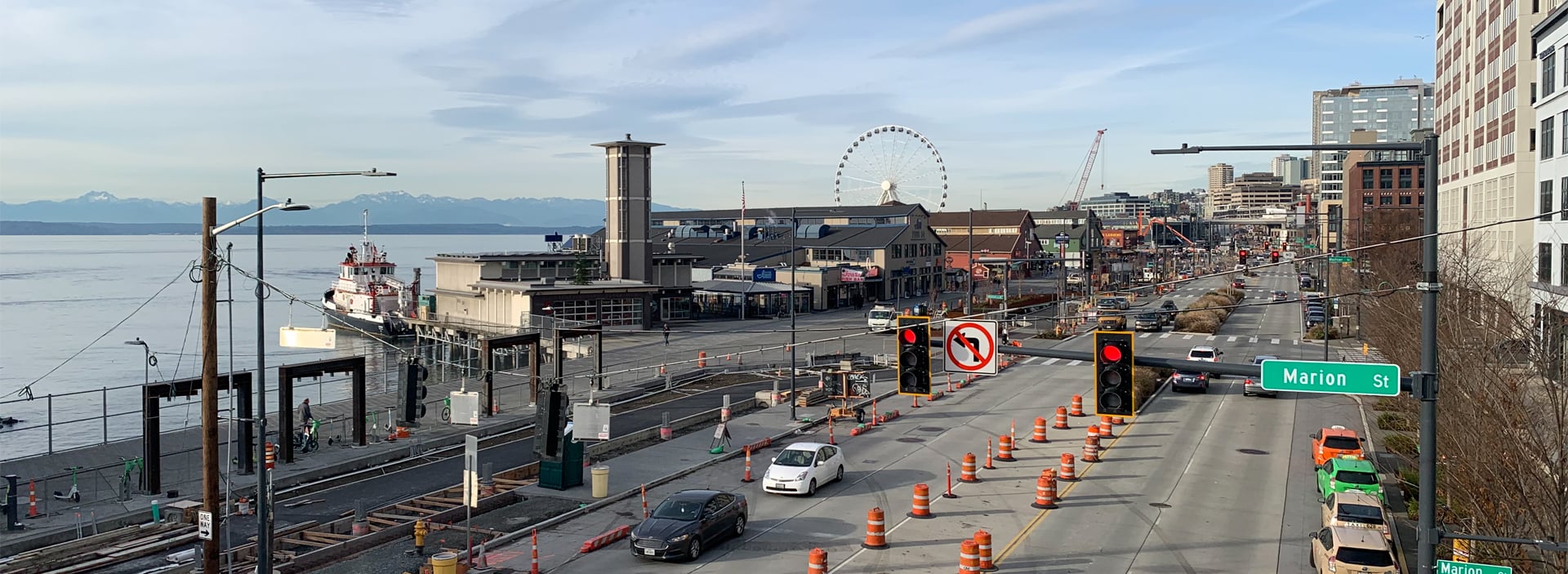
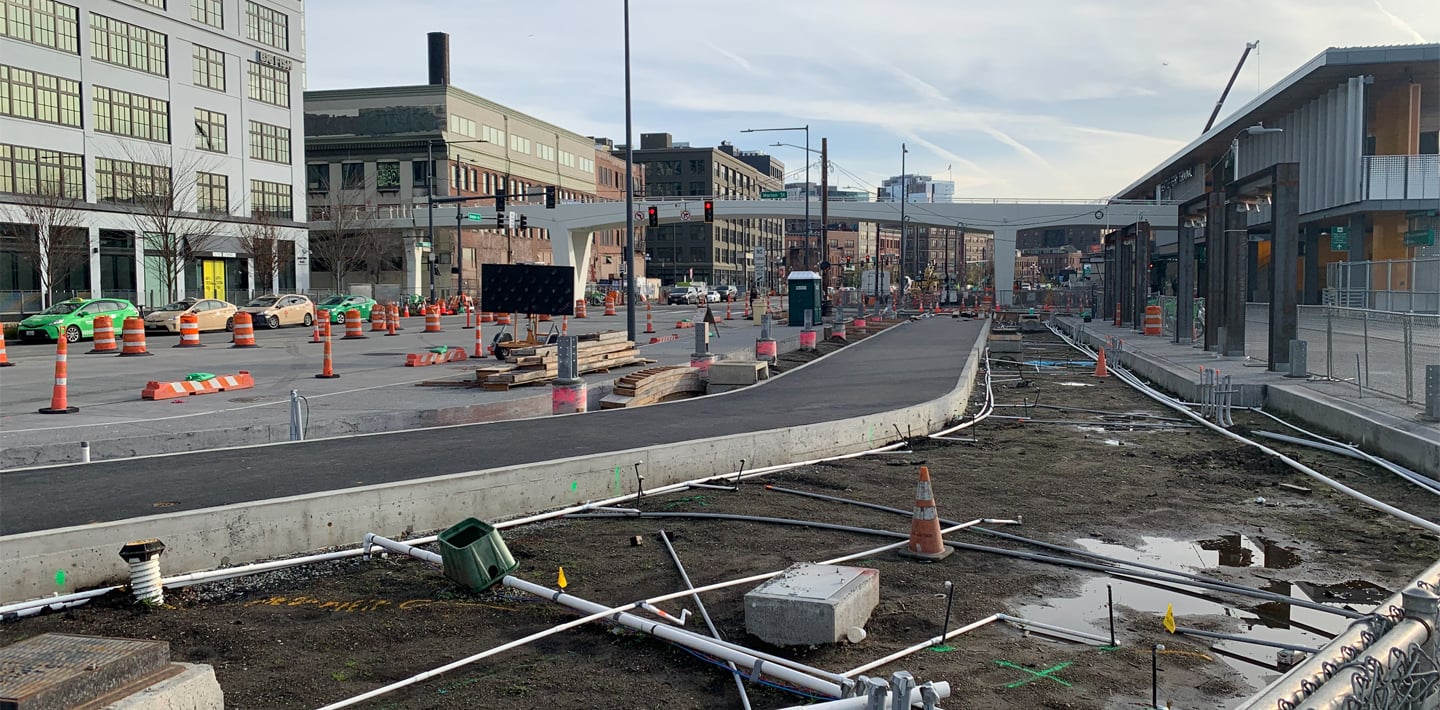
This past year, the program achieved major milestones with the opening of Elliott Way to provide a new multimodal connection between the waterfront and Belltown, the opening of the Marion Street Pedestrian Bridge to provide a new connection to the ferry terminal, commencing construction on the Pike Pine Streetscape project, and major progress on the new Pier 58, the pedestrian promenade and Overlook Walk.
According to the City, substantial completion of many major elements is expected by the end of 2024. These elements allow for direct access from downtown Seattle directly to the waterfront, including the expanded park promenade that provides a protected bike lane.
“Seattle is an iconic city, and it should have an iconic waterfront to go with it,” said McPherson, who himself is a Seattle resident. “We like to walk and bike around our Seattle spaces. While the Alaskan Way Viaduct took you through downtown, it didn’t allow you to stop and take it all in. That’s what this new waterfront experience offers.”
The Marion Street Pedestrian Bridge provides a new connection to Waterfront Seattle and the ferry terminal.
Breaking Ground with Alaskan Way
These blocks were originally opened up to this new program opportunity thanks to the completion of the Alaskan Way Viaduct Replacement Program, which replaced the seismically vulnerable Alaskan Way Viaduct (AWV) with the two-mile-long, double decked State Route 99 road tunnel.
The AWV had been a fixture of downtown Seattle’s Elliott Bay waterfront for 65 years and at one point was carrying an average of 100,000 vehicles daily. But the 2001 Nisqually earthquake damaged both the viaduct and the supporting Alaskan Way Seawall, which required $14.5 million in emergency repairs from the Washington State Department of Transportation (WSDOT).
“When we saw the viaduct cracks, we began a monitoring system for the foundations, because they were starting to settle and sink from the damage,” said Paula Hammond, WSP senior vice president and multimodal national market leader, who was chief of staff for then-WSDOT Secretary Doug MacDonald when the project was conceived, and then served as state Secretary of Transportation from 2007-13. “That’s when we began in earnest to study whether to attempt to retrofit it or consider replacement.”
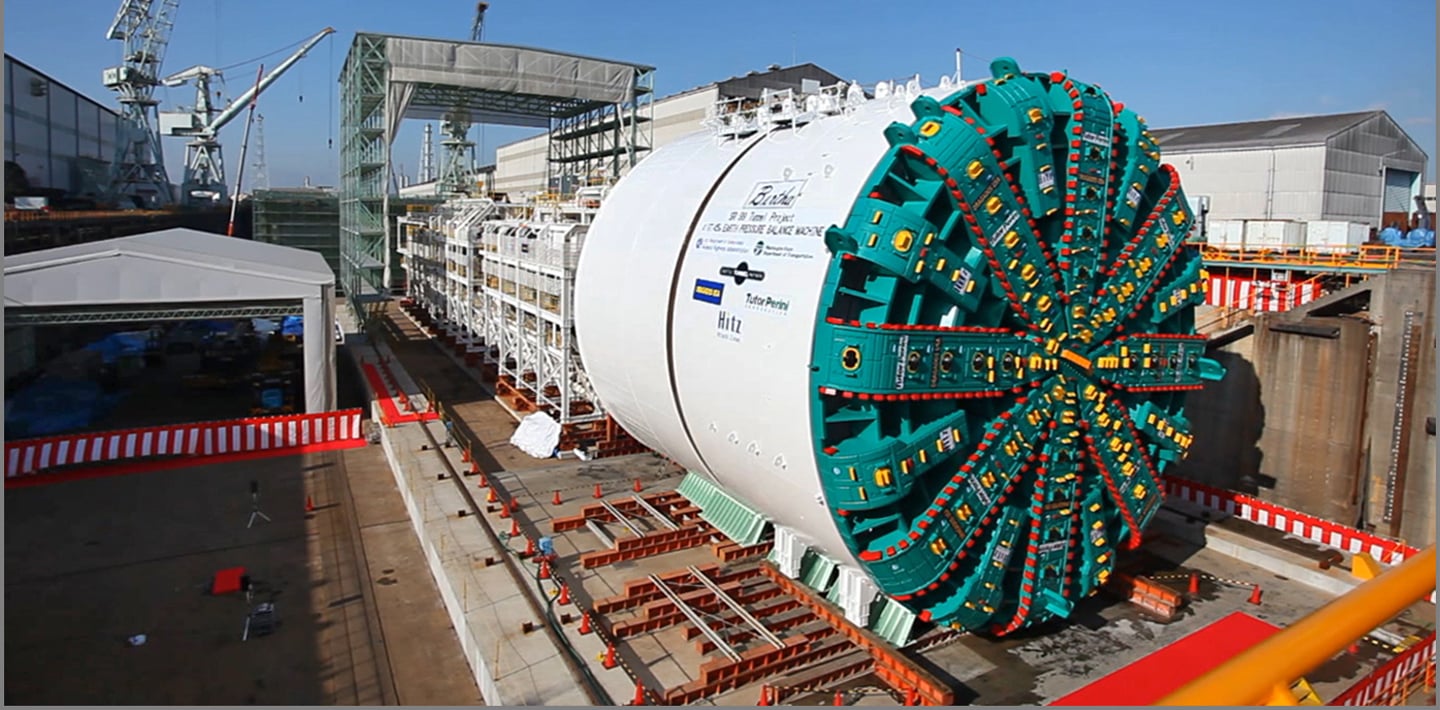
In 2013, a historically massive tunnel boring machine named Bertha, began its descent into the Seattle underground to begin digging the Alaskan Way Tunnel.
Bertha: A New Beginning
The Alaskan Way Viaduct Replacement Program was eventually started to improve the downtown commute and begin the revitalization of the public waterfront.
In 2001, WSP—then Parsons Brinckerhoff—was hired by WSDOT as a consultant for engineering and environmental planning concepts for the project and remained involved through its completion.
“Our role in a technical sense was to provide alternatives, from suspension bridges to underwater tunnels, that would be technically feasible, financially viable, environmentally responsible and supported both politically and publicly,” said Mike Rigsby, principal director of project management for WSP in the U.S. and WSP’s project manager at the time.
A tunnel plan was approved and digging began in July 2013, using a historically massive tunnel boring machine (TBM) named Bertha, in honor of Bertha Knight Landes, Seattle’s first female mayor from 1926-1928. Standing five-stories tall, the 7,000-ton TBM was the largest in the world at that time.
Bertha was able to drill four traffic lanes at one time using a single-bored tunnel, with two lanes stacked above two others. This drilling was eventually completed in April 2017, after which crews finished construction, and a grand opening was held in February 2019.
“I think that everybody that worked on this project knew that it was going to make a historical impact on the city and thought that this was a legacy that they could be proud of and tell the children and grandchildren about,” Rigsby said.
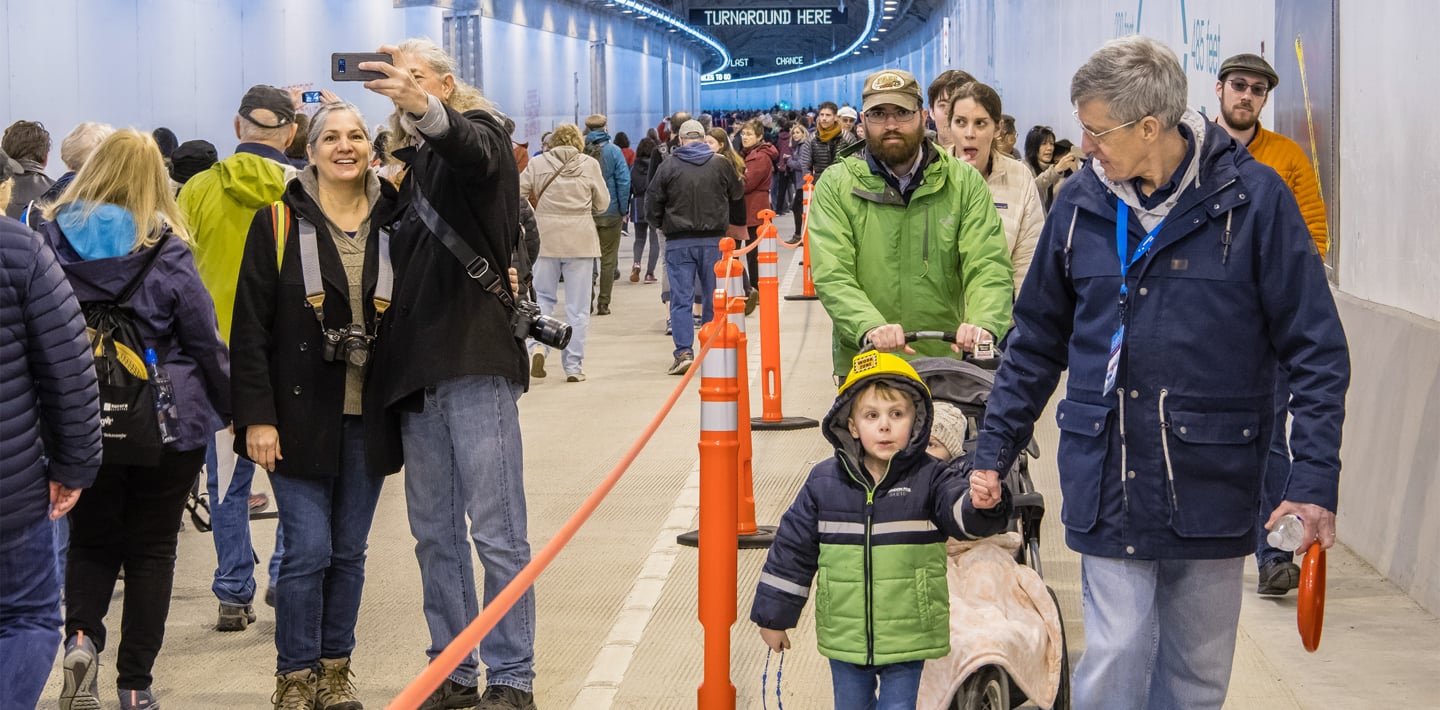
WSP’s Mike Rigsby and his grandson, Caleb, take a walk through the recently completed Alaskan Way Tunnel during its 2019 grand opening.
Welcoming Waterfront Seattle
The years that followed that grand opening have seen the steady revitalization of Seattle’s waterfront. This renewal supports the city’s cultural identity and paves the way for a go-to destination not only for local residents, but visitors as well.
“When the viaduct came down and this project got underway, it felt like the city got its first real breath of fresh air,” said Ginette Lalonde, WSP vice president and Seattle area manager for Water and Environment, who served as the firm’s project manager during the final stages of the Alaskan Way project. “It’s going to help establish the cultural identity of what will become an anchor for businesses, residents and tourists.”
[To subscribe to Insights, contact the editorial staff at [email protected].]