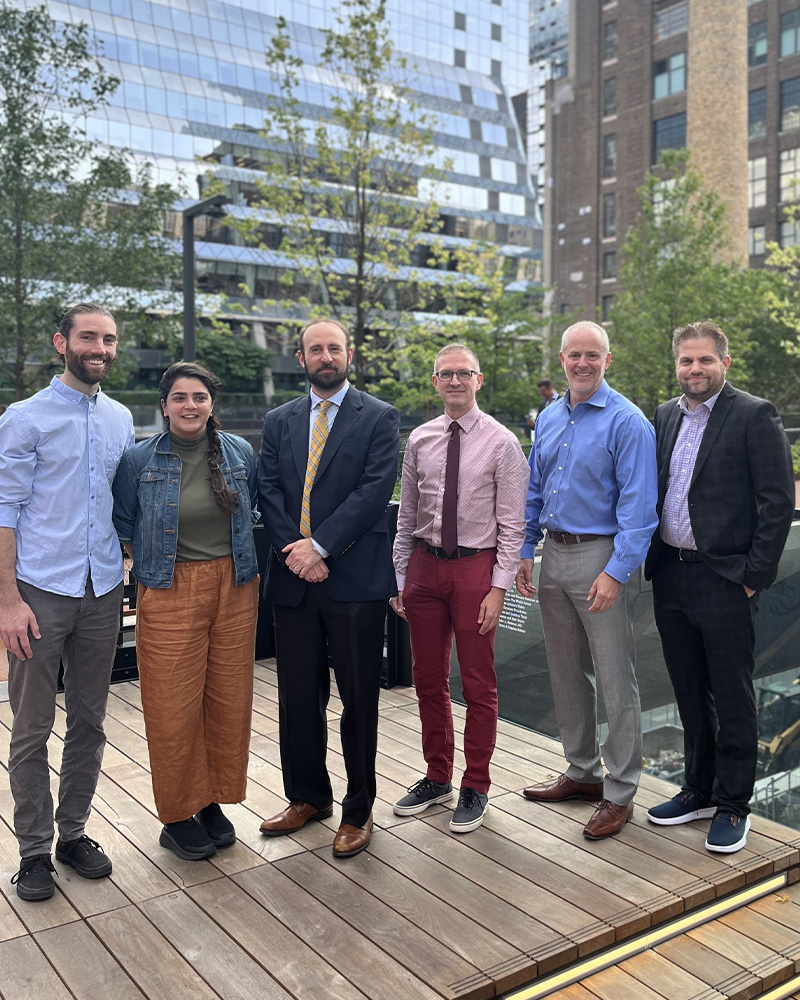
David Weiss had two summer internships while at Manhattan University before launching his career with Chas. H. Sells, Inc., WSP’s first transportation acquisition in the U.S. Over the past three decades, he ascended into roles from bridge condition inspections and design of highways to high-stakes project management of urban transportation facilities, area manager, and New York district transportation lead.
David currently serves as the executive of our transportation and infrastructure national business lines, providing strategic leadership and operational oversight of niche sectors including aviation, highway, structures, maritime, geotechnical and tunneling, transit and rail, tolling, mobility operations and digital services. His story is a testament to the power of seizing opportunities, embracing challenges, and continuously learning.
Dive into David’s dynamic career path and discover how passion and perseverance can lead to extraordinary success.
Can you describe a pivotal moment or project that significantly advanced your expertise?
My boss, Steve Smith, encouraged me to pivot from fieldwork to bridge design. At first, I was nervous because I had always been a field-oriented guy, and this change felt daunting. However, I decided to embrace the opportunity. I dove into learning the business of bridge design analysis, and the development of rehabilitation and replacement plans. The experience was transformative, providing me with a well-rounded understanding of the field and marking the first major pivot in my career.
Another significant moment was when I was asked to lead the civil site/municipal practice, an area completely outside my expertise. Despite the challenge, I took it on and successfully grew the team from fewer than 10 to more than 30 members. This experience taught me the power of adaptability and the importance of surrounding myself with knowledgeable people. It was a testament to the fact that stepping out of my comfort zone could lead to incredible growth.
Thankfully, I've always had good mentors and folks that worked alongside me. I have always been in a perpetual state of learning. My thought is the minute you stop learning; you should probably call it a career.