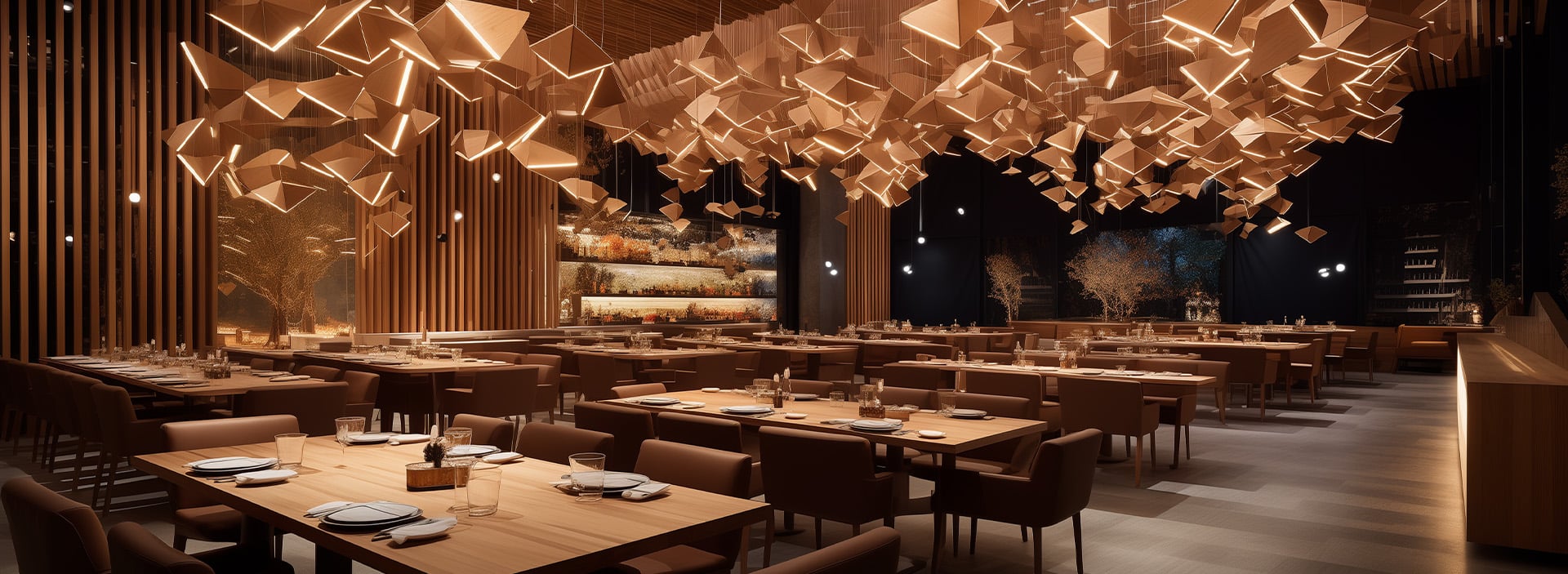
As a design professional, I believe that our experiences inform our work. When you walk into a high-end restaurant and find yourself in a dimly lit room with rich reds and oranges overhead, it speaks to your memories of sitting cozy by a campfire. It’s that thoughtful response to the human experience that we bring to the table as designers.
You can program AI to mimic certain colors, sure, and you could go deeper into biological response evaluations to better program AI, but you’re still missing the creative spark that comes from a designers years of experience honing their craft.
Furthermore, today’s AI technology uses historical data for training, which inhibits the technology’s capacity to respond to our ever-evolving culture and trends.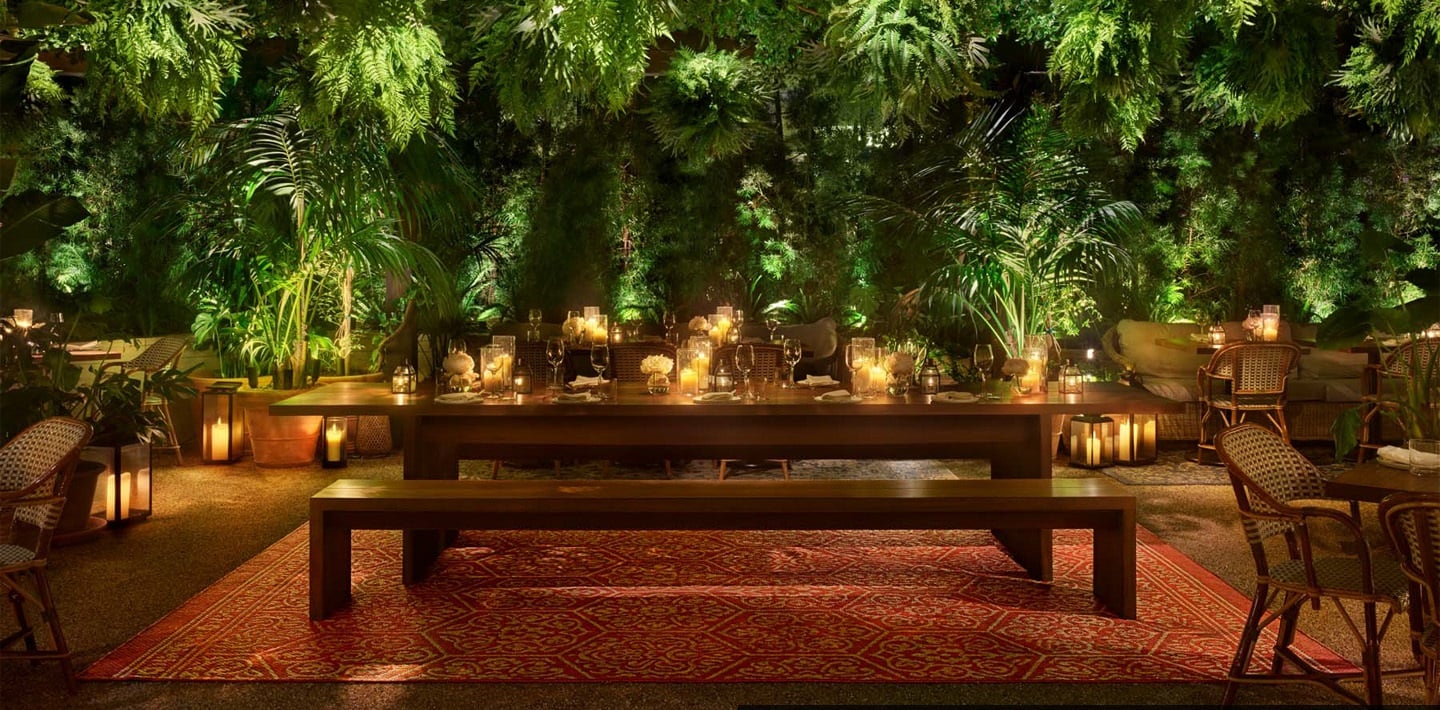
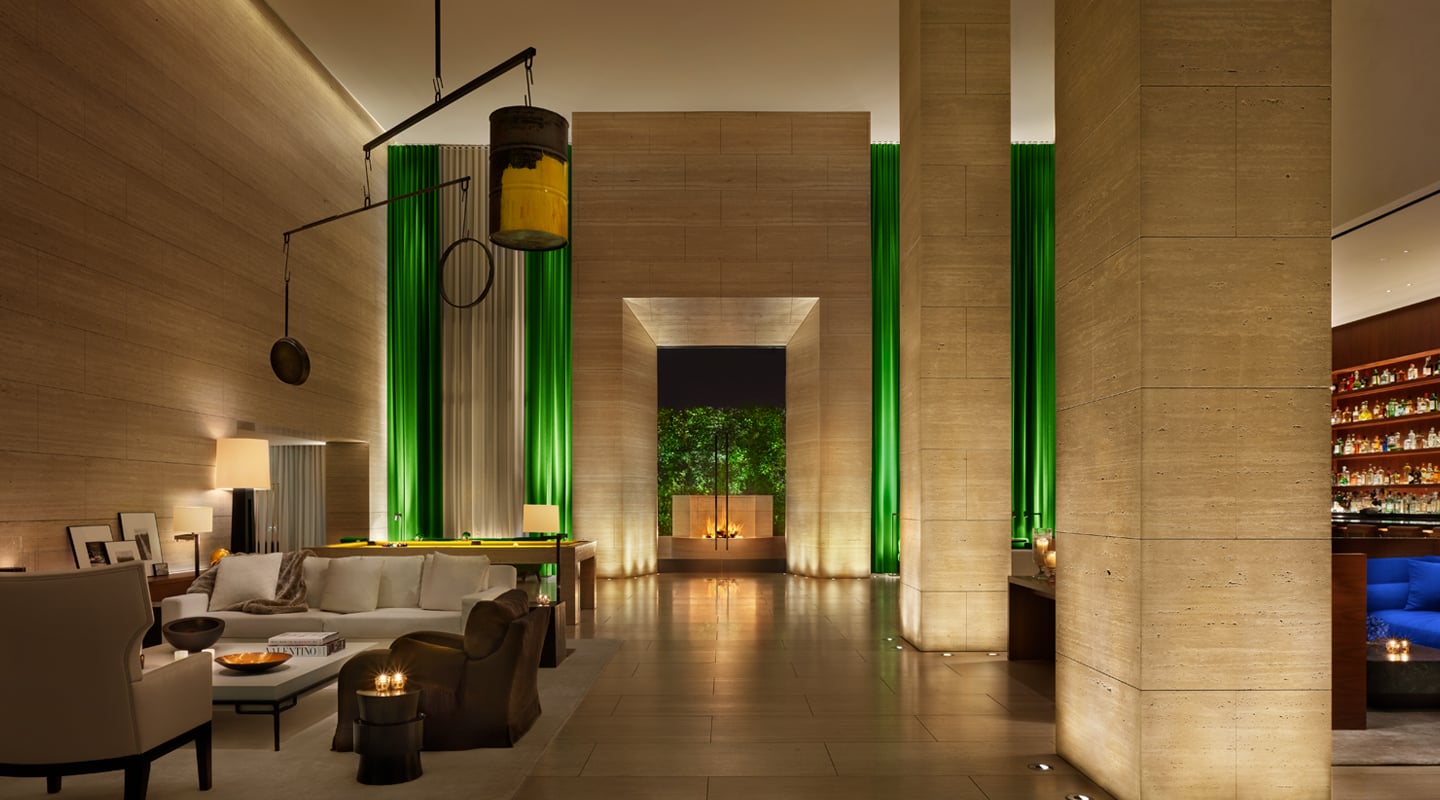
©EDITION HOTELS/NIKOLAS KOENIG
WSP’s lighting design in the Edition hotel is an example of how a designer’s experience honing their craft provides a creative spark to enhance the overall atmosphere.
Can AI Reduce Lighting Costs?
In many ways, AI is simply a new version of automation. In cases where you’re following a design concept with known lighting solutions, AI applications can quickly recognize the patterns in those solutions and complete these repetitive tasks automatically. This can save both time and money on any applicable project.
There are also opportunities to rethink our current workflows and toolsets to capitalize on AI’s capabilities; for example using a conversational interface to direct application of prototypical solutions like wallwash, graze or downlighting, and automatically generate objects in a design model.
It also presents a promising opportunity for me and my colleagues to bring quality lighting solutions to more people. As it stands today, only a small percentage of the world is afforded lighting solutions that enhance day-to-day living. By reducing the cost of these solutions using AI techniques, more people would benefit from this basic and essential quality of life improvement.
But we need to ask the right questions to better position WSP to pursue these future possibilities. How can we adjust our employee training and development to better prepare our experts? How can we align our skills with new and changing AI tools so that we become tastemakers for quality designs, as well as for other industries within our firm’s sphere influence?
The future of AI industry applications may not be certain, but I believe our experts can be prepared to interpret and leverage AI-based results towards even greater client benefits down the road. 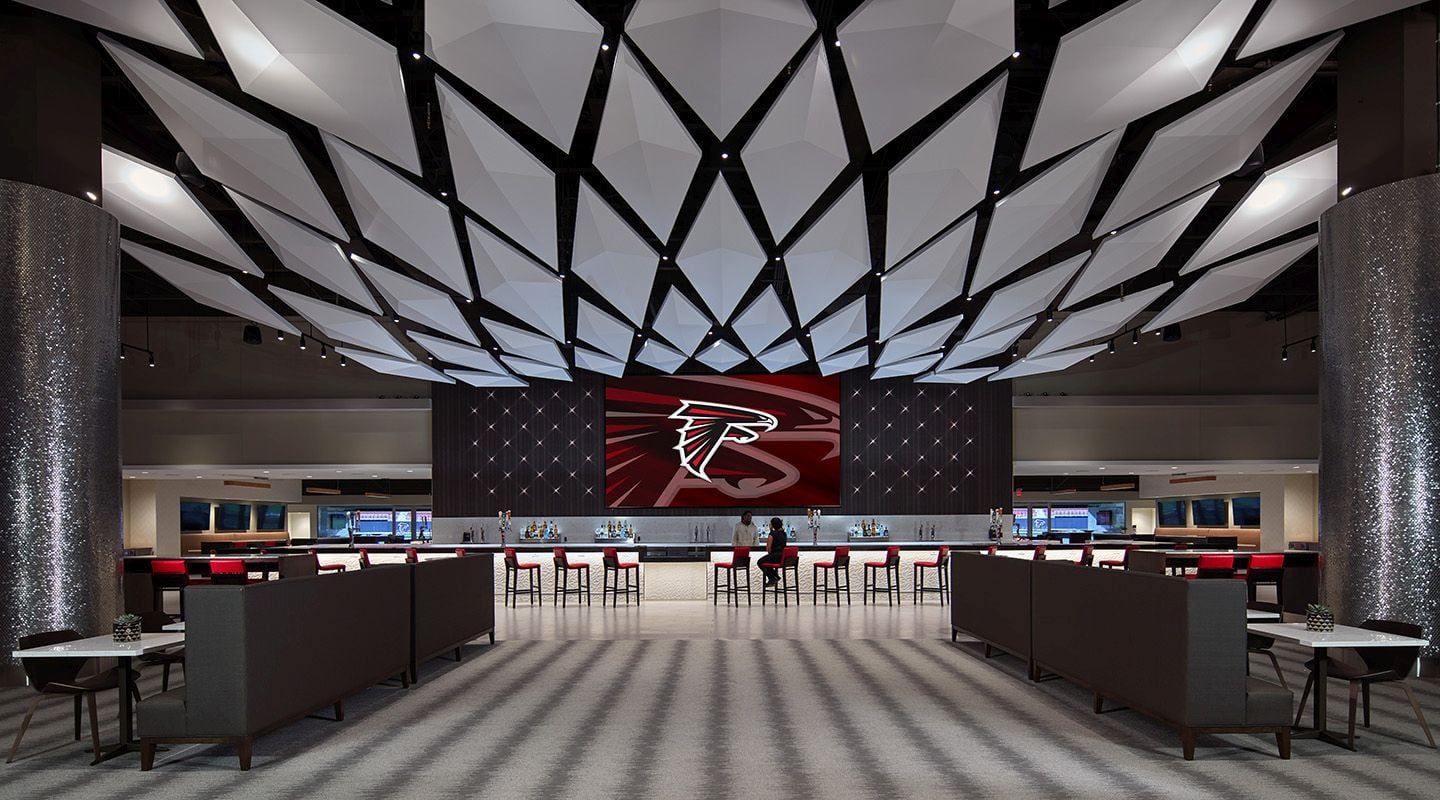
©BRIAN GASSEL
The Atlanta Falcons’ Mercedes-Benz Stadium uses LED lighting, designed by WSP, that offers flexibility while significantly cutting energy and maintenance costs.
[To subscribe to Insights, contact the editorial staff at
[email protected].]