Recognizing the successful experience with the SpeedCore system in earthquake-prone regions, the WSP team led by Rahimian decided to adopt the system, specifically for tall-building projects where wind loading is the governing lateral load consideration.
“We spoke to national steel erectors and fabricators to find out what can be done to make SpeedCore more cost-effective for use throughout the USA,” said Jeffrey Smilow, PE, F.ASCE, executive vice president and U.S. managing director of building structures at WSP. “They told us reducing the amount of field welding is key to increased erection speed and improved economics.”
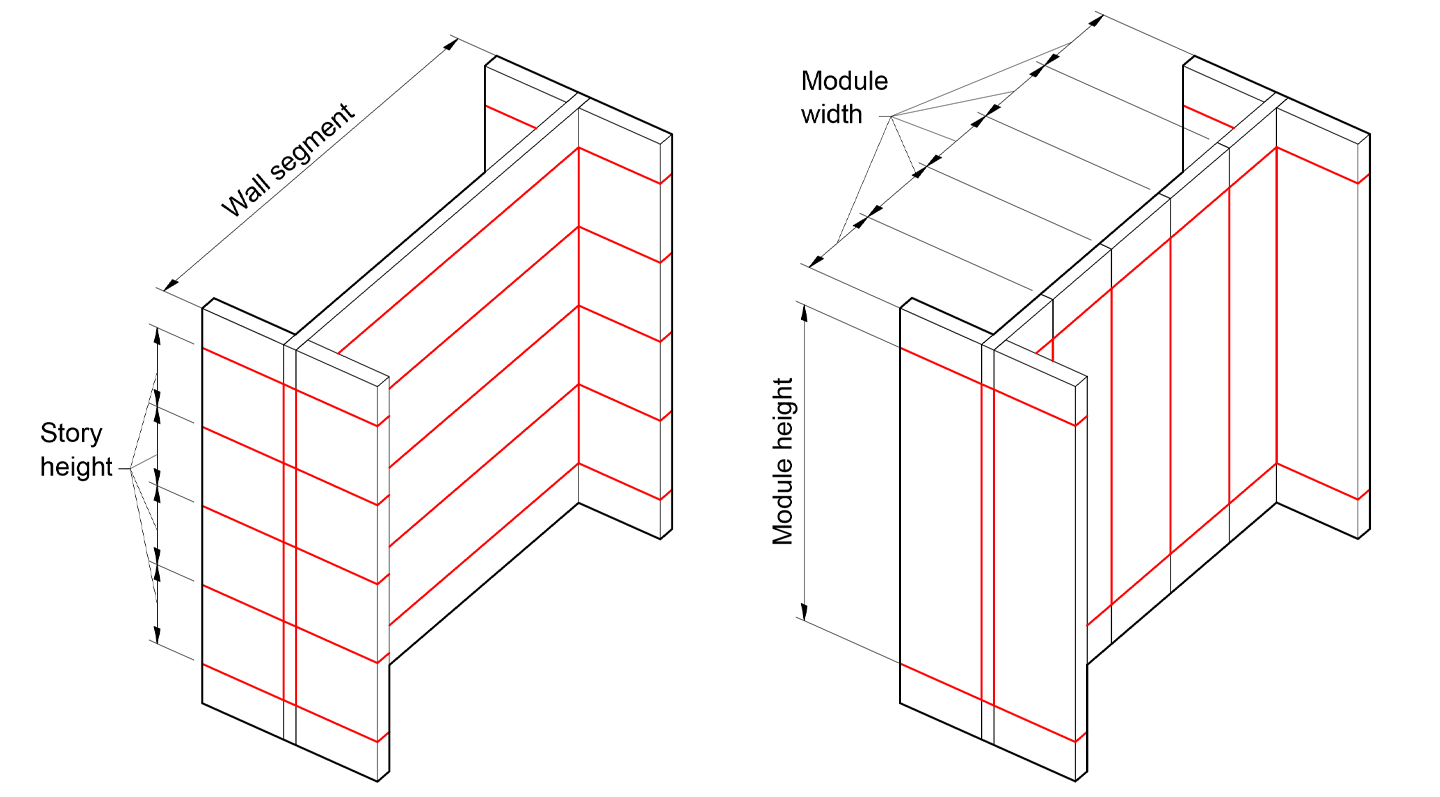
Rahimian and his WSP team developed a jointing approach that reduces the amount of field-welding and simplifies the connections between wall modules. The new approach is to orient prefabricated steel modules in a way that lends itself to easier fabrication, transportation and field erection.
Rahimian’s team recognized that vertical and horizontal joints between modules have different function and levels of stresses and can be differentiated. The horizontal joints can be field-welded, while vertical joints that experience lower structural demand can be joined without welding.
In the modified SpeedCore system developed by WSP, vertical joints are constructed using specially designed reinforcement bars that “stitch” adjacent modules through concrete fill. Using a vertical orientation of the prefabricated module, the system also minimizes the horizontal field-welded joints.
“This approach gives steel contractors the option of fabricating narrower modules, allowing them more control over fabrication, transportation and erection in projects where wide modules may otherwise present challenges,” said Konstantin Udilovich, PE, associate, building structures at WSP.
The increased tolerance in the vertical joints between modules offered by this jointing strategy allows the steel erectors to move faster and assemble more steel modules in reduced timeframes. By reducing the amount of time spent on joining steel modules at the construction site, this approach minimizes disruptions that come from major construction projects in dense urban areas. It also improves safety for construction workers by minimizing field operations.
Another crucial aspect of the Modified SpeedCore system is an alternative design of coupling beams over openings in steel modules. These beams, also known as “link-beams,” are often some of the most critical elements of a tall building lateral force resisting system. Instead of extending the wall module face plates over the openings, WSP proposed to use conventional I-beams (rolled or built up from plates) to construct the link-beams. The I-beams can then be embedded into concrete fill between face plates.
“We use embedded steel I-beams for link-beams on many projects,” said Ilya Shleykov, Ph.D., PE, vice president of building structures at WSP. “We have a good understanding of their behavior and contractors are comfortable using them.”
I-beams also allow for openings for piping and ductwork and are easier to fabricate and construct. Both the vertical joints and the modified link-beams can be designed using provisions already covered by steel and concrete design specifications. Certain aspects of the modified system, such as embedded I-beams, have been utilized in both moderate and high earthquake hazard regions and are known to exhibit the desired seismic performance.