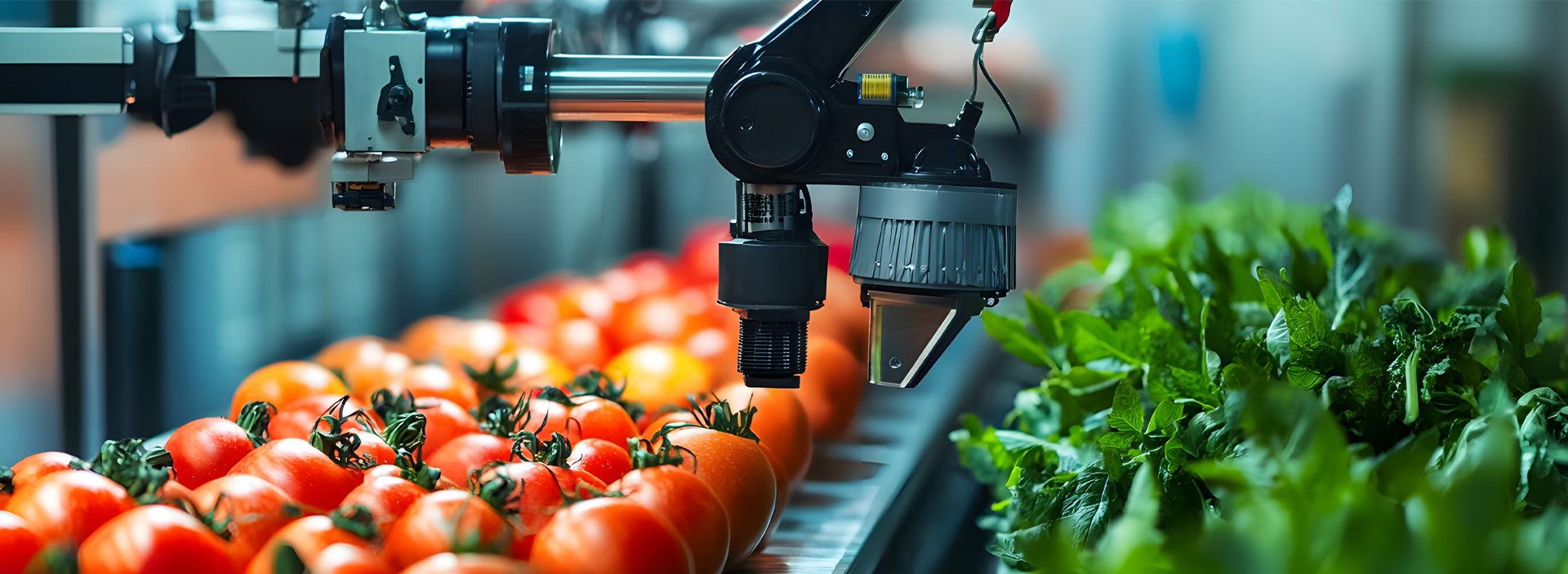
Historically, metal detection and x-ray dominated the search for foreign materials in food production lines. While effective, these technologies can sometimes miss contaminants that share similar density or composition with the product.
In recent years, our food and beverage team has observed a growing interest in optical scanning, not as a replacement, but as a valuable enhancement.
In addition to identifying contaminants, these systems can perform advanced tasks like sorting products by size — for example, directing potatoes into separate bins based on dimensions. They can detect mold spores using ultraviolet light, which causes specific molds to fluoresce, making them easier to identify in products like nuts.
Optical scanning works best within the meat, cheese and fruit and nut industries, and can quickly identify organic materials, plastic, paper, unripe fruit or nuts and certain molds. When paired with smart implementations, these systems reduce waste and deliver higher quality products.
Four recent technology advancements have allowed optical scanning to become more powerful:
- Faster computer processing speeds: Modern systems now offer significantly faster processing speeds, allowing high-capacity production environments to maintain throughput without compromising accuracy. Today’s machines can detect multiple foreign material profiles simultaneously, something that was not possible in the past. With increased computing power, it’s now feasible, using the same machine, to identify discolorations, such as a brown spot, and contaminants like a blue piece of plastic. This dual-target capability streamlines operations and enhances overall detection precision.
- Smaller, higher-speed cameras: Smaller, more powerful imaging devices are now able to keep pace with fast-moving product streams, boosting output while maintaining strict quality standards. These cameras support scanning at higher line rates without sacrificing accuracy. Their ability to detect smaller defects helps reduce unnecessary product rejection, thanks to precise nozzle control that enables targeted removal and minimizes waste.
- Advanced lighting technology: Lighting innovations such as 360-degree continuous and shadowless illumination ensure that all sides of a product are visible during inspection. This comprehensive visibility allows for more complete scans, improving the detection of both quality attributes and foreign materials. Stable, high-frequency lighting systems, combined with staggered light types, eliminate flicker issues that were common with previous technology. As a result, high-speed cameras receive consistent illumination, maintaining a clear view of products even at rapid throughput speeds.
- AI-powered learning systems: Intelligent software integrations now allow technicians to train systems to recognize specific product characteristics. This capability enables the system to continuously improve over time, reducing false rejections and increasing sorting accuracy. Owners can introduce new defect profiles directly into the machine without requiring a technician visit, allowing for faster adaptation to changing product requirements. This not only enhances performance but also minimizes downtime and operational disruption.
By integrating these types of technologies, optical scanning adds a modern and versatile layer to the foreign material detection process. This expanded capability broadens the range of detectability and significantly enhances overall food safety.
Learn more about our Food and Beverage capabilities here.