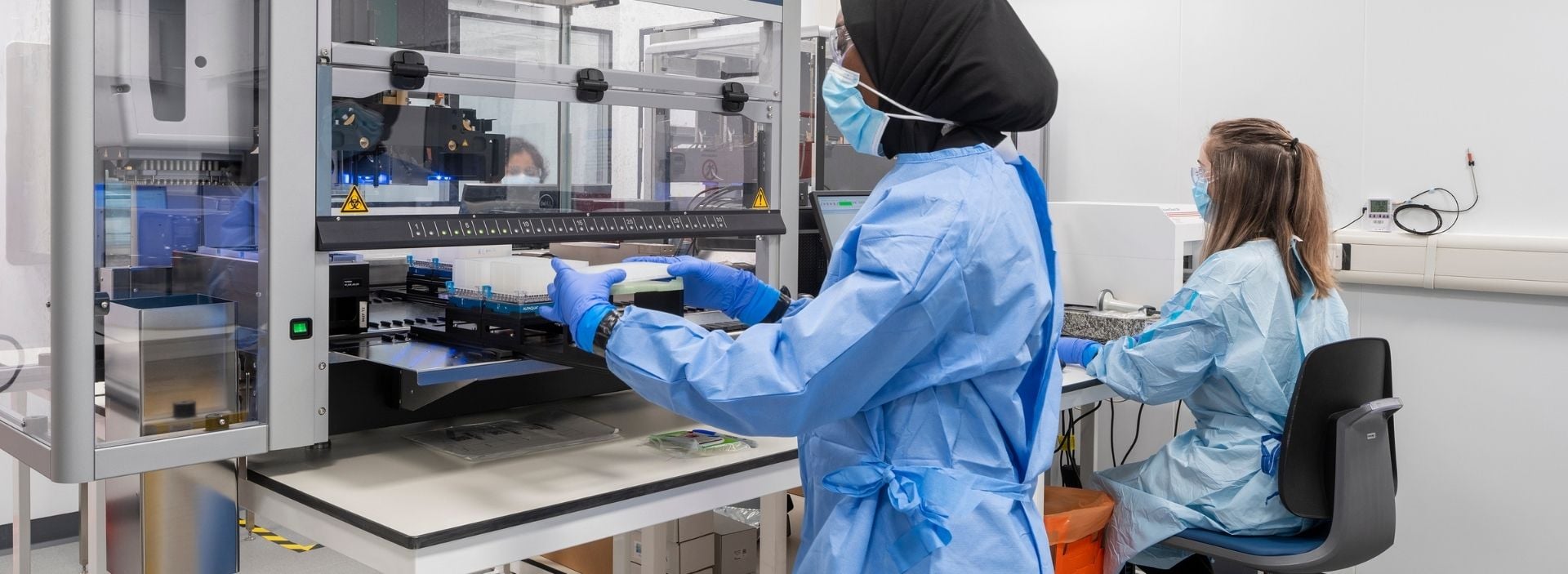
Vaccines are essential in protecting the world from harmful infectious diseases. However, the pharmaceutical industry is a significant contributor to greenhouse gas emissions, often relying on energy-intensive vaccine manufacturing processes.
Leveraging WSP’s deep understanding of novel sustainability solutions across various sectors coupled with our technical expertise in vaccine manufacturing process engineering, we have developed a resilient, future-focused decarbonisation plan for a UK pharmaceutical company with a demanding manufacturing process in terms of output.
Here are four actionable steps that similar pharmaceutical companies can take to future-proof their facilities based on our findings from this project.
1. Implement low-energy thermal oxidisers
Gas-fired thermal oxidisers are commonly used to treat exhaust gases and remove pollutants, but they consume a lot of energy. We worked with our client to replace this with a more sustainable, less energy-intensive solution.
We assessed various options using a financial and non-financial ranking process, analysing the energy cost and carbon performance of each. The options included:
- Gas absorption to treat off-gases: This process removes water-soluble inorganic contaminants from a gas mixture – this was effective but did not meet water-usage targets.
- Biofiltration: This involves waste degradation by living materials but would require specialist support and intensive maintenance – which can lead to higher costs.
- Regenerative thermal oxidiser: This recycles waste heat from one oxidisation cycle to preheat the waste gases for the next, allowing batch production instead of continuous operation.
Our extensive testing uncovered that regenerative thermal oxidisation was the most optimal solution, providing significant improvements to the facility’s energy efficiency.