Skip to content
WSP
WSP
  • Who we are
    We are the home of ambitious, passionate, and innovative engineering experts, scientists and advisors.

    Read more
    Who we are
    • Overview
    • Our history
    • Future Ready
    • Corporate responsibility
    • Our Offices
    • UK and Ireland Leadership
    • Global Strategic Plan
    • Our impact
    Corporate responsibility
    • Overview
    • Communities
    • Ethics and integrity
    • Health and safety
    • Inclusion and belonging
    • Sustainability
    • UK Policies
    Featured content
    thn-strat-plan-2025
    Pioneering change for empowered growth

    As world shapers, our 2025-2027 Global Strategic Action Plan captures our determination to push boundaries, deliver innovative solutions, and unleash the full potential of WSP.

  • What We Do
    We work together with clients to plan, design, create and deliver innovative projects that shape the world.


    View All

    • Sectors
    • Services
    • Projects
    What We Do
    • Overview
    • Property and buildings
    • Transport and infrastructure
    • Earth and environment
    • Digital services and solutions
    • Planning and development
    • Energy
    • Water
    • Advisory
    Property and buildings
    • Overview
    • Architecture services
    • Commercial and mixed use
    • Cultural
    • Education
    • Existing buildings
    • Healthcare
    • Heritage
    • High-rise
    • How to net zero
    • Industry
    • Local government
    • Mission critical facilities
    • Modern methods of construction
    • Pharmaceuticals and life science
    • Placemaking development and urban regeneration
    • Residential
    • Sports and stadia
    • Sustainable design and building
    • Town planning and consulting
    • Workplace
    Transport and infrastructure
    • Overview
    • Asset management
    • Aviation
    • Bridges
    • Defence
    • How to net zero
    • Infrastructure planning and consulting
    • Local government
    • Maritime
    • Project, programme and commercial management
    • Rail and transit
    • Roads and highways
    • Transport planning
    • Tunnels
    Earth and environment
    • Overview
    • Acoustics, noise and vibration
    • Air quality
    • Arboriculture and forestry
    • Asbestos and hazardous material
    • Biodiversity & natural capital services
    • Climate resilience
    • Climate risk and adaptation
    • Cultural heritage and archaeology
    • Ecology
    • Environmental assessment and management
    • How to net zero
    • Kit-of-parts approach
    • Landscape architecture
    • Nature solutions
    • Nature-based solutions
    • Waste management
    • Water
    Digital services and solutions
    • Overview
    • Cyber Security Services
    • Daisy
    • Data science advisory solutions
    • Digital solutions for water
    • Digital transport planning
    • How to net zero
    • Kit of parts
    Planning and development
    • Overview
    • Environmental assessment and management
    • How to net zero
    • Infrastructure planning and consulting
    • Land referencing and land assembly
    • Landscape architecture
    • Local government
    • Placemaking development and urban regeneration
    • Stakeholder engagement and strategic communications
    • Town planning and consulting
    • Transport planning
    • Urban planning and design
    Energy
    • Overview
    • Energy transition
    • How to net zero
    • Hydrogen energy
    • Nuclear energy
    • Offshore wind
    • Solar energy
    Water
    • Overview
    • Asset management for water
    • Desalination
    • Digital solutions for water
    • Drinking water supply
    • How to net zero
    • Industrial water
    • Minewater management
    • Nature based solutions
    • Storm water and flood risk management
    • Wastewater treatment
    • Water infrastructure
    • Water planning and advisory
    • Water resources
    Advisory
    • Overview
    • Asset management
    • Business rates
    • Climate risk and adaptation
    • Data science advisory solutions
    • Economics
    • Energy Advisory
    • Investment and Transaction Advisory
    • Nature advisory
    • Planning, Development and Economics Advisory
    • Project, programme and commercial management
    • Sustainability and ESG solutions
    • Transformation and change management
    • Water planning and advisory
    Featured content
    thumbnail-net-zero-services
    How to Net Zero

    How WSP can help you decarbonise with confidence

  • Insights
    Our experts offer compelling insights that provide new perspectives.

    Read inspiring articles that challenge the status quo by reframing current issues, sparking fresh ideas and conversations.

    View all
    Insights
    • Overview
    • Climate
    • Mobility
    • Places
    • Resources
    • Society
    • Technology
    Featured content
    thumbnail-water-research
    Navigating the Waters of Change


    We explore the urgent global water crisis, the innovative strategies being employed to tackle it, and the challenges faced. Drawing from interviews with global water companies, we’re introducing 10 key lessons, ranging from long-term planning and stakeholder engagement to the use of cutting-edge technologies and effective governance.

  • Careers
    What if you could do the kind of work the world needs?

    With us, you can. Make your best impact with WSP, where the culture and people also make it the best work of your life.

    Find out more
    Careers
    • Overview
    • Job opportunities
    • Early Career
    • Experienced Professionals
    • Why join us?
    Featured content
    Thn-Web-Careers-Landing
    Careers in Engineering, Professional Services & the…

    Shape a better future for us all and a brighter future for you. With us, you can.

  • Who we are
    • Overview
    • Our history
    • Future Ready
    • Corporate responsibility
      • Who we are
      • Accountable for Tomorrow
        • Overview
        • Communities
        • Ethics and integrity
        • Health and safety
        • Inclusion and belonging
        • Sustainability
        • UK Policies
    • Our Offices
    • UK and Ireland Leadership
    • Global Strategic Plan
    • Our impact
  • What We Do
    • Overview
    • Property and buildings
      • What We Do
      • Expertise at your service
        • Overview
        • Architecture services
        • Commercial and mixed use
        • Cultural
        • Education
        • Existing buildings
        • Healthcare
        • Heritage
        • High-rise
        • How to net zero
        • Industry
        • Local government
        • Mission critical facilities
        • Modern methods of construction
        • Pharmaceuticals and life science
        • Placemaking development and urban regeneration
        • Residential
        • Sports and stadia
        • Sustainable design and building
        • Town planning and consulting
        • Workplace
    • Transport and infrastructure
      • What We Do
      • Expertise at your service
        • Overview
        • Asset management
        • Aviation
        • Bridges
        • Defence
        • How to net zero
        • Infrastructure planning and consulting
        • Local government
        • Maritime
        • Project, programme and commercial management
        • Rail and transit
        • Roads and highways
        • Transport planning
        • Tunnels
    • Earth and environment
      • What We Do
      • Expertise at your service
        • Overview
        • Acoustics, noise and vibration
        • Air quality
        • Arboriculture and forestry
        • Asbestos and hazardous material
        • Biodiversity & natural capital services
        • Climate resilience
        • Climate risk and adaptation
        • Cultural heritage and archaeology
        • Ecology
        • Environmental assessment and management
        • How to net zero
        • Kit-of-parts approach
        • Landscape architecture
        • Nature solutions
        • Nature-based solutions
        • Waste management
        • Water
    • Digital services and solutions
      • What We Do
        • Overview
        • Cyber Security Services
        • Daisy
        • Data science advisory solutions
        • Digital solutions for water
        • Digital transport planning
        • How to net zero
        • Kit of parts
    • Planning and development
      • What We Do
      • Expertise at your service
        • Overview
        • Environmental assessment and management
        • How to net zero
        • Infrastructure planning and consulting
        • Land referencing and land assembly
        • Landscape architecture
        • Local government
        • Placemaking development and urban regeneration
        • Stakeholder engagement and strategic communications
        • Town planning and consulting
        • Transport planning
        • Urban planning and design
    • Energy
      • What We Do
      • Expertise at your service
        • Overview
        • Energy transition
        • How to net zero
        • Hydrogen energy
        • Nuclear energy
        • Offshore wind
        • Solar energy
    • Water
      • What We Do
        • Overview
        • Asset management for water
        • Desalination
        • Digital solutions for water
        • Drinking water supply
        • How to net zero
        • Industrial water
        • Minewater management
        • Nature based solutions
        • Storm water and flood risk management
        • Wastewater treatment
        • Water infrastructure
        • Water planning and advisory
        • Water resources
    • Advisory
      • What We Do
      • Expertise at your service
        • Overview
        • Asset management
        • Business rates
        • Climate risk and adaptation
        • Data science advisory solutions
        • Economics
        • Energy Advisory
        • Investment and Transaction Advisory
        • Nature advisory
        • Planning, Development and Economics Advisory
        • Project, programme and commercial management
        • Sustainability and ESG solutions
        • Transformation and change management
        • Water planning and advisory
  • Insights
    • Overview
    • Climate
    • Mobility
    • Places
    • Resources
    • Society
    • Technology
  • Careers
    • Overview
    • Job opportunities
    • Early Career
    • Experienced Professionals
    • Why join us?
Select your language and location

We are locally dedicated with international scale.

International
  • Global
    English — Français
Americas
  • Canada
    English — Français
  • Latin America
    Español — Português
  • United States
    English
Africa
  • South Africa
    English
Asia
  • China
    中文(简体) — English
  • Hong Kong
    English
  • India
    English
  • Indonesia
    English
  • Malaysia
    English
  • Philippines
    English
  • Singapore
    English
  • South Korea
    한국어(대한민국) — English
  • Thailand
    English
Europe
  • Denmark
    Dansk
  • Finland
    Suomi
  • France
    Français
  • Germany
    Deutsch
  • Hungary
    English
  • Italy
    Italiano
  • Netherlands
    Nederlands
  • Norway
    Norsk
  • Poland
    Polski
  • Romania
    English
  • Spain
    Español
  • Sweden
    Svenska
  • Switzerland
    Deutsch — Français
  • Turkey
    Turkish
  • United Kingdom
    English
Middle East
  • Middle East
    English
Oceania
  • Australia
    English
  • New Zealand
    English
Worldwide offices
    • Investors
    • Investors
    • News
      Progress happens quickly.

      Stay up to date with our projects, news, events and more.

      News
      • Overview
      • Latest news
      • WSP in the media
      • Our Awards
      • Events and webinars
      Featured content
      thumbnail-award-winning-engineering-consultancy
      Award Winning Engineering and Project Management

    • Contact us
    • Investors
    • Investors
    • News
      • Overview
      • Latest news
      • WSP in the media
      • Our Awards
      • Events and webinars
    • Contact us
  1. We are WSP
  2. Insights
  3. Views on COP26 outcomes

Views on COP26 outcomes

The UN Climate Change Conference of the Parties (COP26), held in Glasgow in November 2021, was widely considered to be our last chance at keeping the 1.5 degree goal set at the 2015 Paris climate change summit ‘alive’. Delayed a year by coronavirus pandemic, this was to be the forum that would secure the necessary global agreements in a bid to avert the worst impacts of climate change. 

01 December 2021

Depending on the lens through which you look at the outcomes, you might consider the glass half full or half empty. Overall, the consensus is that, while the end result of COP26 was far from perfect, we have made steps in the right direction. 

As a leading global advisory firm, WSP was privileged to play an active role in the discussions. Several WSP experts attended the conference in person, sharing their insights on a range of issues including resilience, net zero and industrial decarbonization. And many more were involved in countless side events alongside the main summit. As we enter a critical decade for climate action, their shared objective was to help steer the conversation and demonstrate how WSP can be a force multiplier to achieving the actions necessary to implement the conference goals. 

The formal outcome of COP26 is called the Global Climate Pact and is primarily targeted at policy makers. However, numerous other pledges were made that will impact how businesses should conduct their activities. As COP26 concluded, WSP gathered a few experts from around the globe to take us through the outcomes and key takeaways. This topic was discussed in more detail in a webinar hosted on 23rd November. 

In fact two webinars: 

  • UK focused webinar here.
  • North American+UK focused webinar here. 


The overall sentiment

This was expected to be a quiet but critically important COP. For many observers, success hinged on countries providing strengthened commitments ahead of the conference, known as Nationally Determined Contributions (NDCs), on their efforts to cut greenhouse gas emissions.

There was widely expressed concern that GHG reduction commitments for the next five years are still not sufficient to keep global temperature increases to below 1.5 degrees above pre-industrial levels. Nevertheless, the commitments made in the run up to COP26 do still represent a step up compared to just five years ago.

And, in terms of bringing in a wide range of perspectives to the negotiating table, this COP was judged the “best COP ever” for equity, diversity and inclusion. Particularly significant was the participation of younger generations whose voices were frequent and prominent in the sessions. Equally, the forthright contributions from representatives of the “Global South,” who are facing the greatest impacts of climate change, were blunt and uncompromising. The event’s hybrid in-person/online nature meant that many attendees who were unable to travel to Glasgow could still participate virtually.


Key takeaways

New country commitments to reducing GHGs

One of the most scrutinised elements of COP26 was the progress in the commitments of individual nations to fighting climate change. Core to agreements made at the 2015 Paris COP was that countries would return in five years to make a new round of commitments focused on increasing their NDC commitments.

Prior to COP26, the majority of countries had already committed to strengthening their NDCs. As part of the discussions, all countries, with a few exceptions for special national circumstances, were asked to further increase the ambition of their NDCs by next year. The goal is to cut CO2 emissions by 45% by 2030 compared to 2010, and to be at net zero by around 2050.

Reducing unabated coal use

There has been considerable attention in the media on the disappointment following a last-minute change to the wording in the final deal around “unabated” coal use, under pressure from India and China. This refers to coal-derived power generation that is not mitigated with technologies to reduce CO2 emissions, such as Carbon Capture and Storage (CCS) or Carbon Capture, Utilization and Storage (CCUS) technology. 

At COP26, the wording “phase out” coal was replaced by a pledge to “phase down.” 

However, while the final wording is not as robust as hoped, the agreement on coal does still represent a significant achievement. This is the first time that a global climate deal has explicitly referenced fossil fuel consumption in terms of climate change, and a pathway agreed to reducing the use of coal to generate electricity. 

Phasing out inefficient fossil fuel subsidies
There is a line in the Pact concerning the phase out of inefficient fossil fuel subsidies. Many countries provide subsidies to their oil, gas and coal industries, and since they generally claim that those subsidies are efficient, it will take time to see if this resolution results in any meaningful change.

Carbon markets: gaining real power
COP26 finally saw an agreement around rules by which nations must fulfill the pledges that they made in Paris five years ago regarding carbon markets. The agreement holds that if countries make faster progress on reducing their emissions, they can generate and trade carbon offset credits to other countries to help them meet their own obligations. 

We’re expecting seeing real movement in this area. For example, a government could make some major changes in its assumed carbon price for its business case reviews, assuming  carbon pricing should go up. This could mean that any project that is expected to emit large amounts of carbon would face a substantial dis-benefit in the business case review, hampering access to government support. On the other hand, carbon-saving projects will fare much better.  

Rich countries must ‘at least double’ funds for adaptation
In 2009, developed countries promised to provide $100 billion in public and private funding each year from 2020 to help poor nations respond and adapt to climate change. This is based on the idea that while wealthy countries are largely responsible for causing most of the climate change, it is the countries of the Global South that are feeling a disproportionate level of impacts including droughts, storms and unpredictable weather.

Wealthy countries have been making progress on that commitment. However, total funding fell about $20 billion short of the target last year, and an official assessment before this COP indicated that it might not be reached until 2023. 

Loss and damage funds to compensate for climate change impacts
Developing countries put forward a proposal at COP26 for a new “loss and damage” funding facility to help nations that suffer losses due to hurricanes, rising seas and other impacts. This is akin to providing compensation for the historic emissions of developed countries. 

The US is leading the resistance to any suggestion that developing countries are entitled to compensation. Under the Glasgow Pact, countries can get technical assistance on dealing with impacts like relocating communities away from flood prone coastlines, but there is no suggestion that there will be money to cover the costs of rebuilding. 

For context, the US is responsible for about a quarter of all historic greenhouse gas emissions, China about 14%, and the UK about 4%. Overall, just a handful of countries are responsible for the lion’s share of historic GHG emissions. 

At COP26, the idea of loss and damage compensation was effectively pushed aside. It may be a more significant topic at COP27 in November 2022, which significantly will be held in Sharm-al-Sheikh in Egypt, with an African chair. 

Resilience and Adaptation topics found a seat at the main table
For the first time ever at a COP, there was a Resilience hub. This included a focus on the “Race to Resilience,” and a commitment by 2030 to catalyze action by non-state actors that builds resilience to climate change for people from the most vulnerable groups and communities. This recognizes that even today, with global temperatures already 1.2 degree above pre-industrial levels, there has been ocean warming, more storms, climate-related migration, and other manifestations of climate change. There must be more focus on adaptation and resilience in addition to mitigation.

There was considerable cross-fertilization of ideas, as the issue of resilience applies across the various regional and topical hubs. This led to many joint presentations, at which the intersectionality of ideas came across clearly. The path forward is one of radical collaboration, agility and innovation.

Other key decisions at COP26

Methane: 100 countries supported the US/EU pledge to cut emissions of methane of 30%, a particularly potent greenhouse gas, largely from agriculture and fossil fuels, by 2030. Despite its very high global warming index, methane does not stay long in the atmosphere, so changes made now may have a significant impact in reducing global warming.

Trees: 110 countries backed the push to halt and reverse forest loss. 

Coal: 23 countries made commitments to phase out coal power.

Vehicles: Several countries and vehicle manufacturers made commitments to phase out fossil fuel cars and vans between 2035 and 2040. Notably, China, the US and Germany did not sign the commitment.

Clean technology: 40 countries, including China and the US, agreed to collaborate to develop standards to grow the market for clean technologies.

Finance: Major financial institutions committed to aligning private financial flows to support net zero goals.

Net-Zero Standard: Ahead of COP26, the Science Based Targets initiative (SBTi), a partnership between CDP, the United Nations Global Compact and the World Resources Institute, delivered a consistent and authoritative definition for companies wishing to make a net zero claim and the criteria for ensuring it is robust. 


To sum up…

Our goal as a company is to maintain the momentum achieved at COP26. We want to ensure that climate awareness is front of mind for all our people, and that we reflect and build in mitigation, resilience and adaptation measures into everything we do for our clients. WSP has made a commitment to achieve net zero emissions across its value chain by 2040. We intend to deliver on that commitment and to support our clients on their own journeys towards net zero. Let’s act now in preparation for COP27.


More on this subject

advisory-energy-data-graphic thumbnail

September 2026 | 5 minutes

Investing in Carbon Capture Means Investing in an Integrated System

United Kingdom
svg-icon Technical Paper
Decarbonization
thn-methanol-as-marine-fuel-life-cycle-v2

September 2026 | 3:30 minutes

Methanol as a Marine Fuel – Life Cycle Study

svg-icon Technical Paper
Decarbonization , Energy Transition , Mobility
thn-NHS-estates

September 2026 | 5 minutes

Turning capital pressure into opportunity for NHS estates

United Kingdom
svg-icon Feature
Decarbonization , Places , Resilience , Technology
thn-kiinteistojen-ilmastoriskien-arviointi

August 2026 | 5 minutes

How groundwater shapes mining projects

Australia
svg-icon Feature
Resources , Energy Transition
thn-mining-project-delivery-certainty

August 2026 | 5 minutes

Delivering certainty in remote mining locations

Australia
svg-icon Blog
Resources , Energy Transition
thn-sbti-net-zero-standard-v2

July 2026 | 10 minutes

What the new SBTi Net-Zero Standard V2.0 means for businesses

United Kingdom
svg-icon Technical Paper
Climate , Decarbonization , Resilience
thn-green-buildings

July 2026 | 5 minutes

Bringing central business districts back to life

svg-icon Feature
Decarbonization , Places , Resilience
img-digital-campaign-city-lightstreaks thumbnail

June 2026 | 5 min

Designing a low-energy tall building with Daisy

United Kingdom
svg-icon Blog
Technology , Decarbonization , Resilience , Places
thn-transaction-advisory

June 2026

Three investment realities shaping Europe's infrastructure moment

Data Centres , Energy Transition
Thn-Web-VV-Matt

June 2026

Nature Paves the Way: Can Pine Trees Shape the Future of Sustainable Road Infrastructure?

New Zealand
svg-icon Feature
Resilience , Resources , Mobility , Decarbonization
A bright red modern tram travels along a city street at dusk or nighttime, with motion blur showing movement and illuminated interior lights revealing seated passengers. Streetlights and traffic signals cast warm yellow and green glows along the road, while surrounding buildings—some with lit windows—form an urban backdrop under a darkening blue sky. Light trails from passing vehicles streak across the scene, and trees and foliage line parts of the street, adding contrast to the urban setting.

May 2026

Unlocking digital: five things rail needs to do to drive progress

United Kingdom
svg-icon Feature
Mobility , Climate , Technology , Decarbonization
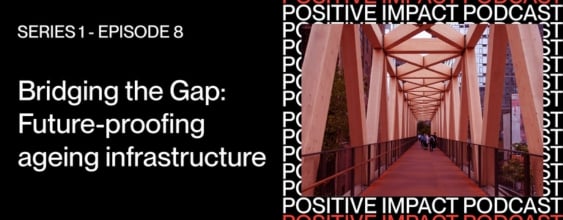
thumbnail episoded 8

May 2026 | 4 min

Positive Impact Podcast – Episode 8

United Kingdom
svg-icon Podcast
Energy Transition , Decarbonization

Share this page

  • Share on Facebook - Warning, this link will open a new tab.
  • Share on Linkedin - Warning, this link will open a new tab.
  • Share on Twitter - Warning, this link will open a new tab.
  • Share on Skype - Warning, this link will open your Skype application.

Related themes and tags

  • Decarbonization (116)

  • Energy Transition (83)

  • COP27 (10)


  • Climate (166)
  • Future Ready (208)
  • Biodiversity (35)
  •  
  •   Page will open in a new tab
  •   Page will open in a new tab
  •   Page will open in a new tab
  •   Page will open in a new tab
  • Who We Are
  • Our history
  • Future Ready
  • UK and Ireland leadership
  • Our offices
  • What We Do
  • Sectors
  • Services
  • Projects
  • Insights
  • Climate
  • Mobility
  • Places
  • Society
  • Resources
  • Technology
  • Careers
  • Job opportunities
  • Early career
  • Experienced professionals
  • Why join us?
  • Corporate
  • Policies
  • Sustainability
  • Health and safety
  • Investors
  • Business Conduct Hotline
  • News
  • Ethics and integrity
    ©2026 WSP
    • The WSP logo
    • Privacy notice
    • Anti-spam commitment
    • UK corporate governance statement
    • UK policies
    • Cookie notice
    • Terms of use
    • AI statement
    • Supplying to WSP
    ©2026 WSP
    Exiting our Website

    You are about to leave WSP.com and are being redirected to a job opportunity at Louis Berger, which has been recently acquired by WSP in the US.