Washington Avenue Repaving and Improvement
This transformative road reconfiguration project demonstrates Philadelphia’s commitment to putting safety first when revitalizing its busy corridors.
Location
- Philadelphia, Pennsylvania, USA
Project Status
- Completed
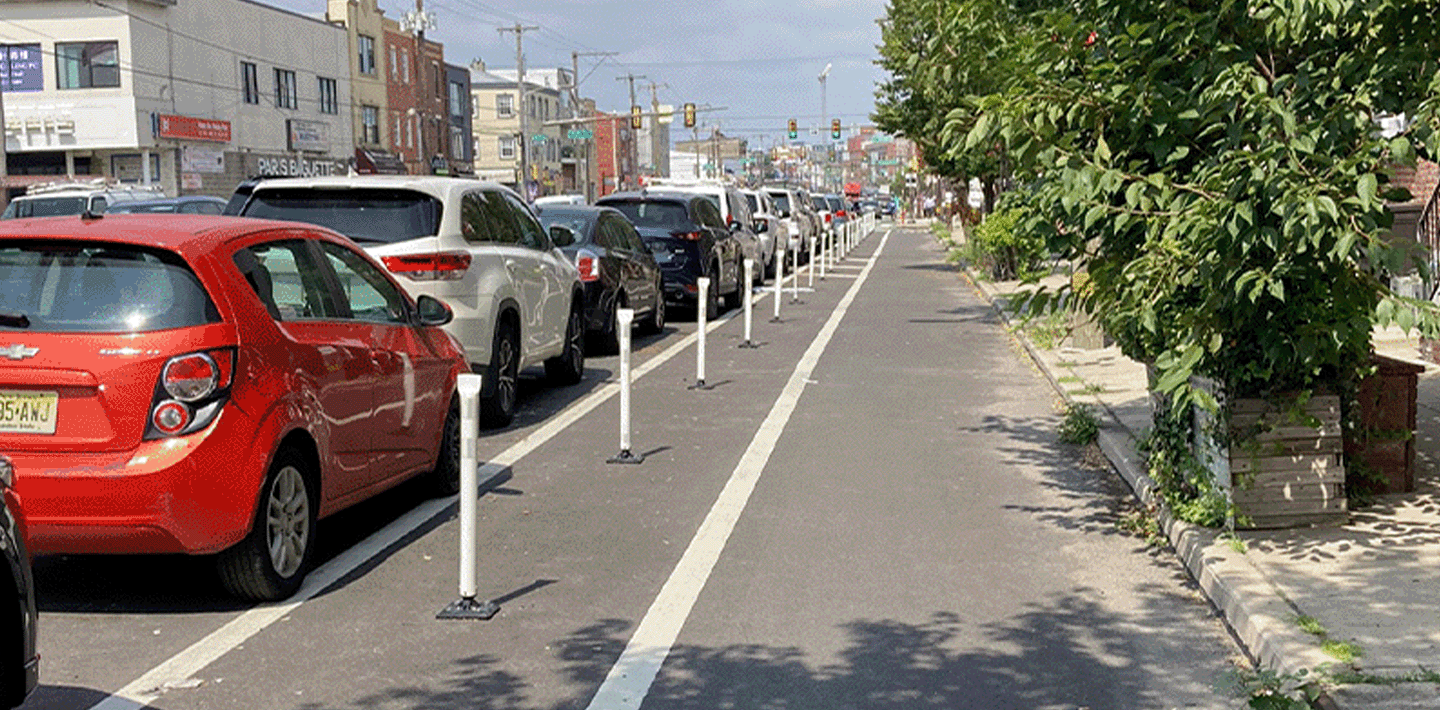

Several blocks along Washington Avenue that would benefit from speed slots were identified. The speed slots were designed so that motorists could safety drive the speed limit, while slowing faster motorists.

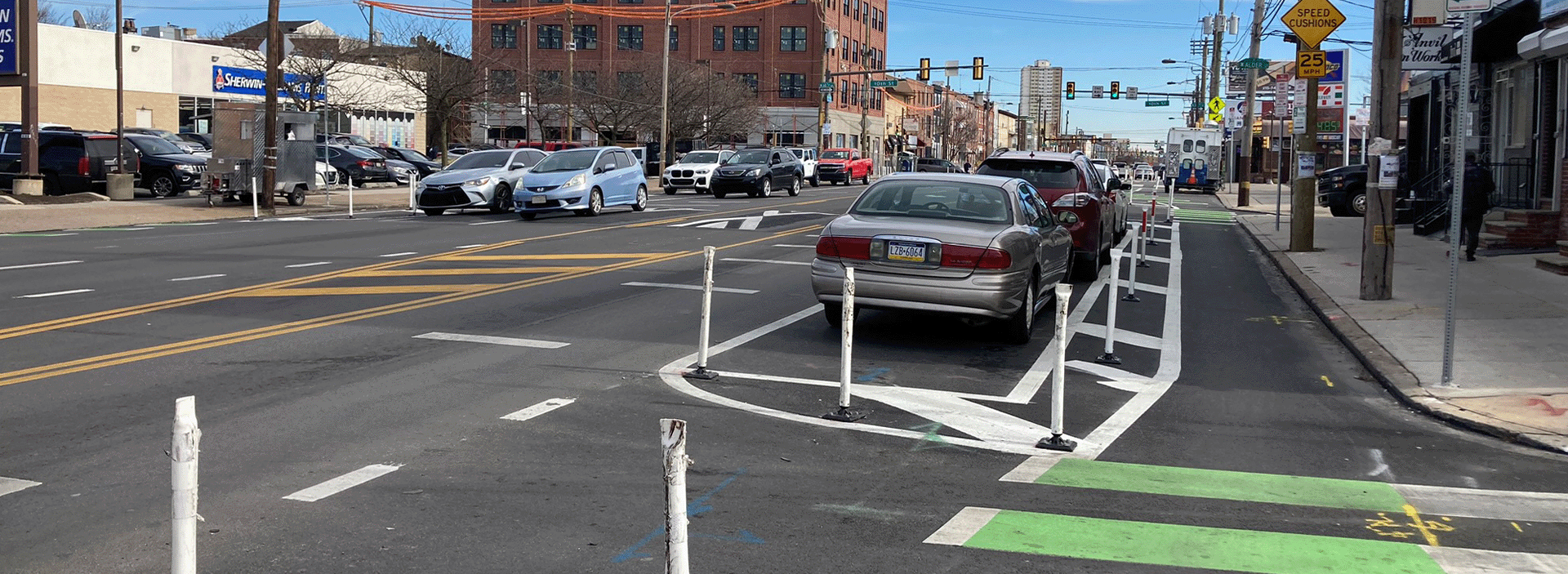
A modular curb was installed along the centerline at selected intersections to slow left turning vehicles from the side streets.

Every driveway along Washington Avenue was classified based on the type of usage (commercial or residential) and the typical volume. These classifications resulted in assignment of varying daylighting lengths for turning motorists to see bicyclists.

SEPTA bus passengers were provided floating bus stops where they could wait and board/disembark the bus. Permanent bus boarding islands at these locations are under design.

Adapted from treatments implemented in New York, corner turn wedges were installed to slow turning motorists and improve their visibility of approaching bicyclists in the protected bike lane.