Our Director of Growth and Regeneration, Rahul Patalia, discusses why a regenerative vision should be prioritised to shape places that thrive for generations – sharing insights from Bow Goods Yard.

icn-01

Projects that set ambitions above policy are better positioned for future needs and deliver greater impact

icn-02

Community co-creation is turning complex industrial sites into engines for local employment

icn-03

Low-carbon freight integration can take tens of thousands of HGV movements off the road

icn-04

Net positive energy is repositioning industrial developments as community power sources


Rahul Patalia
Rahul Patalia
Director of Growth and Regeneration
United Kingdom

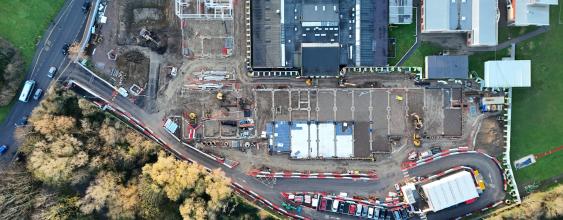
Large-scale developments often struggle to deliver meaningful social value due to misaligned objectives and inconsistent implementation. Bow Goods Yard is taking a different path. By transforming one of London’s busy railheads into a more compact, modern terminal, the project will unlock space for light industrial uses, workspaces, logistics and leisure opportunities – enhancing its value as a mixed-use destination.

To ensure the development reflects local priorities, a community brief was co-created with input from over 500 residents and stakeholders. This brief underpins the project vision and informs design decisions at every stage. Additionally, a dedicated Social Value Charter has been established to embed social value throughout the project lifecycle, driving long-term benefits such as job creation, training and skills development.

Currently, the site supports around 100 jobs. Under the proposed plan, this figure could rise to as many as 5,000, delivering a significant boost to local employment and economic resilience. These measures position Bow Goods Yard as a benchmark for socially responsible regeneration, delivering lasting community benefits for London.

Industrial sites can generate high volumes of Heavy Goods Vehicle (HGV) traffic, leading to congestion and high carbon emissions. At Bow Goods Yard, this challenge will be turned into a design opportunity. By prioritising low-carbon transport, it will reshape how people and goods move through the site. This will not only support healthy behaviours and bring disease prevention into communities but will also maximise freight operations and support construction of the capital.

The site will see the transformation of an isolated site, previously not accessible to the local community, into 200,000 sq ft of new public open space. Visitor parking will be limited. Instead, walking and cycling take precedence, with dedicated routes and facilities that promote healthier, more sustainable travel.

This shift has the potential to remove up to 90,000 HGV movements from the national road network each year, demonstrating how congestion and emissions can be cut at scale by integrating sustainable and active transportation.

Brownfield sites are often mislabelled as derelict, yet many support vibrant ecosystems that enrich urban biodiversity. Bow Goods Yard will build on this potential – integrating nature-inclusive design to connect habitats and aim to exceed the 10% requirement set by the Environment Act 2021.

Native UK species will complement existing flora, and green and brown roofs will be installed on non-industrial buildings where feasible. Beyond biodiversity, nature-based solutions will improve climate resilience. Soft landscaping will provide shade and slow surface water run-off to help manage Urban Heat Island (UHI) effect and flood risk.

By embedding biodiversity and resilience into the fabric of the site, it will create a place that nurtures and strategically leverages nature, rather than working against it.

Material consumption is a significant challenge for the built environment, not just from a carbon standpoint but also in terms of social and economic costs. If not managed sustainably, material imports may lead to resource depletion and the destabilisation of global economies. Embodied biodiversity constraints must also be considered, which considers the total impact of materials and their lifecycle on ecosystems and wildlife. Embracing circular economy principles is crucial to achieving a balance between carbon, social, economic and environmental factors.

Bow Goods Yard has the potential to revolutionise how circularity is embedded on large-scale projects. Among other measures, the development will prioritise local procurement and resource efficiency as much as possible, such as sourcing low-carbon concrete from nearby concrete batching plants. It will also support local enterprises that repurpose recycled materials, transforming waste into economic opportunity.

Similar projects can replicate this approach by auditing materials prior to demolition, planning logistics at an early stage and establishing partnerships with recycling providers before procurement begins. This ensures circularity is maintained throughout each phase of the building’s lifecycle, from design through to delivery.

Traditional energy strategies often focus solely on achieving self-sufficiency at the site level. In contrast, designing systems to generate surplus power offers a distinctive opportunity to support nearby communities – shifting the energy model from net zero to net positive.

At Bow Goods Yard, the approach will be to maximise roof space for Photovoltaic (PV) panels, with the goal of producing up to 4GWh per year of renewable energy. This level of generation is expected to exceed the site’s consumption, enabling surplus electricity to be offset and resold to support the energy needs of surrounding homes – aligning with London’s net zero transition.