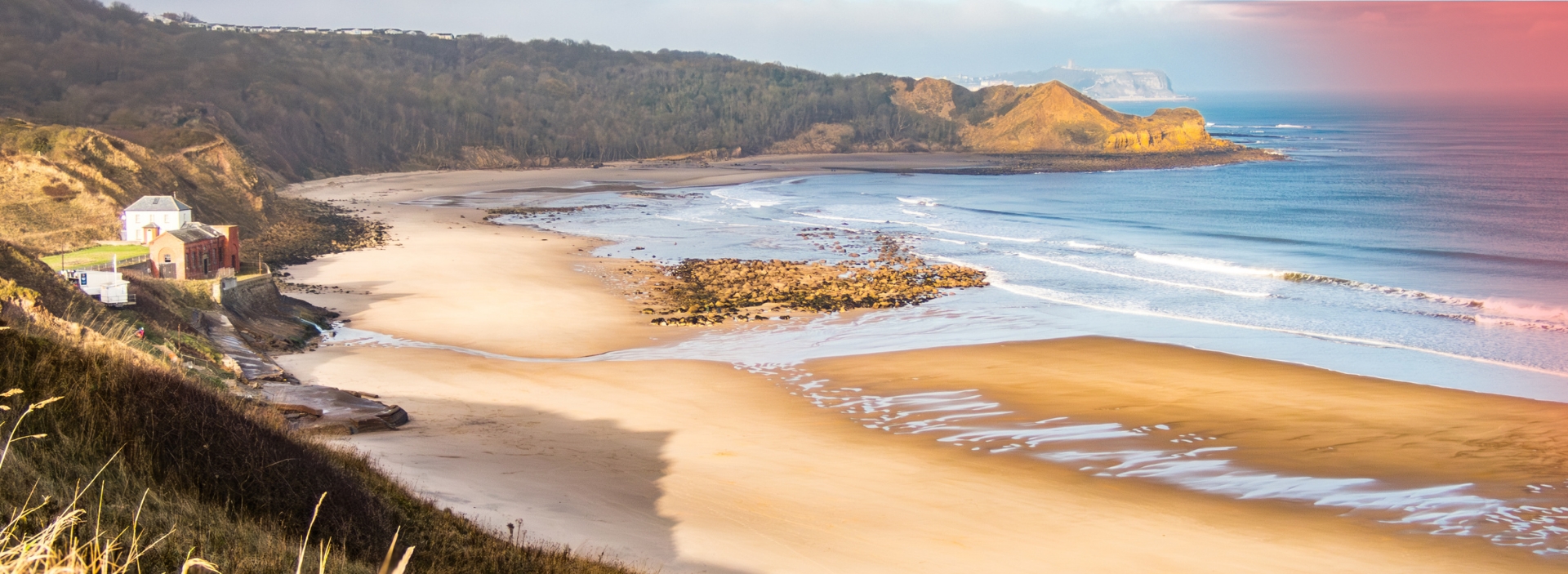
Yorkshire is showing the world how restoring landscapes can also revive communities and economies.
spotify icon

Spotify

Subscribe
apple podcast

Apple Podcasts

Subscribe
pocket casts

Pocket Casts

Subscribe
youtube logo

YouTube

Subscribe
player fm 250by250

Player Fm

Subscribe
podcast addict

Podcast Addict

Subscribe
Ludo Pittie red
Shaun Berry red
Ed Dick red

The WSP’s Positive Impact podcast is for general informational purposes only and is not a substitute for independent, tailored professional advice. The podcast does not constitute, nor should it be construed as, a financial inducement, incentive, or recommendation to act in any way. No financial or other benefit is offered or implied in connection with its content. No reliance may be placed on the content of this podcast and listeners will need to seek independent professional advice tailored to their specific needs. The views and opinions expressed by the guests on this podcast are their own and do not necessarily reflect those of the host, nor WSP and its affiliates. 

Insofar as the content of this podcast was created by WSP, WSP retains all intellectual property rights and asserts all moral rights in relation to this podcast and its content (including enclosures and attachments). Unless WSP has provided express prior written consent, no part of this podcast may be used, published, reproduced, distributed, or communicated by or to any third party. WSP accepts no liability in respect of the content of this podcast nor as to its suitability for any specific use (including by any third party).

Great Yellow Limited is an Appointed Representative of Infinity Asset Management LLP which is authorised and regulated by the Financial Conduct Authority.

Future Ready ideas for a better tomorrow

Join Lucy Siegle on The Positive Impact Podcast for engaging conversations on climate resilience, net zero, and more. Hear from industry experts and WSP specialists on future-ready solutions.

Read more

Nature Markets Services

Discover how Nature Finance models restore ecosystems and scale up resilience. WSP provides the strategic and technical due diligence to integrate nature projects into new sectors and portfolios.

Read more

Lucy Siegel:

Hello and welcome to WSP’s Positive Impact Podcast. I’m your host, Lucy Siegel. In this series, we explore the ideas, innovations, and voices shaping a more sustainable, resilient, and future-ready world. 

Today, we’re delving into the realm of nature finance—a term that may sound a bit abstract, but for those in the know, it’s one of the most practical and impactful ways to address environmental challenges and unlock local economic opportunities. Our focus today is Yorkshire, a region abundant in natural capital and serving as a living test bed for environmental restoration that drives economic regeneration.

Lucy: 

Let’s begin with the crucial question: What is nature finance? Ed, let’s come to you first. 

Ed Dick: 

Nature finance is about directing capital—usually money—into landscapes to achieve two aims: 

  • Enhancing environmental outcomes 
  • Improving business, asset maintenance, or societal benefit 

The two go hand in hand. The benefit to nature leads to societal and economic improvements, and vice versa. 

Shaun Berry: 

There’s a saying: “Money doesn’t grow on trees.” In a sense, that’s true, but we like to say money grows in trees. If you plant a tree, it absorbs carbon, which is then stored within the tree. That carbon becomes a credit we can trade and transact. Nature finance is about improving the environment and turning that improvement into a transactional opportunity—an economic perspective. 

Ludo Pittie: 

Nature finance isn’t about selling land to private investors or displacing communities. It’s a framework for engaging with and changing how we value nature. The value of nature has often been hidden, but over half the world’s GDP is heavily reliant on nature. Nature finance helps to rectify how we bring value back to nature. 

Lucy: 

How did your collaborations come about? How does it work in practice? Any highs and lows? 

Ed: 

Nature markets are still in their early stages. The public sector, large organisations like WSP, and smaller ones like mine all need to collaborate to build these markets. There’s no tried and tested approach yet—there are periods of uncertainty and moments of breakthrough. Trust is essential for collaboration to succeed. 

Shaun: 

The LINK programme (Local Investment in Natural Capital) is funded by DEFRA. Local authorities applied to participate, with the focus on attracting private investment to enhance nature. 

Ludo: 

WSP has worked with North Yorkshire for a decade. After securing LINK funding, we discussed ways to fulfil the ambitions of the programme, bringing Ed and Great Yellow into the collaboration. It took weeks to agree on the specifics, balancing government ambitions, budgets, and programme constraints. 

Lucy: 

Let’s discuss some examples and how scalable and replicable they are. 

Ludo: 

The aim for LINK is to unlock institutional investment. The government has established the foundations for the market, and standards are being developed. Local authorities are key because of their scale. We identified more than 50 projects already underway with public grants. The challenge is to stimulate these initiatives to go further and to bridge the knowledge gap for organisations accustomed to public funding, so they can access natural capital markets. 

Shaun: 

We have projects restoring habitats locally—natural flood management schemes, peatland restoration, and rewetting bogs for carbon storage. Local authorities are under budgetary pressure, but nature finance could help address economic challenges. The LINK programme connects projects and investors, bridging the “missing middle” between them. 

Lucy: 

Do you think local authorities are sufficiently engaged in nature finance discussions? 

Shaun: 

Local authorities have climate emergency plans and recognise the role of nature alongside carbon. Delivering local nature recovery strategies is a statutory requirement. LINK could be the implementation vehicle and finance mechanism for these strategies. Local authorities are well placed to convene partnerships, aggregate demand, and provide governance. 

Ed: 

Nature is inherently local, unlike carbon, which can be managed nationally. Local authorities have programme expertise and can deliver complex initiatives at the local level. The LINK programmes can serve as a springboard for others to follow. 

Lucy: 

If you were starting again, what would you do differently? 

Ludo: 

Learning earlier would have enabled us to make faster progress. Sharing knowledge is fundamental so each local authority doesn’t need to repeat the same learning. Communities of practice and knowledge forums help to accelerate progress. The mechanisms are scalable. 

Ed: 

There are two ways to track positive impact: 

  • Monetary flows
  • Qualitative feedback from projects—giving them hope to achieve more than they thought possible 

Shaun: 

Measuring success also involves equipping projects with green skills and language, making them ready for investment and able to secure their own funding. 

Lucy: 

How can clients begin to integrate nature finance into their operations? What’s the first step? 

Ed: 

Many industries are subject to reporting standards regarding risk. LINK can demonstrate how to implement change in the landscape to address those risks. Practical application of well-financed nature solutions can help to address significant industry and corporate risks. 

Shaun: 

Businesses affected by flooding could invest in upstream flood mitigation—tree planting, creating wider catchment areas to absorb water. This kind of collaborative investment in nature-based solutions can reduce the economic impact of flooding. 

Ludo: 

Businesses should acknowledge the role of nature in their operations. For some, it’s existential. Re-evaluate the relationship with nature and treat nature as a key stakeholder. Leadership is vital—nature leadership in the boardroom can drive real change. 


Lucy: 

If you could do one thing to create positive impact, what would it be? 

Shaun: 

A legislative mandate—a statutory tool to make nature finance a reality. 

Ed: 

Application of AI to massive data sets in nature finance. AI can prove that investing in nature makes clear economic sense—reducing costs, creating jobs, and providing investment.

Lucy:

Thank you to all our guests for a passionate and insightful conversation. If you found this episode helpful, please subscribe, rate, and share the podcast. Explore more on today’s topic, including useful links and resources, in the episode description.

Thank you for listening and join us next time as we continue to explore the innovations shaping a future-ready world.

I’m Lucy Siegel and this is Positive Impact. Goodbye.

Are you on your journey to a sustainable future?

Wherever you are on your decarbonisation, climate resilience or nature-positive journey, we have the expertise to help you move forward with positive outcomes.

View our expertise