This meant site sub-assembly components such as floors, walls and roofs could be manufactured off-site, then delivered and installed immediately once the building was ready to be constructed – with the potential to drastically streamline the project delivery.
What benefits did our kit-of-parts approach bring?
Our research uncovered that a kit-of-parts approach could lead to multiple benefits for this project, ranging from reductions in project delivery to enhanced sustainability. Below we explore the opportunities that not only showed improved outcomes for this project but have the potential to transform other similar chemical industry projects.
1. Saving time by building off-site
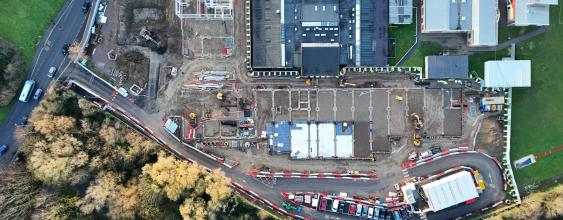
Site access issues posed significant challenges for the decanter building’s construction. Our modular, kit-of-parts approach provided another option for walls, floors, roofs and services to be manufactured off-site and then assembled quickly on-site. This would keep the programme moving and avoid delays caused by overlapping works, with the potential for plants to be operational faster.
2. Simplifying construction with the right mix
Our study demonstrated how combining volumetric and panelised construction methods could optimise different building elements while streamlining installation. Volumetric modules were ideal for precision-critical areas like the electrical switchroom, whereas panelised systems accelerated installation and reduced transport complexity.
Additionally, mechanical and electrical systems were reimagined as modular clusters, reducing the number of components and simplifying on-site work. For instance, 18 types of electrical equipment were consolidated into 11 modular cabinets, significantly improving projected delivery timeframes.