Skip to content
WSP
WSP
  • Who we are
    We are the home of ambitious, passionate, and innovative engineering experts, scientists and advisors.

    Read more
    Who we are
    • Overview
    • Our history
    • Future Ready
    • Corporate responsibility
    • Our Offices
    • UK and Ireland Leadership
    • Global Strategic Plan
    • Our impact
    Corporate responsibility
    • Overview
    • Communities
    • Ethics and integrity
    • Health and safety
    • Inclusion and belonging
    • Sustainability
    • UK Policies
    Featured content
    thn-strat-plan-2025
    Pioneering change for empowered growth

    As world shapers, our 2025-2027 Global Strategic Action Plan captures our determination to push boundaries, deliver innovative solutions, and unleash the full potential of WSP.

  • What We Do
    We work together with clients to plan, design, create and deliver innovative projects that shape the world.


    View All

    • Sectors
    • Services
    • Projects
    What We Do
    • Overview
    • Property and buildings
    • Transport and infrastructure
    • Earth and environment
    • Digital services and solutions
    • Planning and development
    • Energy
    • Water
    • Advisory
    Property and buildings
    • Overview
    • Architecture services
    • Commercial and mixed use
    • Cultural
    • Education
    • Existing buildings
    • Healthcare
    • Heritage
    • High-rise
    • How to net zero
    • Industry
    • Local government
    • Mission critical facilities
    • Modern methods of construction
    • Pharmaceuticals and life science
    • Placemaking development and urban regeneration
    • Residential
    • Sports and stadia
    • Sustainable design and building
    • Town planning and consulting
    • Workplace
    Transport and infrastructure
    • Overview
    • Asset management
    • Aviation
    • Bridges
    • Defence
    • How to net zero
    • Infrastructure planning and consulting
    • Local government
    • Maritime
    • Project, programme and commercial management
    • Rail and transit
    • Roads and highways
    • Transport planning
    • Tunnels
    Earth and environment
    • Overview
    • Acoustics, noise and vibration
    • Air quality
    • Arboriculture and forestry
    • Asbestos and hazardous material
    • Biodiversity & natural capital services
    • Climate resilience
    • Climate risk and adaptation
    • Cultural heritage and archaeology
    • Ecology
    • Environmental assessment and management
    • How to net zero
    • Kit-of-parts approach
    • Landscape architecture
    • Nature solutions
    • Nature-based solutions
    • Waste management
    • Water
    Digital services and solutions
    • Overview
    • Cyber Security Services
    • Daisy
    • Data science advisory solutions
    • Digital solutions for water
    • Digital transport planning
    • How to net zero
    • Kit of parts
    Planning and development
    • Overview
    • Environmental assessment and management
    • How to net zero
    • Infrastructure planning and consulting
    • Land referencing and land assembly
    • Landscape architecture
    • Local government
    • Placemaking development and urban regeneration
    • Stakeholder engagement and strategic communications
    • Town planning and consulting
    • Transport planning
    • Urban planning and design
    Energy
    • Overview
    • Energy transition
    • How to net zero
    • Hydrogen energy
    • Nuclear energy
    • Offshore wind
    • Solar energy
    Water
    • Overview
    • Asset management for water
    • Desalination
    • Digital solutions for water
    • Drinking water supply
    • How to net zero
    • Industrial water
    • Minewater management
    • Nature based solutions
    • Storm water and flood risk management
    • Wastewater treatment
    • Water infrastructure
    • Water planning and advisory
    • Water resources
    Advisory
    • Overview
    • Asset management
    • Business rates
    • Climate risk and adaptation
    • Data science advisory solutions
    • Economics
    • Energy Advisory
    • Investment and Transaction Advisory
    • Nature advisory
    • Planning, Development and Economics Advisory
    • Project, programme and commercial management
    • Sustainability and ESG solutions
    • Transformation and change management
    • Water planning and advisory
    Featured content
    thumbnail-net-zero-services
    How to Net Zero

    How WSP can help you decarbonise with confidence

  • Insights
    Our experts offer compelling insights that provide new perspectives.

    Read inspiring articles that challenge the status quo by reframing current issues, sparking fresh ideas and conversations.

    View all
    Insights
    • Overview
    • Climate
    • Mobility
    • Places
    • Resources
    • Society
    • Technology
    Featured content
    thumbnail-water-research
    Navigating the Waters of Change


    We explore the urgent global water crisis, the innovative strategies being employed to tackle it, and the challenges faced. Drawing from interviews with global water companies, we’re introducing 10 key lessons, ranging from long-term planning and stakeholder engagement to the use of cutting-edge technologies and effective governance.

  • Careers
    What if you could do the kind of work the world needs?

    With us, you can. Make your best impact with WSP, where the culture and people also make it the best work of your life.

    Find out more
    Careers
    • Overview
    • Job opportunities
    • Early Career
    • Experienced Professionals
    • Why join us?
    Featured content
    Thn-Web-Careers-Landing
    Careers in Engineering, Professional Services & the…

    Shape a better future for us all and a brighter future for you. With us, you can.

  • Who we are
    • Overview
    • Our history
    • Future Ready
    • Corporate responsibility
      • Who we are
      • Accountable for Tomorrow
        • Overview
        • Communities
        • Ethics and integrity
        • Health and safety
        • Inclusion and belonging
        • Sustainability
        • UK Policies
    • Our Offices
    • UK and Ireland Leadership
    • Global Strategic Plan
    • Our impact
  • What We Do
    • Overview
    • Property and buildings
      • What We Do
      • Expertise at your service
        • Overview
        • Architecture services
        • Commercial and mixed use
        • Cultural
        • Education
        • Existing buildings
        • Healthcare
        • Heritage
        • High-rise
        • How to net zero
        • Industry
        • Local government
        • Mission critical facilities
        • Modern methods of construction
        • Pharmaceuticals and life science
        • Placemaking development and urban regeneration
        • Residential
        • Sports and stadia
        • Sustainable design and building
        • Town planning and consulting
        • Workplace
    • Transport and infrastructure
      • What We Do
      • Expertise at your service
        • Overview
        • Asset management
        • Aviation
        • Bridges
        • Defence
        • How to net zero
        • Infrastructure planning and consulting
        • Local government
        • Maritime
        • Project, programme and commercial management
        • Rail and transit
        • Roads and highways
        • Transport planning
        • Tunnels
    • Earth and environment
      • What We Do
      • Expertise at your service
        • Overview
        • Acoustics, noise and vibration
        • Air quality
        • Arboriculture and forestry
        • Asbestos and hazardous material
        • Biodiversity & natural capital services
        • Climate resilience
        • Climate risk and adaptation
        • Cultural heritage and archaeology
        • Ecology
        • Environmental assessment and management
        • How to net zero
        • Kit-of-parts approach
        • Landscape architecture
        • Nature solutions
        • Nature-based solutions
        • Waste management
        • Water
    • Digital services and solutions
      • What We Do
        • Overview
        • Cyber Security Services
        • Daisy
        • Data science advisory solutions
        • Digital solutions for water
        • Digital transport planning
        • How to net zero
        • Kit of parts
    • Planning and development
      • What We Do
      • Expertise at your service
        • Overview
        • Environmental assessment and management
        • How to net zero
        • Infrastructure planning and consulting
        • Land referencing and land assembly
        • Landscape architecture
        • Local government
        • Placemaking development and urban regeneration
        • Stakeholder engagement and strategic communications
        • Town planning and consulting
        • Transport planning
        • Urban planning and design
    • Energy
      • What We Do
      • Expertise at your service
        • Overview
        • Energy transition
        • How to net zero
        • Hydrogen energy
        • Nuclear energy
        • Offshore wind
        • Solar energy
    • Water
      • What We Do
        • Overview
        • Asset management for water
        • Desalination
        • Digital solutions for water
        • Drinking water supply
        • How to net zero
        • Industrial water
        • Minewater management
        • Nature based solutions
        • Storm water and flood risk management
        • Wastewater treatment
        • Water infrastructure
        • Water planning and advisory
        • Water resources
    • Advisory
      • What We Do
      • Expertise at your service
        • Overview
        • Asset management
        • Business rates
        • Climate risk and adaptation
        • Data science advisory solutions
        • Economics
        • Energy Advisory
        • Investment and Transaction Advisory
        • Nature advisory
        • Planning, Development and Economics Advisory
        • Project, programme and commercial management
        • Sustainability and ESG solutions
        • Transformation and change management
        • Water planning and advisory
  • Insights
    • Overview
    • Climate
    • Mobility
    • Places
    • Resources
    • Society
    • Technology
  • Careers
    • Overview
    • Job opportunities
    • Early Career
    • Experienced Professionals
    • Why join us?
Select your language and location

We are locally dedicated with international scale.

International
  • Global
    English — Français
Americas
  • Canada
    English — Français
  • Latin America
    Español — Português
  • United States
    English
Africa
  • South Africa
    English
Asia
  • China
    中文(简体) — English
  • Hong Kong
    English
  • India
    English
  • Indonesia
    English
  • Malaysia
    English
  • Philippines
    English
  • Singapore
    English
  • South Korea
    한국어(대한민국) — English
  • Thailand
    English
Europe
  • Denmark
    Dansk
  • Finland
    Suomi
  • France
    Français
  • Germany
    Deutsch
  • Hungary
    English
  • Italy
    Italiano
  • Netherlands
    Nederlands
  • Norway
    Norsk
  • Poland
    Polski
  • Romania
    English
  • Spain
    Español
  • Sweden
    Svenska
  • Switzerland
    Deutsch — Français
  • Turkey
    Turkish
  • United Kingdom
    English
Middle East
  • Middle East
    English
Oceania
  • Australia
    English
  • New Zealand
    English
Worldwide offices
    • Investors
    • Investors
    • News
      Progress happens quickly.

      Stay up to date with our projects, news, events and more.

      News
      • Overview
      • Latest news
      • WSP in the media
      • Our Awards
      • Events and webinars
      Featured content
      thumbnail-award-winning-engineering-consultancy
      Award Winning Engineering and Project Management

    • Contact us
    • Investors
    • Investors
    • News
      • Overview
      • Latest news
      • WSP in the media
      • Our Awards
      • Events and webinars
    • Contact us
  1. We are WSP
  2. Insights
  3. 5 Thoughts on Mass Timber

5 Thoughts on Mass Timber

Mass Timber is entering a new era as a construction material. With good design and modern engineering techniques, it can be used to create extraordinary structures and a positive and healthy environment.   
04 January 2022
Reading Time : 6 Minutes

“After a cave, timber is our oldest building material,” says senior director, William Johnston, who leads WSP’s global timber network. “Examples of its strength, versatility and durability are seen in historic buildings around the world. With the advent of concrete and steel, the use of timber in construction declined, and it was mainly used to create architectural features or in the stick frame structures of housing. But over the past twenty years the mass timber products, such as CLT (Cross Laminated Timber) and Glulam (Glue Laminated), have opened up new opportunities for the use of timber as a construction material for different buildings across a wide range of market sectors.”
Here are five thought in using timber.

1. Is timber carbon-friendly?

In the drive to decarbonisation, mass timber may offer a way to reduce embodied carbon. The reason is twofold: when trees grow, they absorb CO2 from the atmosphere, and using timber in construction means replacing carbon-intensive materials, such as concrete or steel, with a more carbon-friendly alternative. 
Bas de Leijer, project manager at WSP in The Netherlands, sees a growing appetite for the use of wood, particularly in residential buildings because of its environmental properties. “Timber is renewable, recyclable, waste efficient, biodegradable and carbon positive. It’s a growing market, especially for dwellings, because people want to live in more ecological buildings. We are also seeing more timber offices and we use it extensively in sports facilities as well.”
Embodied carbon is typically less than half of that for concrete floor plate solutions.
Its is also relatively light weight compared to concrete. Not only does this reduce the overall weight of the building, but it also allows for more efficient transportation onsite. You can fit 30 timber elements in a truck from factory to construction site, compared to three to five concrete elements.  That means 60-70% fewer trucks coming onto a construction site, resulting in less carbon emissions from transportation during construction.

2. Is timber good for you?

William Johnston cites the biophilic properties of timber as an important benefit. In a recent research for Forestry Innovation Investment, an independent organisation set up by the province of British Columbia in Canada to promote BC wood products, educate on forest practices and provide research around all aspects of growing and using wood, WSP found that wood has a number of material and immaterial benefits. “It is hypoallergenic, has antimicrobial properties, has excellent sound absorption and reduced off-gassing emissions; benefits which collectively decrease negative physiological effects on occupants.” 

For William Johnston, the fact that timber buildings support the health and wellness of their occupants adds significant value in the long term by creating natural, welcoming and healthy environments. “Patients in hospitals recover more quickly, businesses experience more engaged staff with higher retention, children concentrate better in their classrooms. Biophilia is proven and real,” he says.

William Johnston also believes it is vital that we start to re-evaluate what constitutes successful design. “We’ve learnt that long term operational costs of the building systems significantly trump the initial capital costs. But the financial implications of the human implications are even greater – financial benefits of increased productivity, engagement and retention dwarf all other costs. Human centric design is fundamental to the long-term performance of a facility and it needs to be measured as such in the feasibility stage.”

Wood also naturally absorbs humidity, buffering it. This has the effect of regulating the indoor relative humidity to a comfortable level between 30-70%, for a healthier indoor climate. It helps reduce the spread of bacteria in humid weather, and viruses when it’s dry and cold. And, because there’s less dust than with concrete, building with wood can also ease human respiratory issues, such as asthma.

socials-5 thoughts about timber

Photo: Montessori School 

3. Is timber versatile?

Timber offers many advantages, and versatility is very important. “Its thermal insulation properties make it energy efficient, and it is economical and fast to construct,” says Ove Morten Bergane, head of structures for WSP in Norway. “It is ideal for prefabrication, simple and quick to install, and very flexible.

Thanks to timber, WSP’s structures team in Norway overcame a number of challenges in the design of a student apartment building in Haugesund, which has distinctive architecture with slope CLT walls, slices and different shapes. The ground floor is for business areas with open spaces. The floor above is made in concrete and CLT above this level. The project meets passive house standards and is an infill project in the centre of the municipality.

“The light weight of timber makes it ideal for over-building as our cities get ever denser and space is at a premium,” adds Phil Gardiner, principal director based in Melbourne, Australia. “We’ve designed a residential building on top of an office tower; and an office tower above a shopping centre, which would require almost no strengthening of the structures on the trading floors. We are currently designing a ten-storey CLT hotel in Melbourne that will be built over a railway line.”

Furthermore, wood is easy to handle on the construction site. There’s no hard drilling, which makes the construction process quieter, and cleaner, for everyone.

4. Is timber design friendly?

Timber is extremely easy it is to work with, especially when offsite construction is part of the equation. Cross laminated timber (CLT) panels – or ‘2D elements’ – consist of three to nine layers of timber, each glued perpendicular to the one below. These 2D elements work like concrete, but are quicker, easier and safer to manufacture offsite. With digitalisation, the different components can be precisely fabricated according to specifications, and easily assembled on-site.

“We can use a hybrid floor plate that has steel columns and beams but replaces a composite deck slab with a cross-laminated timber slab manufactured off-site. The timber makes an aesthetically pleasing ceiling for people on the floor below, services can still run as they would in a traditional solution and – with no waiting to fix reinforcement, pour concrete and allow it cure – construction is faster”, explains Dan Hagan, technical director and Modern Methods of Construction Lead for WSP in the UK. 

In addition, by moving construction into a controlled offsite manufacturing setting, we can address reliability, quality issues and provide certainty in design programming and cost. 

5. Does timber make economic sense?

Last but not least, cost. Sure, mass timber can be more costly when compared to steel or concrete on a per unit basis. However, when looking at the whole picture, timber makes the cut.

- Thanks to its light weight, timber allows for smaller foundations and fewer support structures.
- Manufactured components and ease-of-use means timber necessitates smaller crews, leading to reduced labour costs. 
- Using timber can speed up construction time potentially resulting in schedule savings of 20-50% than if traditional materials are used.

Dan Hagan adds that timber is an excellent option for retrofit projects that involve adding floors to existing buildings. “A multi-storey mass timber building has a substructure up to 85% smaller than a traditional alternative. This reduction in substructure material relates directly to a similar saving in costs, programme, and importantly, embodied carbon”, he says. 
And ultimately, timber buildings have other financial benefits that are more difficult to calculate, such as improved health and wellbeing for occupants and higher staff retention (or lower staff turnover) thanks to attractive work environments.  

Timber might be one of the oldest building materials, but we are still learning how to optimise its potential. WSP experts across the globe collaborate to increase our understanding of the challenges and opportunities for timber, and explore its use as a sustainable, healthy, safe and efficient alternative to concrete and steel.


Want to find out more about Timber, visit our hub.


More on this subject

thn-kim-ferguson-Environment-Analyst

October 2026 | 5 minutes

WSP on contaminated land and managing the aftermath of mining

svg-icon Feature
Resilience , Resources
thn-EA-decom

September 2026

Environment Analyst’s Responsible Mining Guide: Rethinking mine closure

svg-icon Feature
Biodiversity , Resources
thn-web-hero-EA-permitting

September 2026

Environment Analyst’s Responsible Mining Guide: Faster permitting starts earlier

svg-icon Feature
Biodiversity , Resources , Society
thn-kiinteistojen-ilmastoriskien-arviointi

August 2026 | 5 minutes

How groundwater shapes mining projects

Australia
svg-icon Feature
Resources , Energy Transition
thn-mining-project-delivery-certainty

August 2026 | 5 minutes

Delivering certainty in remote mining locations

Australia
svg-icon Blog
Resources , Energy Transition
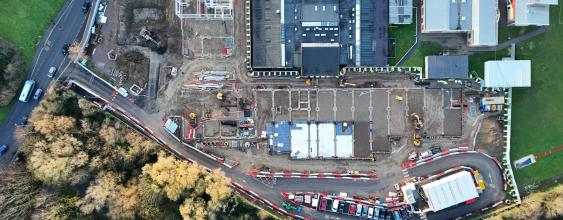
Aerial view of an active construction site with roadworks, buildings and infrastructure development in progress - Thumbnail size

June 2026 | 3 minutes

How to manage “Technical Debt” and drive success on large infrastructure projects

United Kingdom
svg-icon Feature
Mobility , Resilience , Resources
Thn-Web-VV-Matt

June 2026

Nature Paves the Way: Can Pine Trees Shape the Future of Sustainable Road Infrastructure?

New Zealand
svg-icon Feature
Resilience , Resources , Mobility , Decarbonization
thumb-DC-Article-Water-563x220

December 2025 | 5 minutes

Data Center Water Stewardship is the Path to Positive Growth

svg-icon Feature
Data Centres , Places , Resources , Resilience
thn-advisory-investment-transactions-second

November 2025 | 9 minutes

A turning point for nuclear power

Resources
thn-beyond-the-technical-driving-sustained-asset-management

November 2025

Beyond the Technical: Driving Sustained Asset Management Benefits with Effective Change Management

United States
svg-icon Feature
Resources , Resilience , Society
thn-resilience-through-desalination

October 2025

Building Water Resilience Through Desalination

svg-icon Feature
Resilience , Resources
thn-Navigating waters of change

September 2025 | 3 minutes

Navigating the Waters of Change: one year on

United Kingdom
svg-icon Blog
Resources

Share this page

  • Share on Facebook - Warning, this link will open a new tab.
  • Share on Linkedin - Warning, this link will open a new tab.
  • Share on Twitter - Warning, this link will open a new tab.
  • Share on Skype - Warning, this link will open your Skype application.

Related themes and tags

  • Resources (154)


  • Buildings (106)
  • Future Ready (208)
  • Environment (208)
  •  
  •   Page will open in a new tab
  •   Page will open in a new tab
  •   Page will open in a new tab
  •   Page will open in a new tab
  • Who We Are
  • Our history
  • Future Ready
  • UK and Ireland leadership
  • Our offices
  • What We Do
  • Sectors
  • Services
  • Projects
  • Insights
  • Climate
  • Mobility
  • Places
  • Society
  • Resources
  • Technology
  • Careers
  • Job opportunities
  • Early career
  • Experienced professionals
  • Why join us?
  • Corporate
  • Policies
  • Sustainability
  • Health and safety
  • Investors
  • Business Conduct Hotline
  • News
  • Ethics and integrity
    ©2026 WSP
    • The WSP logo
    • Privacy notice
    • Anti-spam commitment
    • UK corporate governance statement
    • UK policies
    • Cookie notice
    • Terms of use
    • AI statement
    • Supplying to WSP
    ©2026 WSP
    Exiting our Website

    You are about to leave WSP.com and are being redirected to a job opportunity at Louis Berger, which has been recently acquired by WSP in the US.