Skip to content
WSP
WSP
  • Who we are
    We are the home of ambitious, passionate, and innovative engineering experts, scientists and advisors.

    Read more
    Who we are
    • Overview
    • Our history
    • Future Ready
    • Corporate responsibility
    • Our Offices
    • UK and Ireland Leadership
    • Global Strategic Plan
    • Our impact
    Corporate responsibility
    • Overview
    • Communities
    • Ethics and integrity
    • Health and safety
    • Inclusion and belonging
    • Sustainability
    • UK Policies
    Featured content
    thn-strat-plan-2025
    Pioneering change for empowered growth

    As world shapers, our 2025-2027 Global Strategic Action Plan captures our determination to push boundaries, deliver innovative solutions, and unleash the full potential of WSP.

  • What We Do
    We work together with clients to plan, design, create and deliver innovative projects that shape the world.


    View All

    • Sectors
    • Services
    • Projects
    What We Do
    • Overview
    • Property and buildings
    • Transport and infrastructure
    • Earth and environment
    • Digital services and solutions
    • Planning and development
    • Energy
    • Water
    • Advisory
    Property and buildings
    • Overview
    • Architecture services
    • Commercial and mixed use
    • Cultural
    • Education
    • Existing buildings
    • Healthcare
    • Heritage
    • High-rise
    • How to net zero
    • Industry
    • Local government
    • Mission critical facilities
    • Modern methods of construction
    • Pharmaceuticals and life science
    • Placemaking development and urban regeneration
    • Residential
    • Sports and stadia
    • Sustainable design and building
    • Town planning and consulting
    • Workplace
    Transport and infrastructure
    • Overview
    • Asset management
    • Aviation
    • Bridges
    • Defence
    • How to net zero
    • Infrastructure planning and consulting
    • Local government
    • Maritime
    • Project, programme and commercial management
    • Rail and transit
    • Roads and highways
    • Transport planning
    • Tunnels
    Earth and environment
    • Overview
    • Acoustics, noise and vibration
    • Air quality
    • Arboriculture and forestry
    • Asbestos and hazardous material
    • Biodiversity & natural capital services
    • Climate resilience
    • Climate risk and adaptation
    • Cultural heritage and archaeology
    • Ecology
    • Environmental assessment and management
    • How to net zero
    • Kit-of-parts approach
    • Landscape architecture
    • Nature solutions
    • Nature-based solutions
    • Waste management
    • Water
    Digital services and solutions
    • Overview
    • Cyber Security Services
    • Daisy
    • Data science advisory solutions
    • Digital solutions for water
    • Digital transport planning
    • How to net zero
    • Kit of parts
    Planning and development
    • Overview
    • Environmental assessment and management
    • How to net zero
    • Infrastructure planning and consulting
    • Land referencing and land assembly
    • Landscape architecture
    • Local government
    • Placemaking development and urban regeneration
    • Stakeholder engagement and strategic communications
    • Town planning and consulting
    • Transport planning
    • Urban planning and design
    Energy
    • Overview
    • Energy transition
    • How to net zero
    • Hydrogen energy
    • Nuclear energy
    • Offshore wind
    • Solar energy
    Water
    • Overview
    • Asset management for water
    • Desalination
    • Digital solutions for water
    • Drinking water supply
    • How to net zero
    • Industrial water
    • Minewater management
    • Nature based solutions
    • Storm water and flood risk management
    • Wastewater treatment
    • Water infrastructure
    • Water planning and advisory
    • Water resources
    Advisory
    • Overview
    • Asset management
    • Business rates
    • Climate risk and adaptation
    • Data science advisory solutions
    • Economics
    • Energy Advisory
    • Investment and Transaction Advisory
    • Nature advisory
    • Planning, Development and Economics Advisory
    • Project, programme and commercial management
    • Sustainability and ESG solutions
    • Transformation and change management
    • Water planning and advisory
    Featured content
    thumbnail-net-zero-services
    How to Net Zero

    How WSP can help you decarbonise with confidence

  • Insights
    Our experts offer compelling insights that provide new perspectives.

    Read inspiring articles that challenge the status quo by reframing current issues, sparking fresh ideas and conversations.

    View all
    Insights
    • Overview
    • Climate
    • Mobility
    • Places
    • Resources
    • Society
    • Technology
    Featured content
    thumbnail-water-research
    Navigating the Waters of Change


    We explore the urgent global water crisis, the innovative strategies being employed to tackle it, and the challenges faced. Drawing from interviews with global water companies, we’re introducing 10 key lessons, ranging from long-term planning and stakeholder engagement to the use of cutting-edge technologies and effective governance.

  • Careers
    What if you could do the kind of work the world needs?

    With us, you can. Make your best impact with WSP, where the culture and people also make it the best work of your life.

    Find out more
    Careers
    • Overview
    • Job opportunities
    • Early Career
    • Experienced Professionals
    • Why join us?
    Featured content
    Thn-Web-Careers-Landing
    Careers in Engineering, Professional Services & the…

    Shape a better future for us all and a brighter future for you. With us, you can.

  • Who we are
    • Overview
    • Our history
    • Future Ready
    • Corporate responsibility
      • Who we are
      • Accountable for Tomorrow
        • Overview
        • Communities
        • Ethics and integrity
        • Health and safety
        • Inclusion and belonging
        • Sustainability
        • UK Policies
    • Our Offices
    • UK and Ireland Leadership
    • Global Strategic Plan
    • Our impact
  • What We Do
    • Overview
    • Property and buildings
      • What We Do
      • Expertise at your service
        • Overview
        • Architecture services
        • Commercial and mixed use
        • Cultural
        • Education
        • Existing buildings
        • Healthcare
        • Heritage
        • High-rise
        • How to net zero
        • Industry
        • Local government
        • Mission critical facilities
        • Modern methods of construction
        • Pharmaceuticals and life science
        • Placemaking development and urban regeneration
        • Residential
        • Sports and stadia
        • Sustainable design and building
        • Town planning and consulting
        • Workplace
    • Transport and infrastructure
      • What We Do
      • Expertise at your service
        • Overview
        • Asset management
        • Aviation
        • Bridges
        • Defence
        • How to net zero
        • Infrastructure planning and consulting
        • Local government
        • Maritime
        • Project, programme and commercial management
        • Rail and transit
        • Roads and highways
        • Transport planning
        • Tunnels
    • Earth and environment
      • What We Do
      • Expertise at your service
        • Overview
        • Acoustics, noise and vibration
        • Air quality
        • Arboriculture and forestry
        • Asbestos and hazardous material
        • Biodiversity & natural capital services
        • Climate resilience
        • Climate risk and adaptation
        • Cultural heritage and archaeology
        • Ecology
        • Environmental assessment and management
        • How to net zero
        • Kit-of-parts approach
        • Landscape architecture
        • Nature solutions
        • Nature-based solutions
        • Waste management
        • Water
    • Digital services and solutions
      • What We Do
        • Overview
        • Cyber Security Services
        • Daisy
        • Data science advisory solutions
        • Digital solutions for water
        • Digital transport planning
        • How to net zero
        • Kit of parts
    • Planning and development
      • What We Do
      • Expertise at your service
        • Overview
        • Environmental assessment and management
        • How to net zero
        • Infrastructure planning and consulting
        • Land referencing and land assembly
        • Landscape architecture
        • Local government
        • Placemaking development and urban regeneration
        • Stakeholder engagement and strategic communications
        • Town planning and consulting
        • Transport planning
        • Urban planning and design
    • Energy
      • What We Do
      • Expertise at your service
        • Overview
        • Energy transition
        • How to net zero
        • Hydrogen energy
        • Nuclear energy
        • Offshore wind
        • Solar energy
    • Water
      • What We Do
        • Overview
        • Asset management for water
        • Desalination
        • Digital solutions for water
        • Drinking water supply
        • How to net zero
        • Industrial water
        • Minewater management
        • Nature based solutions
        • Storm water and flood risk management
        • Wastewater treatment
        • Water infrastructure
        • Water planning and advisory
        • Water resources
    • Advisory
      • What We Do
      • Expertise at your service
        • Overview
        • Asset management
        • Business rates
        • Climate risk and adaptation
        • Data science advisory solutions
        • Economics
        • Energy Advisory
        • Investment and Transaction Advisory
        • Nature advisory
        • Planning, Development and Economics Advisory
        • Project, programme and commercial management
        • Sustainability and ESG solutions
        • Transformation and change management
        • Water planning and advisory
  • Insights
    • Overview
    • Climate
    • Mobility
    • Places
    • Resources
    • Society
    • Technology
  • Careers
    • Overview
    • Job opportunities
    • Early Career
    • Experienced Professionals
    • Why join us?
Select your language and location

We are locally dedicated with international scale.

International
  • Global
    English — Français
Americas
  • Canada
    English — Français
  • Latin America
    Español — Português
  • United States
    English
Africa
  • South Africa
    English
Asia
  • China
    中文(简体) — English
  • Hong Kong
    English
  • India
    English
  • Indonesia
    English
  • Malaysia
    English
  • Philippines
    English
  • Singapore
    English
  • South Korea
    한국어(대한민국) — English
  • Thailand
    English
Europe
  • Denmark
    Dansk
  • Finland
    Suomi
  • France
    Français
  • Germany
    Deutsch
  • Hungary
    English
  • Italy
    Italiano
  • Netherlands
    Nederlands
  • Norway
    Norsk
  • Poland
    Polski
  • Romania
    English
  • Spain
    Español
  • Sweden
    Svenska
  • Switzerland
    Deutsch — Français
  • Turkey
    Turkish
  • United Kingdom
    English
Middle East
  • Middle East
    English
Oceania
  • Australia
    English
  • New Zealand
    English
Worldwide offices
    • Investors
    • Investors
    • News
      Progress happens quickly.

      Stay up to date with our projects, news, events and more.

      News
      • Overview
      • Latest news
      • WSP in the media
      • Our Awards
      • Events and webinars
      Featured content
      thumbnail-award-winning-engineering-consultancy
      Award Winning Engineering and Project Management

    • Contact us
    • Investors
    • Investors
    • News
      • Overview
      • Latest news
      • WSP in the media
      • Our Awards
      • Events and webinars
    • Contact us
  1. We are WSP
  2. Insights
  3. Designing roads for manufacturing and assembly: efficient design and improved safety

Designing roads for manufacture and assembly: efficient design and improved safety

The digital twin provides an accurate virtual representation of a physical asset and it enables a transformation in the way infrastructure assets are designed, built and managed. Using digital twins as virtual representations of the physical assets that are being designed and constructed will create disruption within the architecture engineering and construction sectors. The ability to see, build and “explore” the new asset virtually will deliver significant improvements in productivity and safety, and reduce the impact of construction on the public and adjacent businesses. At the heart of this transformation will be a shift from the current production model of construction, to a new model built on best practices and systems from manufacturing industries. 
map marker United Kingdom | 09 October 2018

By Mungo Stacy, Head of Profession - Civil, Bridge & Ground, WSP in the UK

Designed once, deployed many times
Adopting a manufacturing approach as part of the industrialisation of the creation and upgrading of road and other transport infrastructure will mean that designs will no longer be bespoke and hand-crafted. They will be created from rule-based algorithms and a selection of optimum, pre-defined model components, which would be applied across multiple schemes.  And as with high quality manufacturing, the human input will separate the good designs from the bad. As this approach matures, it could then be organised into product families and platforms designed for efficient manufacture, transportation and installation.

To achieve the productivity improvements a manufacturing approach for the sector is expected to deliver there must be trade-offs particularly the balance between variations (customisation) and standardisation. Mass customisation may offer a compromise.  This means that for most elements of infrastructure like the component parts of a typical motorway scheme, standardisation will offer greater benefits and value. The trade off is that the design is developed around the available products, rather than developing bespoke products to fit the design. For example, the gantries on a typical motorway scheme may come in multiples of a standard length. The digital twin would support the use of standard components by helping to ensure each element will fit perfectly when assembled on site because there can be no final adjustments such as cutting to size. Use of the digital twin is likely to compliment physical prototyping with the manufacturing approach. This will enable the product to be refined based on ease of manufacture and assemble, and will also provide a teaching aid to the site assembly crews.

With fewer tasks completed on site, construction would move to a controlled, factory, environment resulting in better safety management, increased efficiencies through the use of robotics and reduced wasted through lean processes. Since each component would be deployed on multiple schemes, this approach  also provides greater potential for feedback on performance both during installation and in use. This data would allow for refinements to be made and validation that the anticipated improvements are delivered as expected. 

One trade-off with the manufacturing approach is that that design for a specific project must be fixed far earlier than with a traditional construction approach. This early design fix is essential to allow fabrication to be managed efficiently in the manufacturing environment. This approach will reduce the opportunity and flexibility for late changes to be made to the design, but will bring benefits such as greater project certainty and cost savings.

Designing products and platforms
Until now the majority of design work undertaken on a road scheme is bespoke to that particular project. In the future, more of the effort will be focussed on designing the products and platforms that road designers regularly utilise, shifting to the principle of ‘design one, use often.’

This method is already used in the automotive sector where car manufacturers have a range of models and brands marketed to different customers.  Whilst each model has its own specification and set of features, the model ranges often share a common chassis and use a standard catalogue of components. The construction sector could see time and cost benefits by applying a similar approach. The great number of the same products manufactured, the cheaper they could be. Standardisation will also reduce the time needed for installation, which in turn will minimise the impact on road users from temporary traffic management ad road closures. 

Transitioning to a manufacturing approach will require significant changes to the way infrastructure projects are planned and executed.  Engineering professionals will have an important role to play in creating a viable approach. Whilst the vision of roads rolling off a production line as easily as cars do today may be compelling, there are significant challenges to making this a reality. Road projects are tens of km in length and specific constraints such as ground conditions and adjacent land use, including residential properties, must be considered. Upgrades to existing roads add further constraints as traffic flows need to be safely maintained during the works.

Due to this complexity, all stakeholders will need to be engaged in selecting the right balance and approach to manufacturing for infrastructure projects. For example, some projects may benefit from a temporary mobile production facility close to site where final assemblies are completed and, for others it might be more efficient to transport fully assembled components directly from the factory. On long sites, the use of linear production process such as slip forming kerbs and central reserves may be appropriate.  The manufacturing approach will include all these aspects and others will combine them in the most efficient and effective way for the particular scheme, so that standardisation and production are the norm.

Adopting a manufacturing approach, underpinned by the digital twin, will bring significant changes for both the people and organisations delivering, operating and maintaining infrastructure. Suppliers such as fabricators and installers will need to be engaged earlier in the design process to leverage their specific expertise. A contractual and collaborative framework which balances the sharing of knowledge, innovation, and risk will be needed. Clients will play a pivotal role in establishing the right delivery environment. Investment across the industry to develop and attract the skills needed will be essential.

The adoption of best practice from the manufacturing sector, and the use of technologies such as the digital twin will act as a catalyst for a step change in improvement towards more efficient and safer highways – both in construction and in use. A key challenge for the next decade will be to scale these approaches and apply them effectively to the design, delivery, and management of our transport infrastructure


About Mungo Stacy
Mungo leads the technical excellence strand of WSP's strategy in the civil, bridge and ground discipline. He has responsibility for the capability and competence of over 550 engineers in the discipline. Mungo is a civil engineer with extensive experience of the design, construction, maintenance and refurbishment of a wide range of structures, both in this country and overseas, notably in Hong Kong. Follow him on LinkedIn here. 

Read the other articles in our series here Read how WSP connects people for the future here

More on this subject

thn-methanol-as-marine-fuel-life-cycle-v2

September 2026 | 3:30 minutes

Methanol as a Marine Fuel – Life Cycle Study

svg-icon Technical Paper
Decarbonization , Energy Transition , Mobility
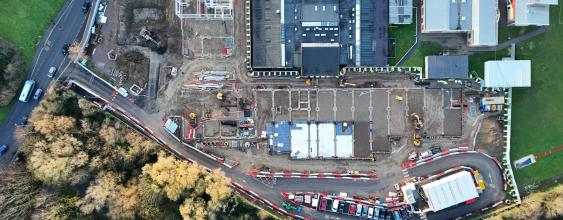
Aerial view of an active construction site with roadworks, buildings and infrastructure development in progress - Thumbnail size

June 2026 | 3 minutes

How to manage “Technical Debt” and drive success on large infrastructure projects

United Kingdom
svg-icon Feature
Mobility , Resilience , Resources
thn-fifa-world-cup

June 2026 | 4:55 minutes

Before the Opening Match: The Decisions that Shape Major Event Success

United States
svg-icon Feature
Mobility , Places , Society
Thn-Web-VV-Matt

June 2026

Nature Paves the Way: Can Pine Trees Shape the Future of Sustainable Road Infrastructure?

New Zealand
svg-icon Feature
Resilience , Resources , Mobility , Decarbonization
A bright red modern tram travels along a city street at dusk or nighttime, with motion blur showing movement and illuminated interior lights revealing seated passengers. Streetlights and traffic signals cast warm yellow and green glows along the road, while surrounding buildings—some with lit windows—form an urban backdrop under a darkening blue sky. Light trails from passing vehicles streak across the scene, and trees and foliage line parts of the street, adding contrast to the urban setting.

May 2026

Unlocking digital: five things rail needs to do to drive progress

United Kingdom
svg-icon Feature
Mobility , Climate , Technology , Decarbonization
thn-advisory-planning-highways-2026

April 2026 | 5 minutes

Concession Crossroads: DBFO and P3 Handback demand a new kind of leadership

svg-icon News
Mobility
AI-Agentic-Article-Thumbnail

March 2026

Agentic Artificial Intelligence in Airport and Airline Operations

svg-icon Feature
Mobility , Technology
CE2-Article-Thumbnail

March 2026

The Circular Future of Airports

svg-icon Feature
Mobility , Resilience
thmb-multi-runway-hubs-thumb

March 2026

From Dual to Multi-Runway Operations: A Roadmap for the Next Generation of Mega Hubs

svg-icon Feature
Mobility , Technology
thmb-airport-delivery-thumb

February 2026

The Evolution of Infrastructure Delivery at Airports

svg-icon Feature
Mobility
thn-Energizing-Airports-Strategies-for-a-Sustainable-Aviation-Future

February 2026 | 0:52 minutes

Energizing Airports: Strategies for a Sustainable Aviation Future

United States
svg-icon White Paper
Decarbonization , Energy Transition , Mobility
Aviation-Africa-Article-Thumbnail

February 2026

Preparing for the next wave of aviation demand in Africa

svg-icon Feature
Mobility , Technology

Share this page

  • Share on Facebook - Warning, this link will open a new tab.
  • Share on Linkedin - Warning, this link will open a new tab.
  • Share on Twitter - Warning, this link will open a new tab.
  • Share on Skype - Warning, this link will open your Skype application.

Related themes and tags

  • Mobility (215)


  • Transportation (187)
  • Digital transformation (74)
  • Infrastructure (200)
  • New Mobility (48)
  •  
  •   Page will open in a new tab
  •   Page will open in a new tab
  •   Page will open in a new tab
  •   Page will open in a new tab
  • Who We Are
  • Our history
  • Future Ready
  • UK and Ireland leadership
  • Our offices
  • What We Do
  • Sectors
  • Services
  • Projects
  • Insights
  • Climate
  • Mobility
  • Places
  • Society
  • Resources
  • Technology
  • Careers
  • Job opportunities
  • Early career
  • Experienced professionals
  • Why join us?
  • Corporate
  • Policies
  • Sustainability
  • Health and safety
  • Investors
  • Business Conduct Hotline
  • News
  • Ethics and integrity
    ©2026 WSP
    • The WSP logo
    • Privacy notice
    • Anti-spam commitment
    • UK corporate governance statement
    • UK policies
    • Cookie notice
    • Terms of use
    • AI statement
    • Supplying to WSP
    ©2026 WSP
    Exiting our Website

    You are about to leave WSP.com and are being redirected to a job opportunity at Louis Berger, which has been recently acquired by WSP in the US.