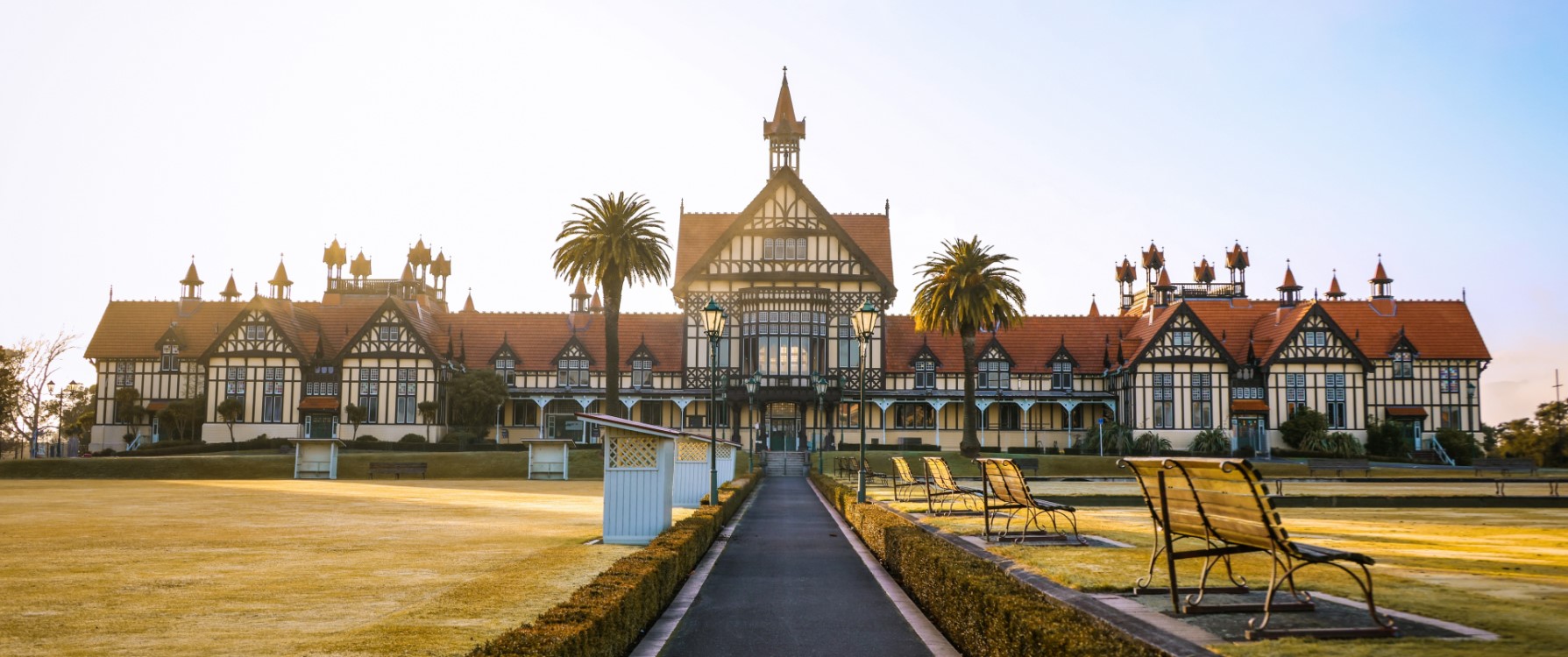
Now, as a testament to the team’s stewardship through the design phase, WSP has been appointed to the project management package for the construction phase and has shown its capability as a project management powerhouse in the process.
“We actively pursued this project to show our capability to the market as Project Managers and continue our commitment to delivering this for the local community,” says Dion Collier, head of WSP Bay of Plenty.
Late in 2023, Rotorua Lakes Council went out to market for construction contractors and asked WSP to reaffirm its commitment to the project through a tender process. WSP’s proposal was given the thumbs up and was awarded the project management contract for the construction phase.
Fred Shilton, WSP business manager for Rotorua, says this is confirmation of the team’s expertise, experience and passion for the project.
“It's awesome for us as a local office to be continuing to work on a community project of such significance. The museum is 500m away from our office and every day we see it sitting there, unable to be used and enjoyed. So to be working on getting that local landmark restored, rebuilt and ready for the community once again is a massive deal for us.”
The museum has been closed since November 2016 when a rapid seismic risk assessment following the Kaikōura earthquake determined it was earthquake prone. The age, complexity, and heritage status of the museum – which started life in 1908 as a bath house – has made the project to strengthen, restore and improve its buildings extremely challenging.
Originally built between 1906-1908 as a spa resort, the Bath House building, home to Rotorua Museum Te Whare Taonga o Te Arawa, is the most well-known Elizabethan Revival building in Aotearoa. It incorporates unique construction techniques such as unreinforced pumice concrete shear walls and pumice concrete panels between individual timbers, and was one of only a few timber-framed buildings constructed in New Zealand during the Edwardian era.
Situated on land gifted by Ngāti Whakaue “hei oranga mo nga iwi katoa o te Ao” (“for the benefit of the people of the world”), the building is a Category 1 Historic Place, as well as an important local taonga and icon for the Rotorua region. A number of subsequent additions were made to the building (with no seismic gaps) right up until 2011, making its restoration a highly complex undertaking.
“It's an extremely complex site on active geothermal ground. The building itself is right beside the lake so it's subject to seasonal fluctuations and ground movement due to the water table,” says WSP Senior Project Manager Kareen McLaren who has been the project manager for the design and pre-construction phase since 2018.
Construction begins in June 2024 and is expected to be complete in 2027.