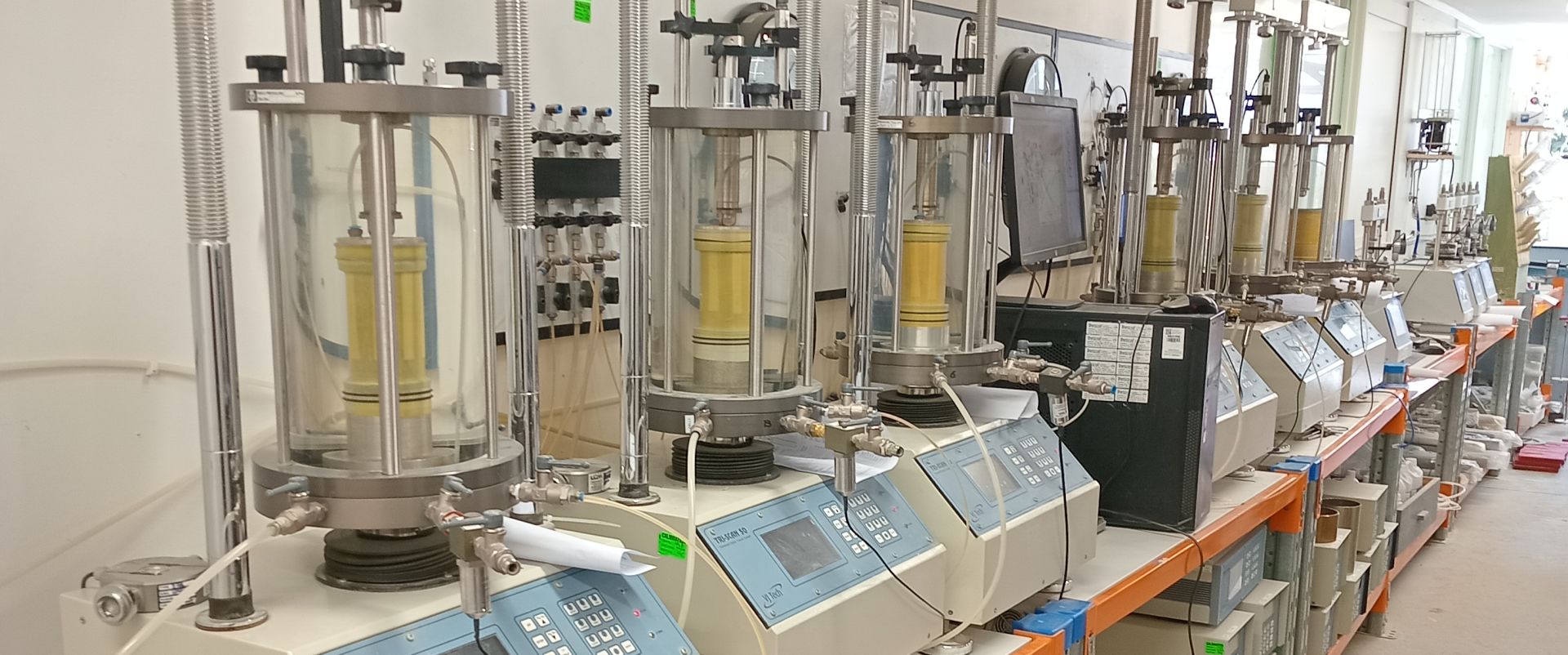
The bread and butter of WSP labs is testing the strength, durability, and performance of construction materials such as soils, aggregates, cement, concrete, steel, bitumen, and asphalt.
With around 150 lab and research staff and a nationwide presence, WSP offers what Sheldon calls an 'integrated service' – the right people, the right tools, and the expertise to help, wherever you are.
Tests are done on everything from roads and bridges to subdivisions and large-scale infrastructure builds. Materials for testing are either supplied by clients or sampled directly from site by WSP technicians.
It's not all routine testing, with Sheldon pointing to WSP's ability to create bespoke tests, and specialist capabilities in its bigger, city labs.
“Our Auckland lab, Hamilton, Rotorua, and WSP Research in Petone offer services not widely available elsewhere such as permeability and triaxial testing of soil and repeat load triaxial testing of pavements - assessing the long-term performance of these materials under load.
“Another specialist test in high demand is the measurement of the thermal resistivity of soil and backfill materials. This test determines the ability of these materials to dissipate heat away from buried high voltage cables to ensure long term resilience. The current demand for testing is mostly related to the development of new wind and solar power generation facilities.”
Daniel adds that testing the geomechanical properties of soils and rocks to understand their behaviour under stress and load, and instrumentation monitoring, is becoming an increasing part of the work at WSP labs.
“Almost every major project wants faster geomechanical testing and embedded monitoring systems. It’s becoming core to what we do. And as construction methods evolve, so does our testing. We're developing smarter ways to collect and share testing data with our clients in formats that plug straight into their systems.
“We operate twelve laboratories nationwide, most recently adding a new satellite lab in Taupō. That geographical spread means we're able to support construction work wherever it’s happening,” says Daniel.
All WSP's testing is done to strict national or international standards, and the labs are independently audited under the IANZ framework - meaning a high level of accuracy and traceability.
“Everything we do is based on sound, proven science,” say the pair. Looking ahead, they see laboratory testing as crucial to improving and sustaining New Zealand’s infrastructure.
“If you want long-lasting roads, safe buildings, and well-designed developments, you need reliable data to understand the behaviour and performance of the materials you’re using. That’s provided by high quality laboratory testing.”