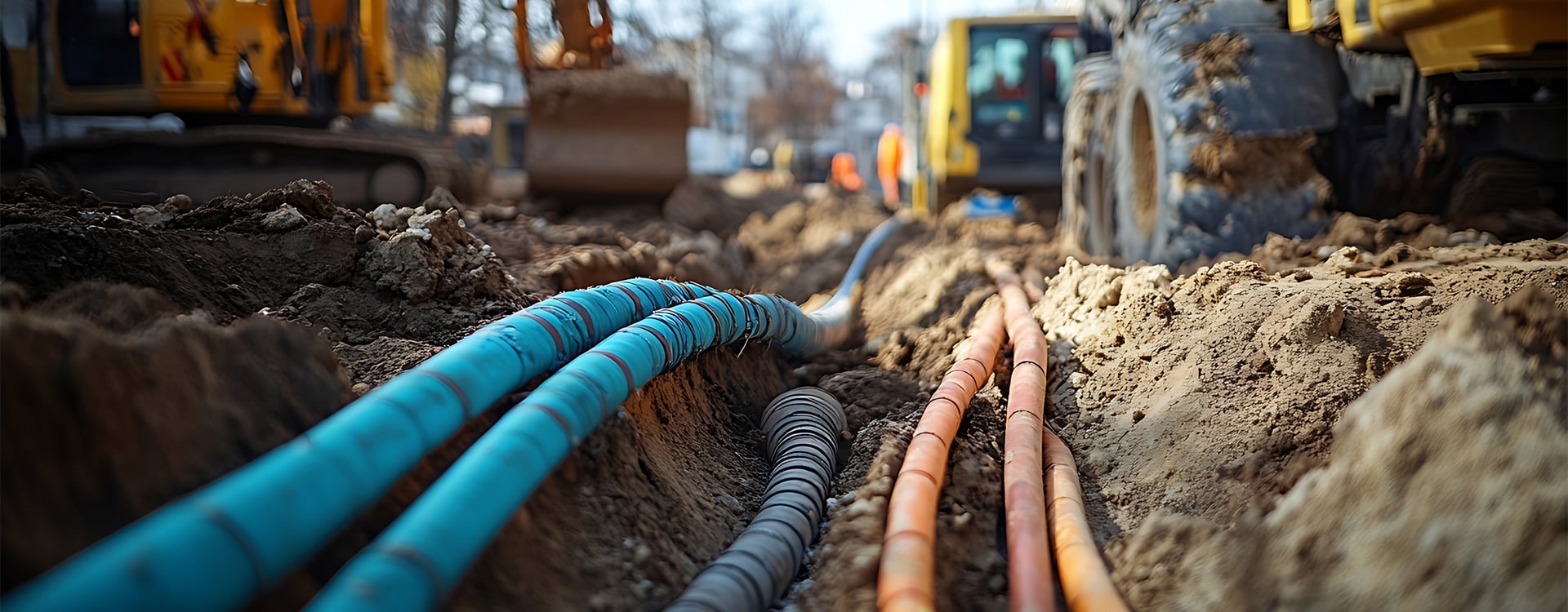
Known as the thermal resistivity test, it’s linked to underground high voltage electrical cabling explains WSP team leader for testing services Zac Francis.
The test is recommended anywhere high voltage cables are placed underground – especially in areas with pumice and other volcanic materials, which transfer heat more easily.
Zac says a little knowledge goes a long way. Understanding the thermal behaviour of ground conditions can help prevent short circuits, service disruptions, and even energy blackouts.
With dozens of infrastructure projects lined up for fast-track consenting, he says demand for the test is growing. Most demand is coming from wind and solar farms, as well as electrical sub-station projects.
“It’s busy and getting busier. Thermal resistivity tests now account for about fifty percent of our Wellington lab’s soil-related work. Our testing work includes site sampling around New Zealand, lab testing, and delivering results to the client.”
If testing shows ground materials at a site have high thermal resistivity, they could be removed and replaced with quarried backfill materials such as basecourse or thermal sands, with a lower thermal resistivity. Less heat sensitive locations could also be chosen.
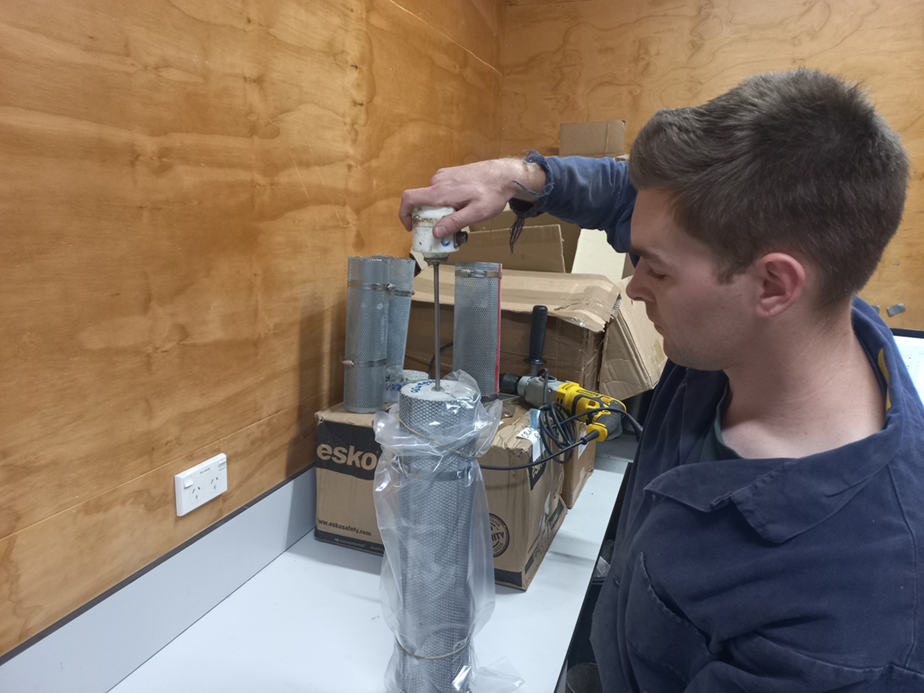
The testing process is straightforward. For harder materials like clay, a core sample can be taken from site. Looser materials such as loamy soil, gravels or sand are collected and compacted in a cylindrical cage at the laboratory.
A specialised probe is inserted and linked to an electronic device, which sends heat through the sample. Sensors on the probe give data on the sample’s heat conducting properties which is then reviewed and calculated.
Samples are tested in their wet, moist and dry states to measure their full thermal behaviour, rain or shine.
Depending on the type of material, testing runs can take anywhere from twenty minutes to two hours, with full ‘dry-out curves’ lasting up to six weeks.
As the number of energy and large-scale infrastructure projects continues to rise, conducting thermal resistivity tests has never been more critical, says Zac. They're playing a vital role in developing resilient, efficient, and future-ready networks while ensuring the long-term reliability and safety of underground cables.