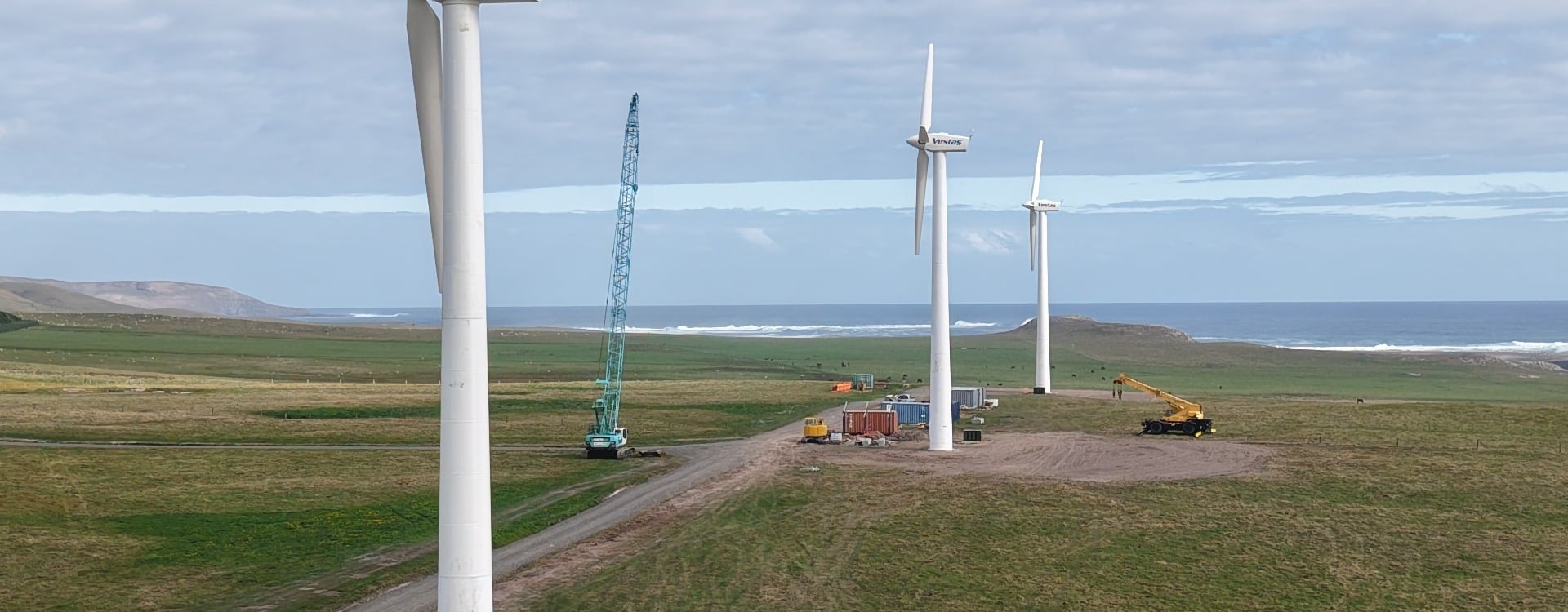
The WSP-designed project was a finalist in the Excellence in Innovation category of the recent Building Nations Infrastructure Conference. For good reason: over fifty pieces of concrete foundation were pre-cast in New Zealand, then shipped to the windswept archipelago for installation.
Christchurch-based WSP technical director of building structures Jamie Lester says the project delivers an improvement in energy resilience for the island and reduces energy costs substantially.
The biggest challenges lay in logistics. Producing or 'batching' concrete needed for the turbines’ foundations couldn’t be done on the island. So, all materials - including the heavy pre-cast foundation pieces and turbines - had to be delivered from New Zealand, 862 kilometres away.
WSP was invited to bid for the project, having had plenty of experience designing wind farm foundations in remote locations, including at Scott Base, Antarctica. Hunter Civil was the main civil engineering contractor.
The pre-cast pieces of concrete were post-tensioned – a process that involves tightening steel bars inside the pieces to connect them together and transfer the heavy, and repetitive loads. No small amount of geometry coordination and computer analysis was required, says Jamie.
“With the constraints around what could be done on-site, we went through an options review process with the client, the Chatham Islands Enterprise Trust, and landed on this pre-cast, post-tensioned foundation solution.”
Using pre-cast concrete helped reduce the project's carbon emissions because the foundation pieces were made in a controlled factory setting, which meant less waste, smarter use of materials, and fewer emissions during construction. Concrete volumes were also offset by using locally sourced backfill material as additional ballast.
Jamie says that over a 25-year lifespan, each turbine can experience up to a billion load cycles.
“Metal fatigue is a concern beyond a million revolutions, so we had to factor that into our design. It’s straightforward with poured concrete foundations, but with our bespoke pre-cast foundation solution, we needed to run much more detailed analysis to understand how the load would transfer into each individual turbine arm.”
Add it up, and there’s every reason to expect the new turbines will be a gamechanger for the Chatham Islands community. Not only are they delivering power at nearly half the cost of current supply, they’re also helping strengthen the local economy and break the Chatham’s dependence on diesel.