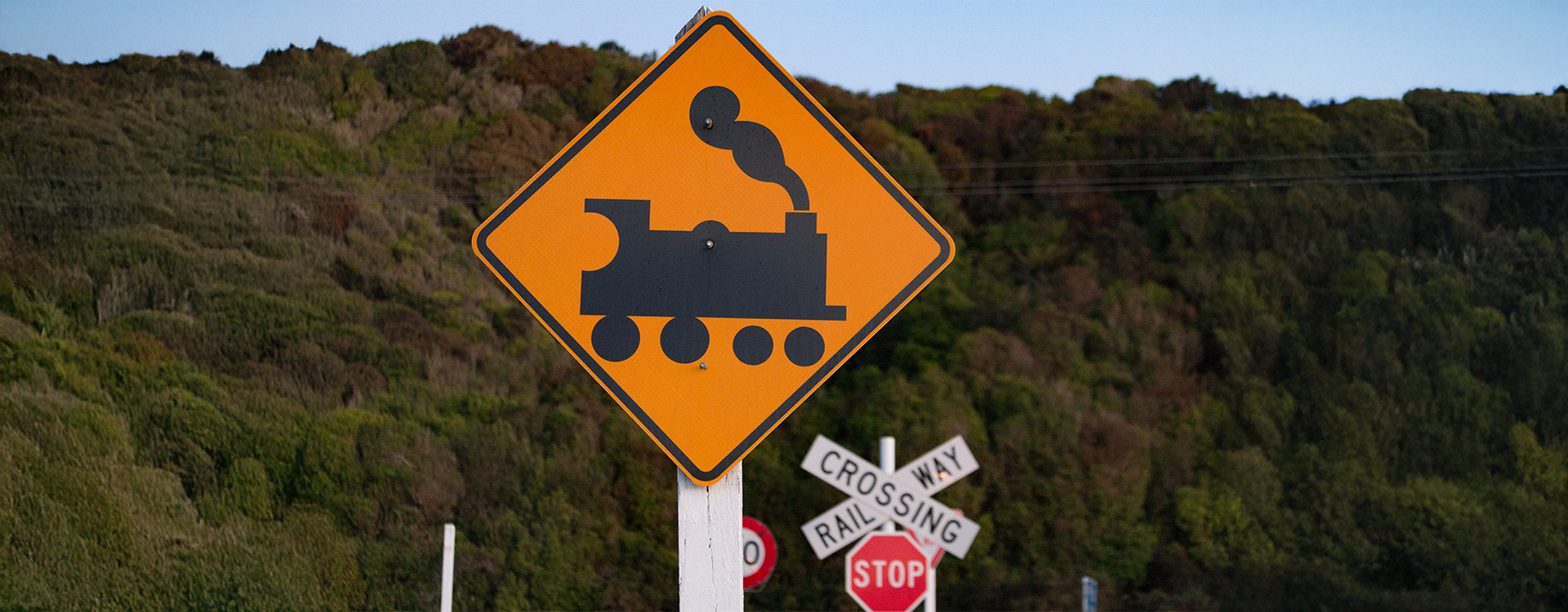
Between 2010 and 2020, there were fifty-two fatal or serious injury incidents at level crossings across Aotearoa New Zealand. Many of these were at passive crossings, where the only control measures were Stop signs.
WSP Research's Joel Burton, who led the study on behalf of KiwiRail, says the first stage of WSP's research highlighted the surprising ways in which infrastructure could shape driver decisions. It found that many drivers simply rolled through Stop signs or failed to properly check for oncoming trains, even when signs were clearly visible. This behaviour was especially prevalent at passive level crossings with poor visibility and no active controls.
WSP's research was initially prompted by a tragic incident at the Bunnythorpe level crossing near Palmerston North, where a bus driver collided with an approaching train despite the warning lights and bell which were operating.
“With a clear need to better understand the factors that influence driver behaviour, the second stage of our research, carried out between July 2023 and April 2024, took a more hands-on approach to observe and quantify these behaviours," says Joel.
With support from KiwiRail, Joel's team collected data from six level crossings, where infrastructure varies widely, from simple Stop signs to crossings with flashing lights, bells, and half arm barriers. Using a combination of camera systems, LiDAR, and vehicle tracking technology, the team analysed over 3,600 vehicles and their interaction with the crossings.
The findings of this second stage of research have led to several recommendations aimed at improving safety. These include introducing turn bays at high-traffic crossings, as these allow drivers more time to assess the situation before making a turn.
Other recommendations include increased signage — such as additional ‘Look for Trains’ signs — and the installation of lighting at crossings with a history of night-time crashes.
The research also recommends removing ‘Give Way’ signs in favour of ‘Stop’ signs at certain crossings, as the former have been found to encourage dangerous driving behaviours.
KiwiRail chief asset development officer David Gordon says the research emphasises how important an individual’s behaviour is when it comes to safety around railway tracks.
“Even close calls at level crossings take a huge toll on train drivers and those who narrowly avoid death. Trains and rail maintenance vehicles always have right of way and travel faster than they appear to.”
KiwiRail says it will review the research report’s recommendations and consider working with NZ Transport Agency on possible changes to signage requirements.
An intriguing result from the research was the impact of limiting visibility at certain crossings. Joel's team found that restricting sightlines at approach points could encourage drivers to slow down and more carefully assess the crossing before proceeding.
“These kinds of design changes are simple but could have a big impact on reducing incidents at level crossings,” says Joel. “If we can get the infrastructure right, we can improve driver behaviours without the need for extensive intervention.”