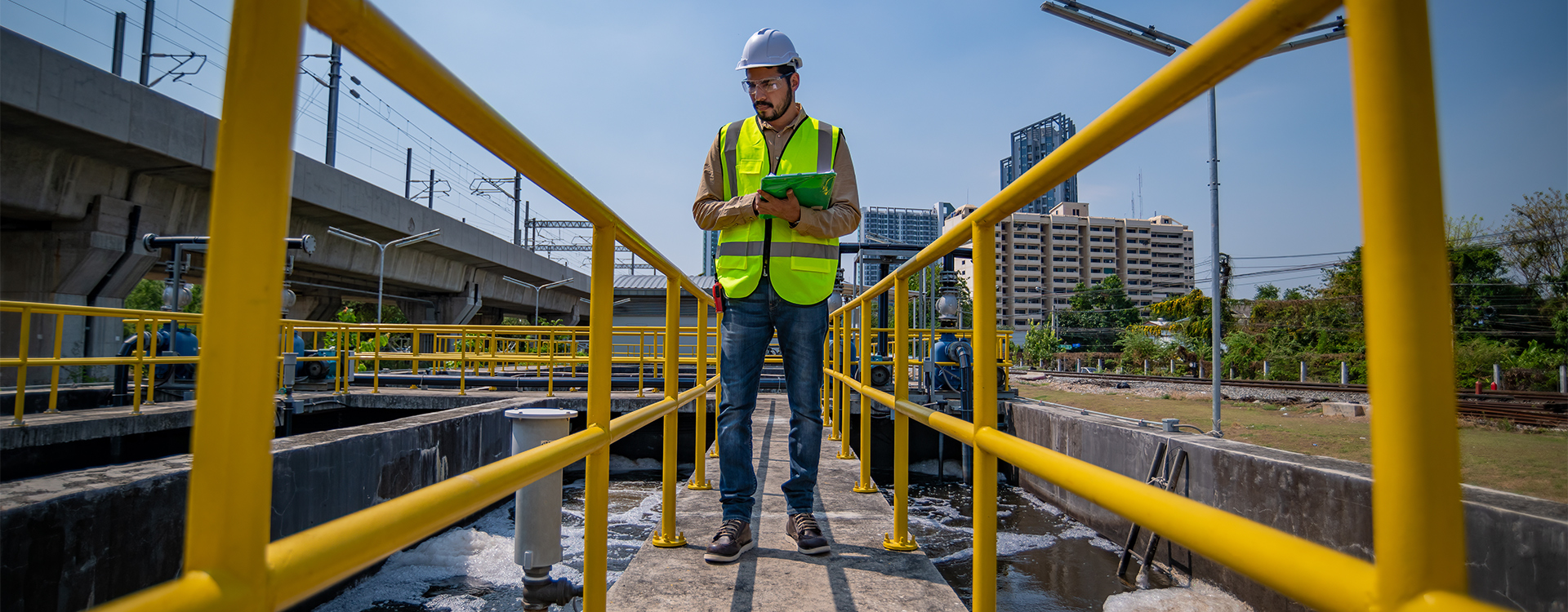
The subscriber-based hub is a digital space for all things water training. It features an initial fifty microlearning courses, ranging in length from ten minutes to an hour. Live webinars with WSP water treatment specialists are also planned to be included.
Learners can track their training with a record of learning and digital badges.
WSP environmental training centre manager Jonathan Mackey says WSP and its predecessors - Opus and the Ministry of Works - have been training water and wastewater operators and technicians since 1959.
“The first operator qualifications were called C, B and A Grade Water or Wastewater before WSP supported transitioning of these local qualifications into National Certificates and Diplomas on the New Zealand Qualifications Framework in the early 2000’s.”
The new hub is “chock full of best practice content,” says Jonathan. “It captures all the clever stuff the industry does and knowledge from specialists with decades of expertise.”
Designed around the concept of social learning, the hub encourages learning through observing and interacting with others. A collaboration space where users can pose questions and share knowledge features prominently.
Jonathan says he twigged to the power of digital collaboration after hearing a story about a wastewater team in the U.S. struggling with a pump issue.
“They posted their problem online,” he explains. “This was spotted by a local authority wastewater team in New Zealand, who knew the solution, got in touch, supplied the pump’s operating procedure, and live-streamed the maintenance fix.”
Importantly, the new hub isn’t restricted to WSP content. Any organisation can use templates available to deliver their own water operations training.
The new hub complements the broader work of WSP’s long-standing Environmental Training Centre, which delivers face-to-face training for water and wastewater operators undertaking their qualifications, provides NZQA-recognised micro-credentials, and trains Resource Management Act (RMA) commissioners and RMA topics for iwi and hapu.
Jonathan says the Water Learning Hub helps fill an awareness and training gap in water and wastewater management - especially as the workforce ages.
“The industry has capacity and capability issues. The average age for a water operations worker in New Zealand is early 50s. For many people earning their first water treatment qualification, it’s often in their 40s.”
While water and wastewater plants are critical regional infrastructure, Jonathan says they don’t often enjoy a high profile. His hope is that the new Water Learning Hub will eventually provide early exposure for learners still at school - or those switching careers - to explore the industry and gain micro-credentials that could spark a rewarding future career essential to public and environmental health.
He adds that the hub should also prove useful for remote communities in New Zealand and the Pacific who may struggle to access in-person training. It provides “just the right level of baseline learning that can lead them to qualifications.”
Explore the Water Learning Hub here or learn more about the WSP Environmental Training Centre here.