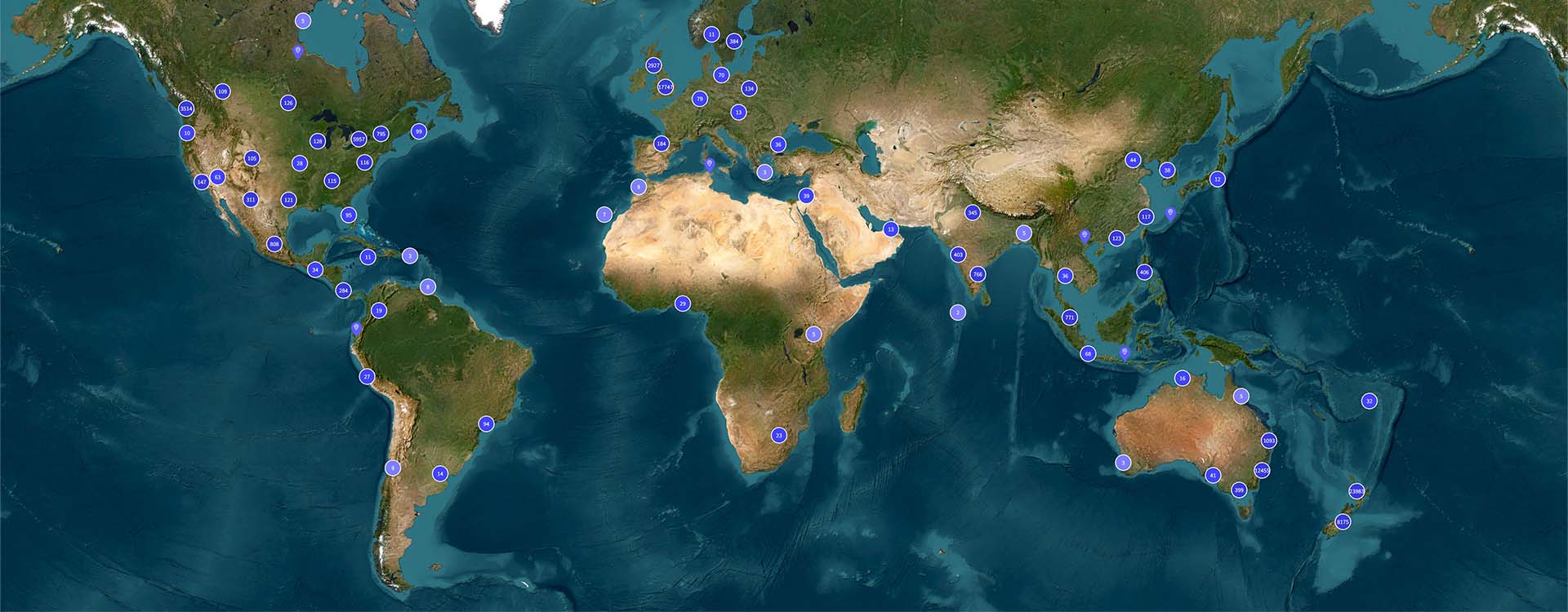
From building condition assessments in Saudi Arabia to construction inspections in Canada and geotechnical surveys in New Zealand, the Asset Data Toolset (ADT) helps WSP’s public and private sector clients better manage their infrastructure assets. It’s even been used in Spain to red-flag potential human health and pollution issues at building sites.
WSP national market leader for buildings performance Dave Monkman says ADT plays an important behind-the-scenes role in keeping infrastructure ticking. It’s a quiet achiever, having been used in over 1,100 WSP projects across Oceania, Asia, Africa, Europe, Middle East, and the Americas.
ADT works via a mobile app. When they’re out and about on a client project using ADT, WSP engineers and fieldworkers collect data – e.g., words, numbers, images. This gets plugged into the app, which synchs back to ADT’s enormous Cloud-hosted database. Data is tagged to the exact place it was collected – such as a built structure, construction site, road, railway track, etc.
Since being developed by WSP Christchurch-based Matt Barnes and Nick Huang, ADT’s database has been filled with petabytes of data, including over three million photographs.
Dave says ADT is a highly efficient way of collecting data for individual projects. It does away with cumbersome paperwork, spreadsheets, and manual handling. But the collective potential of data gleaned from hundreds of projects is where ADT really comes into its own. He likens it to “a deep lake of data”.
“Using ADT’s data to answer questions such as ‘why do structures last better in one place versus another’ opens a world of opportunity in improving our built environment and can lead to engineering innovations.”
While asset condition assessments sit at the heart of what ADT can do, it was deliberately designed to be adaptable for any engineering or infrastructure project involving data.
“We designed ADT so WSP people could set it up easily in the field for any project they want to collect data on. It has a solid data foundation around how data and infrastructure types are classified, and how data is attributed to geographical locations.”
Dave says ADT’s ability to quickly record and interrogate data helps infrastructure owners make better decisions - so they can get the most out of their assets; plus, focus infrastructure expenditure where it’s most needed – whether that’s for asset management, environmental, or health and safety reasons.
The benefits boil down to improved infrastructure performance, he says.
“Using ADT for efficient infrastructure management means fewer unexpected failures, more proactive repairs, and smoother services. By tracking asset efficiency and resource use, it can be used for environmental sustainability."
Dave adds that asset monitoring enabled by ADT can help identify risks before they become disasters. Plus, he says better asset monitoring and tracking can lead to smarter investments and budget planning.
“Not only that, with solid data at their fingertips, decision-makers can prioritise projects that have the greatest social impact - like upgrading facilities in underserved areas or improving public transport in high-growth neighborhoods.”