Designed as a series of connected neighbourhoods, Peacocke is intended to be a community for residents and families to enjoy their home and their sense of place within Hamilton City.
WSP were engaged to assist HCC in providing the services necessary to open up the Peacocke area for development. With no reticulated wastewater the development was unable to progress in the past 30 years. Now with wastewater infrastructure being significantly funded through the New Zealand Government Housing Infrastructure Fund (HIF) development can finally commence.
Our Solution
WSP developed the concept plan for the strategic and trunk wastewater infrastructure. Findings from the initial WSP study formed the basis of a bid to the HIF.
WSP’s master plan included concept design and cost estimates for gravity reticulation (22 km), pump stations (10 no.) and the transfer rising mains (7.5 km). The master plan considered infrastructure needs aligned to phasing of development, initial cost, constructability, consenting and risk issues, and long-term operational and resilience matters.
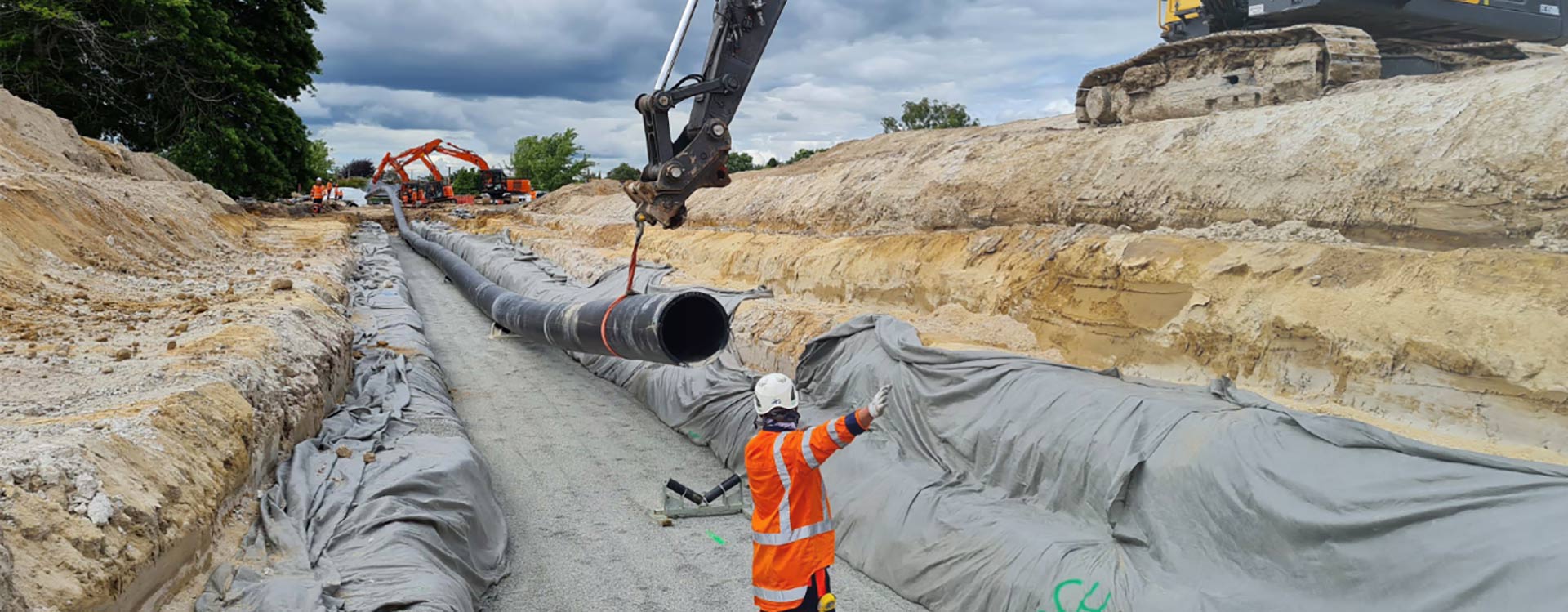
WSP (alongside subconsultants Beca) were then commissioned by HCC to design the initial wastewater infrastructure for the housing area. This included a 330 l/s transfer pump station with 1,500 cum buffer storage, 7.5 km dual rising mains (DN355 and DN630) and large pump station with associated pipework. WSP were responsible for overall client liaison, project management, community engagement and detail design of the rising main and local pump stations.
Key benefits
Collaboration: Hamilton City Council with WSP, Beca and BBO (transportation consultant) built an open and honest ‘One Team’ style culture.
Examples of successes generated through regular face to face meetings included:
- Alleviation of potential odour and septicity issues in the early years of development by redirecting local pumpstation to provide base flow to the new Peacocke Transfer Pumpstation.
- Improving construction and reducing costs through active management of interfaces between wastewater and transport infrastructure.
- Leading the collaboration of wider wastewater design across all projects to ensure alignment of connected systems.
Covid-19 lockdowns occurred during a critical stage of development and during the final review of the tender package for procurement of the rising main. The project team and HCC seamlessly moved to working online, aided by the collaborative relationship already in place and achieved tendering and procurement milestones on time.
Biodiversity: WSP’s ecologists mitigated impact to native bats and lizards through gaining a good understanding of where they live and working with the team to adjust the pipe route to minimise disruption.
Operational Performance: WSP designed a 3m high pipe upstand near the discharge point to prevent emptying of the pressure pipelines. This was to prevent both an increase in odorous air becoming a nuisance and to avoid the negative impacts to the pump performance.
WSP’s specialists in Canada completed the CFD modelling of the upstand and brought international expertise to the project.
WSP’s one team approach doing construction where we worked closely with Council and pipeline contractor CB Civil Ltd resulted in:
- 1,000 tonnes reduced carbon emissions
- $1.5M saving in construction costs
- Construction completed 10 months ahead of schedule
- Saved hundreds of well established trees and several hundred meters of established vegetation from being cleared
- Using recycled materials equivalent to an estimated 500,000 600ml of plastic bottles and estimated 30,000m3 of aggregate