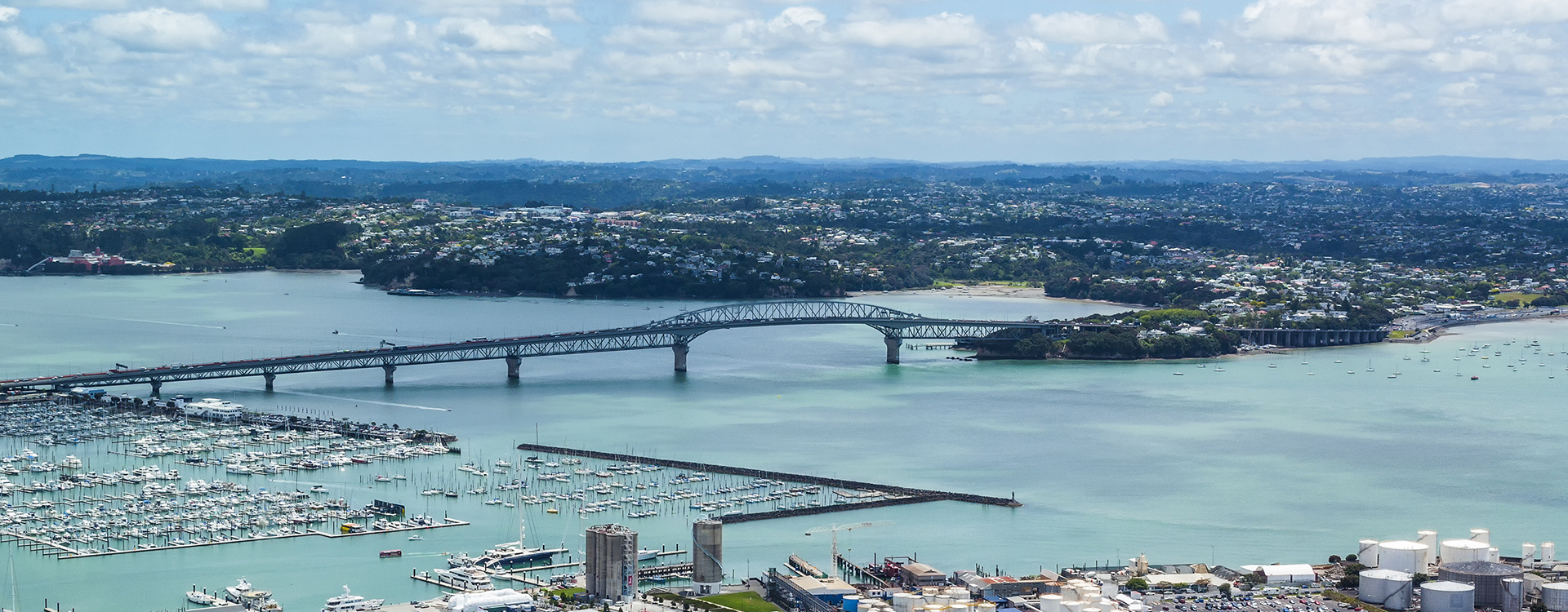
Waka Kotahi NZ Transport Agency, Auckland Transport, Auckland Council and Mana Whenua are working in partnership to determine how Tāmaki Makaurau Auckland’s transport system connects the Waitematā Harbour in a way that enables the city’s urban form to develop while addressing climate change, network reliability, equity and cultural, social, and environmental issues.
This indicative business case is exploring improved multi-modal connectivity between the north shore and the central isthmus. The connections need to provide a multi-modal system solution including busway requirements; long-term walking & cycling; goods, services and freight; rapid transit; and vehicular network resilience. It needs to consider asset longevity for existing and future assets and allow for mode shift and climate change matters to be accounted for.
The project solution needs to consider all these modal connections and confirm how these modes and assets will interact/integrate with each other as part of a system network. Critical utility connections across the harbour is another important consideration for this business case.
CLIENT BRIEF / PROJECT CHALLENGES
Key risks/ challenges include:
- Partnership between Waka Kotahi, Mana Whenua Auckland Transport, and Auckland Council is critical to the project’s success – failure to gain partner support and ownership of outcomes will impact the ability to move to the next phase and deliver outcomes.
- Delivering a business case with a Benefit Cost Ratio (BCR) less than 1 - not achieving a BCR greater than 1 will limit the social license required to support the preferred scheme solution.
- Outcomes not achieved - Partners, stakeholders and the community have many different views on the outcomes to be achieved by this project. It is critical that the right outcomes are delivered by this project.
- Impacts of other projects - This project is large and will be delivered over a long period of time and therefore impacted by other project demands. The challenge is to reduce the impact of changes on WHC as and when they occur.
- Poor social license - The project must take the community on the journey and to form a strong consensus on the recommended way forward.
- Consenting strategy - Elements of the programme are likely to go through significant ecological areas. These areas and other areas of cultural significance are highly valued by Iwi. Balancing project cost with environmental impacts is critical.
OUR SOLUTION
The Waitematā Harbour Connections (WHC) Alliance have been considering key factors such as access, resilience, efficiency, sustainability and carbon reduction in the identification, assessment, and development of solutions.
The Alliance is looking at what new infrastructure is needed, where it will go, and how we make the best use of what we already have, including the Auckland Harbour Bridge.
The project is delivering transport solutions for all modes and urban development for future generations.
OUTCOME/CLIENT BENEFITS
The Alliance model being utilised for the Waitematā Harbour Connections Project allows the team to be agile and shift in order to meet changing expectations and deliver outcomes within constrained timeframes.
Delivering sustainability and broader outcomes with our partners is critical part of what is needed to gain support and alignment for the project.
The Alliance is working with Mana Whenua to directly influence and achieve social, cultural, economic and sustainability outcomes for Te Waitematā and Tāmaki Makaurau. This extends into the Infrastructure Sustainability Council (ISC) Framework at this early IBC phase of the project, the first time for Waka Kotahi. The interwoven approach – as shown below – displays how the aligned approaches and tools that provide a foundation for ongoing partnership that delivers tangible opportunities and outcomes.
LIST OF PRIMARY SERVICES
The WHC Alliance has been formed to deliver a robust ‘Indicative Business Case’ consistent with Waka Kotahi and Treasury guidelines with a particular focus on the ‘strategic case’ and ‘economic case’ to inform robust decision-making on the preferred long-term way forward for a multi-modal system solution across Te Waitematā. The WHC Alliance are required to build on key findings from previous project stages, updating key assumptions and drivers for notable relevant changes that will need to be considered including updates to central and local government policy direction (particularly relating to carbon emissions reduction), growth assumptions (particularly in relation to the National Policy Statement on urban development), key assumptions about the wider transport network and proposed projects (e.g. Auckland Light Rail, North West Rapid Transit) and key broader transport initiatives (e.g. congestion pricing).
Services provided by the Alliance include:
• RMA Planning including
• Land use planning
• Sustainability advisory
• Economic & employment advisory
• Community & culture advisory
• Broader outcomes and social procurement advisory
• Environmental advisory
• Business case advisory
• Economics and commercial advisory
• Funding & finance advisory
• Transport planning and modelling
• Strategic land use consultancy
• Design services (geometric, rail, civil, geotechnical, tunnel, fire life safety, bridges, urban design)
• Constructability advisory
• Communications & Engagement advisory
• Māori partnership advisory
• People Culture co-ordination and management
• Programme/financial controls, risk management and document management
• Cost Estimation
• Digital Engineering
Following the IBC, the next stage will be delivery of a Detailed Business Case (“DBC”).