Presently, 40% of the world’s population lives within 100 kilometers of the coast vulnerable to sea level rise. Commercial trade, tourism and development, natural phenomena and environmental protection are all factors affecting our coasts.
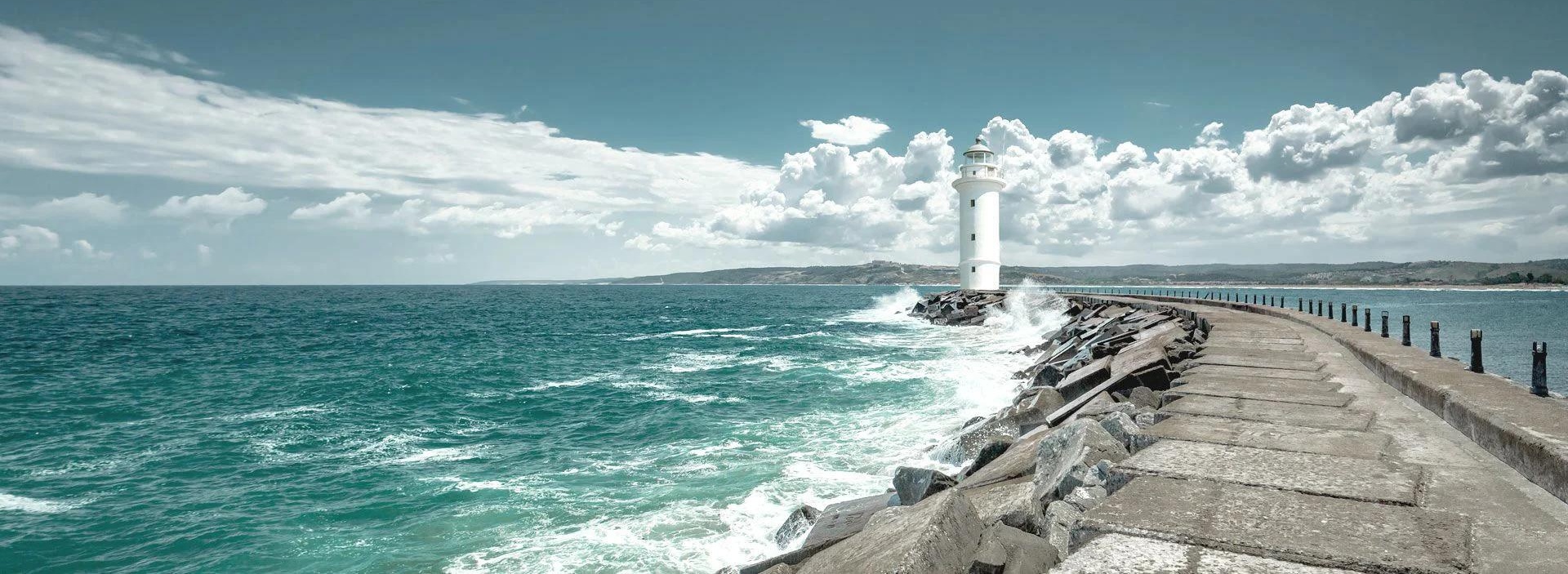
We are involved with the design and rehabilitation of beaches and coastal facilities, such as wharves, jetties, piers, breakwaters, groins, shoreline armoring, and access channels. Our projects are designed to work in harmony with their surroundings and to minimize the potential impact on environmental resources.
Our team has globally recognized expertise in coastal planning and engineering, ranging from the modelling and analysis of coastal processes (waves, tides, currents, sediment transport, and beach morphology) and the anthropogenic effects on these processes, to the detailed design of coastal facilities and beach restoration projects. We use state-of-the-art scientific instrumentation to measure bathymetry, currents, waves, water-levels and sediment transport. Such measurements are employed in the validation of specialized software used to numerically model coastal processes such as waves, currents, sediment transport, and the evolution of beach and seabed morphology. Accurate characterization of marine environmental conditions and processes with such tools is key to the successful design of coastal infrastructure.
Using collected and simulated weather, current, and wave information, we carry out assessments of downtime to offshore, coastal, and inshore installations and facilities, including docks and wind turbines, in order to maximize the available working time at a facility, improve productivity and reduce risk.